


- Ronny Mor
- •
- 7 Min Read
- •
- 1 day ago
Key Points
- Gold surged to fresh record highs as the U.S. dollar slid to multi-year lows, reinforcing the metal’s role as a hedge against policy uncertainty.
- Investor demand has been fueled by a mix of currency weakness, geopolitical risks, and expectations around U.S. monetary policy.
- Central bank buying and sustained ETF inflows are adding structural support to bullion prices in early 2026.

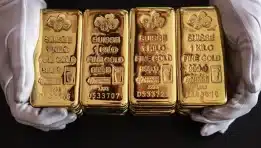
Gold extended its extraordinary rally on Wednesday, climbing above $5,200 per ounce and setting a new all-time high as the U.S. dollar weakened sharply. The move underscores how currency dynamics, rather than inflation alone, are increasingly shaping global asset allocation decisions. With U.S. policymakers signaling comfort with a softer dollar and markets bracing for continued geopolitical and policy uncertainty, gold has reasserted itself as one of the strongest-performing assets of the year.
Dollar Weakness Reignites the Safe-Haven Bid
The immediate catalyst for gold’s latest surge has been the sharp decline in the dollar, which has fallen to its lowest level in four years against a basket of major currencies. President Donald Trump’s public dismissal of concerns around the dollar’s weakness has reinforced market perceptions that the administration views a softer currency as a tool to support export competitiveness and reduce trade imbalances.
For gold investors, this stance matters. A weaker dollar mechanically lowers the cost of gold for non-U.S. buyers, while also signaling looser effective financial conditions. More importantly, it feeds a broader narrative that currency stability is no longer a top policy priority, prompting investors to seek assets that sit outside the fiat system.
Policy Uncertainty and the Fed in Focus
Beyond currency moves, political and institutional uncertainty in Washington has added to gold’s appeal. Renewed tariff threats against major trading partners and increasingly vocal criticism of the Federal Reserve have raised questions about the long-term coherence of U.S. economic policy. Even as the Fed is widely expected to keep interest rates unchanged at its current meeting, markets are intensely focused on forward guidance and the timing of the next rate cut.
This environment has supported gold despite relatively firm economic data. Traditionally, strong growth and stable rates would cap upside for non-yielding assets. Instead, investors appear more concerned with tail risks and regime shifts, a mindset that favors gold as portfolio insurance rather than a short-term trade.
Structural Demand Adds Staying Power
Gold’s rally is not being driven by speculative flows alone. Central banks have continued to accumulate bullion at a robust pace, reflecting a longer-term strategy to diversify reserves away from the dollar. At the same time, exchange-traded funds backed by physical gold have seen steady inflows, indicating renewed interest from institutional and retail investors alike.
Year-to-date, gold is up roughly 20%, while silver has surged nearly 60%, highlighting a broader rotation into precious metals. The magnitude and persistence of these gains suggest that investors are not merely reacting to headlines, but repositioning portfolios for a world marked by higher geopolitical fragmentation and more volatile currencies.
What Comes Next for Gold?
Looking ahead, gold’s trajectory will hinge on whether dollar weakness persists and how the Fed frames its policy outlook. A clear signal that rate cuts are approaching later in the year could add further momentum, while any stabilization in the dollar may prompt periods of consolidation. Still, with central bank demand intact and policy uncertainty elevated, downside risks appear limited in the near term. For investors in both the U.S. and Israel, gold is increasingly viewed not just as a hedge, but as a strategic allocation in an evolving global monetary landscape.
Comparison, examination, and analysis between investment houses
Leave your details, and an expert from our team will get back to you as soon as possible
* This article, in whole or in part, does not contain any promise of investment returns, nor does it constitute professional advice to make investments in any particular field.
To read more about the full disclaimer, click here
- Lior mor
- •
- 6 Min Read
- •
- ago 2 minutes
SKN | Lumber Prices Cool After January Surge: Is the U.S. Housing Slowdown Signaling a Broader Reset?
Lumber futures softened toward the $590 per thousand board feet level in late January, pulling back from a three-month high
- ago 2 minutes
- •
- 6 Min Read

Lumber futures softened toward the $590 per thousand board feet level in late January, pulling back from a three-month high

- sagi habasov
- •
- 7 Min Read
- •
- ago 2 days
SKN | Can Winter Weather Tip the Balance? WTI Rebounds as US Oil Output Takes a Hit
WTI crude oil prices rebounded on Tuesday as traders reacted to significant weather-related supply disruptions across the United States, underscoring
- ago 2 days
- •
- 7 Min Read

WTI crude oil prices rebounded on Tuesday as traders reacted to significant weather-related supply disruptions across the United States, underscoring

- Ronny Mor
- •
- 7 Min Read
- •
- ago 2 days
SKN | Oil Prices Steady as Ample Supply Offsets Impact of US Winter Freeze
Oil prices paused their recent decline as markets reassessed the balance between short-term weather disruptions and a broadly comfortable global
- ago 2 days
- •
- 7 Min Read

Oil prices paused their recent decline as markets reassessed the balance between short-term weather disruptions and a broadly comfortable global
- Lior mor
- •
- 6 Min Read
- •
- ago 3 days
SKN | Has Gold’s Surge Above $5,000 Become the Ultimate Currency Debasement Signal?
Gold has pushed beyond the $5,000 threshold in recent trading across certain benchmark-linked instruments and long-dated contracts, marking a powerful
- ago 3 days
- •
- 6 Min Read
Gold has pushed beyond the $5,000 threshold in recent trading across certain benchmark-linked instruments and long-dated contracts, marking a powerful

