


- Ronny Mor
- •
- 5 Min Read
- •
- 2 hours ago
Key Points
- The S&P 500 ended the week ending January 23 with a marginal gain of 0.03% on Friday, closing at 6,915.61, but ultimately notched its second consecutive weekly loss.
- Market volatility was driven primarily by geopolitical tensions surrounding proposed tariffs on European nations, which were later withdrawn following a diplomatic "framework" agreement.
- Inflation concerns persist as the Core PCE Price Index remains stubbornly above the Federal Reserve's 2% target, keeping interest rate policy in a restrictive stance.

The global financial landscape remains in a state of delicate equilibrium as investors digest a week defined by headline-driven volatility and significant geopolitical shifts. While the S&P 500 managed a narrow recovery during Friday’s session, the broader trend reflects a growing caution among market participants facing the intersection of aggressive trade policies and persistent inflationary pressures.
Tariff Rhetoric and Diplomatic Reversals
The early part of the week was dominated by a sharp market recoil following the administration’s announcement of 10% general tariffs on eight European nations, tied to strategic interests in Greenland. This maneuver rattled investors, leading to the S&P 500’s worst session since October. However, the subsequent “framework” deal reached with NATO leadership provided a much-needed reprieve, allowing indices to claw back most of the losses by Friday. This cycle of policy-driven volatility underscores the sensitivity of global supply chains and equity valuations to sudden shifts in trade relations.
Inflation Persistence and Fed Policy
Despite the rally in tech-heavy sectors, the underlying economic data continues to signal a “higher-for-longer” interest rate environment. The Core Personal Consumption Expenditures (PCE) Price Index—the Federal Reserve’s preferred inflation metric—rose by 0.2% month-over-month, with annualized figures hovering near 2.8%. With inflation remaining sticky, the Federal Open Market Committee (FOMC) is widely expected to maintain the current policy rate of 3.50% – 3.75% in the upcoming session. For the Israeli investor, this translates to a continued premium on the U.S. Dollar and sustained pressure on global borrowing costs.
Sector Divergence: Tech Titans vs. Chipmakers
The performance of the “Magnificent Seven” remained a pillar of strength, with Microsoft (+3.5%) and Nvidia (+1.5%) leading the charge on Friday. Conversely, the semiconductor sector faced a localized shock as Intel (INTC) plummeted 17% following a weak quarterly outlook. This divergence highlights a “winner-takes-all” dynamic where the AI supercycle continues to drive earnings for platform leaders while hardware and fabrication firms face increasing supply-chain and cyclical headwinds.
Looking ahead, the final week of January is poised to be a pivotal “macro compression” event. Investors must monitor the high-stakes Q4 earnings releases from Apple, Meta, and Microsoft, which will serve as a litmus test for the sustainability of current valuations. Additionally, the Federal Reserve’s commentary on Wednesday will be scrutinized for any shift in tone regarding the timing of potential 2026 rate cuts. While the S&P 500 remains in positive territory for the year, the risk of internal rotation remains high as markets balance robust GDP growth against emerging consumer fatigue and geopolitical tail risks.
Comparison, examination, and analysis between investment houses
Leave your details, and an expert from our team will get back to you as soon as possible
* This article, in whole or in part, does not contain any promise of investment returns, nor does it constitute professional advice to make investments in any particular field.
To read more about the full disclaimer, click here
- orshu
- •
- 7 Min Read
- •
- ago 14 minutes
SKN | DAX Steadies After Tariff Volatility: A Turning Point for European Equities?
The German equity market navigated a period of intense volatility this week, with the DAX 40 benchmark successfully defending
- ago 14 minutes
- •
- 7 Min Read

The German equity market navigated a period of intense volatility this week, with the DAX 40 benchmark successfully defending

- sagi habasov
- •
- 6 Min Read
- •
- ago 1 hour
SKN | Can the Market Calm Hold? Decoding the VIX’s Recent Spike and Retreat
The CBOE Volatility Index (VIX), often referred to as Wall Street's "fear gauge," navigated a turbulent path during the week
- ago 1 hour
- •
- 6 Min Read
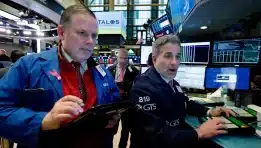
The CBOE Volatility Index (VIX), often referred to as Wall Street's "fear gauge," navigated a turbulent path during the week
- sagi habasov
- •
- 6 Min Read
- •
- ago 14 hours
SKN | Can the NASDAQ Maintain Its Altitude Amid Geopolitical Tensions and Inflationary Signals?
The NASDAQ Composite entered the third week of January facing a complex convergence of geopolitical friction and critical macroeconomic
- ago 14 hours
- •
- 6 Min Read

The NASDAQ Composite entered the third week of January facing a complex convergence of geopolitical friction and critical macroeconomic
- orshu
- •
- 6 Min Read
- •
- ago 15 hours
SKN | Is the Dollar Losing Its Grip? Analyzing the Recent Slide in the US Dollar Index
The US Dollar Index (DXY) faced substantial selling pressure this week, retreating to a closing level of 97.46 as
- ago 15 hours
- •
- 6 Min Read

The US Dollar Index (DXY) faced substantial selling pressure this week, retreating to a closing level of 97.46 as

