


- sagi habasov
- •
- 6 Min Read
- •
- 14 hours ago
Key Points
- The NASDAQ Composite closed the week at 23,501.24, managing a modest gain of 0.28% on Friday despite significant early-week volatility.
- Geopolitical uncertainty regarding US trade policy and proposed tariffs acted as a primary market disruptor, initially sending tech futures lower.
- Investors remain focused on the PCE Price Index and upcoming tech earnings, as the index continues to hover near its 52-week high of 24,019.99.

The NASDAQ Composite entered the third week of January facing a complex convergence of geopolitical friction and critical macroeconomic data releases. Following a market holiday on Monday, the index navigated a period of “macro compression,” where investor sentiment balanced between a resilient US economy and the looming shadow of new trade barriers. While the index remains firmly in a long-term bull trend, the week’s price action highlighted a growing sensitivity to federal policy shifts and inflation persistence.
Navigating the “Greenland Effect” and Trade Uncertainty
The trading week was defined by an unusual catalyst: renewed geopolitical tension as the administration floated aggressive tariff threats linked to territorial interests in Greenland. This rhetoric initially triggered a risk-off environment, with the NASDAQ leading the downside in futures markets as traders priced in potential disruptions to global supply chains. However, the tech-heavy index demonstrated notable resilience, finding support near the 23,000 level. This dip-buying behavior suggests that while the “Greenland headlines” caused short-term turbulence, the underlying bull market remains supported by robust corporate profits and the ongoing AI investment boom.
Economic Indicators: Inflation Persistence vs. Growth
Macroeconomic data released during the week provided a mixed backdrop for growth-oriented equities. The Core Personal Consumption Expenditures (PCE) Price Index—the Federal Reserve’s preferred inflation metric—reportedly held near 2.8% to 3.0%, remaining stubbornly above the 2% target. This persistence has led market participants to reassess the timing of future interest rate cuts. Despite these inflationary signals, US GDP growth and resilient consumer spending have prevented a broader sell-off. The NASDAQ’s ability to finish Friday in the green, up 65.22 points, underscores a market that is currently prioritizing economic strength over the immediate threat of restrictive monetary policy.
Tech Leadership and the 52-Week Horizon
From a technical perspective, the NASDAQ continues to trade within a healthy range, though it remains approximately 2% below its all-time high of 24,019.99. The disparity between the day’s low of 23,374.26 and the high of 23,610.74 reflects the intraday volatility that has become standard in early 2026. Semiconductor stocks and mega-cap tech continue to act as the primary engines of growth, though internal rotation is becoming more evident. Investors are increasingly discerning, shifting focus toward companies that can demonstrate tangible AI-driven revenue growth to justify current valuations.
Looking ahead, the outlook for the NASDAQ remains cautiously optimistic but dependent on the upcoming earnings season and the clarity of US trade policy. The critical factor to monitor will be whether the Supreme Court rulings on tariff legality or the Federal Reserve’s next communication can provide the stability needed for a breakout above the 24,000 resistance level. Investors should watch for increased volatility in interest-rate-sensitive sectors if PCE data continues to signal “higher for longer” rates. However, the strong stabilization seen at the end of this week suggests that the appetite for tech-driven growth remains the dominant force in the capital markets.
Comparison, examination, and analysis between investment houses
Leave your details, and an expert from our team will get back to you as soon as possible
* This article, in whole or in part, does not contain any promise of investment returns, nor does it constitute professional advice to make investments in any particular field.
To read more about the full disclaimer, click here
- orshu
- •
- 7 Min Read
- •
- ago 14 minutes
SKN | DAX Steadies After Tariff Volatility: A Turning Point for European Equities?
The German equity market navigated a period of intense volatility this week, with the DAX 40 benchmark successfully defending
- ago 14 minutes
- •
- 7 Min Read

The German equity market navigated a period of intense volatility this week, with the DAX 40 benchmark successfully defending

- sagi habasov
- •
- 6 Min Read
- •
- ago 1 hour
SKN | Can the Market Calm Hold? Decoding the VIX’s Recent Spike and Retreat
The CBOE Volatility Index (VIX), often referred to as Wall Street's "fear gauge," navigated a turbulent path during the week
- ago 1 hour
- •
- 6 Min Read
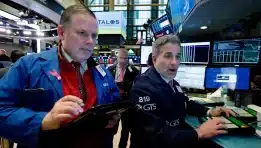
The CBOE Volatility Index (VIX), often referred to as Wall Street's "fear gauge," navigated a turbulent path during the week

- Ronny Mor
- •
- 5 Min Read
- •
- ago 2 hours
SKN | Navigating the “Greenland Gap”: Can the S&P 500 Regain Momentum After a Volatile Week?
The global financial landscape remains in a state of delicate equilibrium as investors digest a week defined by headline-driven
- ago 2 hours
- •
- 5 Min Read

The global financial landscape remains in a state of delicate equilibrium as investors digest a week defined by headline-driven
- orshu
- •
- 6 Min Read
- •
- ago 15 hours
SKN | Is the Dollar Losing Its Grip? Analyzing the Recent Slide in the US Dollar Index
The US Dollar Index (DXY) faced substantial selling pressure this week, retreating to a closing level of 97.46 as
- ago 15 hours
- •
- 6 Min Read

The US Dollar Index (DXY) faced substantial selling pressure this week, retreating to a closing level of 97.46 as

