





- Ronny Mor
- •
- 6 Min Read
- •
- 7 months ago
Key Points
- Oil prices declined after former President Donald Trump indicated that a U.S. response toward Iran is not imminent, easing near-term fears of supply disruption.
- The pullback highlights how quickly the market’s geopolitical risk premium can unwind when escalation appears less likely.
- Traders are refocusing on fundamentals such as global demand growth, OPEC+ policy, and U.S. production levels.

Oil prices fell in global trading after Donald Trump signaled that U.S. action toward Iran was effectively on hold, tempering expectations of an immediate escalation in Middle East tensions. The move triggered a retracement of the geopolitical premium that had built into crude markets in recent sessions, at a time when investors are already weighing mixed signals on global growth and energy demand.
Geopolitical Premium Recedes as Rhetoric Softens
Crude markets have been highly sensitive to political messaging linked to Iran and regional stability, with prices often reacting within minutes to statements from senior political figures. Trump’s indication that a U.S. response is not imminent reduced the perceived probability of near-term disruption to shipping routes, infrastructure, or production capacity across the Gulf. That matters because a significant portion of the world’s seaborne oil supply still passes through strategically vulnerable corridors. When the perceived risk of disruption declines, the additional premium embedded in oil prices tends to unwind quickly, resulting in sharp, sentiment-driven moves that are not necessarily connected to physical supply changes.
Markets Rebalance Toward Supply and Demand Fundamentals
As geopolitical anxiety eased, traders shifted focus back to underlying fundamentals. Recent data from major consuming regions continue to point to uneven demand growth, with resilient consumption in parts of Asia offset by softer industrial activity in Europe. At the same time, U.S. crude production remains near record levels, reinforcing the perception that global supply remains ample despite ongoing OPEC+ production management. For energy markets, this combination limits upside momentum unless accompanied by either a clear acceleration in demand or a credible supply shock. The speed of the latest price decline illustrates how fragile rallies can be when they are driven more by narrative than by structural tightening.
Implications for Inflation, Currencies, and Israeli Markets
Oil price movements extend beyond energy desks. For global investors, including those in Israel, crude remains an important transmission channel into inflation expectations, currency dynamics, and central bank policy assumptions. Lower oil prices tend to ease imported inflation pressures, which can influence bond yields and interest-rate pricing across developed markets. For Israel, where energy costs feed into transportation, manufacturing, and consumer pricing, sustained softness in crude could provide modest relief on the inflation margin. However, markets remain cautious: any renewed escalation involving Iran, shipping lanes, or regional infrastructure could quickly reverse sentiment and reintroduce volatility across commodities, equities, and foreign exchange.
Looking ahead, attention will remain focused on three key variables: the evolution of U.S.–Iran rhetoric, the stability of physical flows through critical export routes, and upcoming signals from OPEC+ regarding production discipline. Oil’s recent decline suggests that markets currently see diplomacy and restraint as the more likely near-term path. Yet with positioning still sensitive and headlines capable of reshaping expectations within hours, crude remains less a pure reflection of supply-demand balance and more a barometer of how investors are pricing global risk.
Comparison, examination, and analysis between investment houses
Leave your details, and an expert from our team will get back to you as soon as possible
* This article, in whole or in part, does not contain any promise of investment returns, nor does it constitute professional advice to make investments in any particular field.
To read more about the full disclaimer, click here
- sagi habasov
- •
- 6 Min Read
- •
- ago 10 hours
SKN | Japanese Yen Currency Index (^XDN) Rallies 3.93% Weekly to 63.43 as BoJ Policy Expectations and Greenback Pullback Drive Gain
The Japanese Yen Currency Index (^XDN) delivered a robust end-of-week performance, advancing 1.18% on Friday to close near 63.43
- ago 10 hours
- •
- 6 Min Read

The Japanese Yen Currency Index (^XDN) delivered a robust end-of-week performance, advancing 1.18% on Friday to close near 63.43

- orshu
- •
- 6 Min Read
- •
- ago 11 hours
SKN | Nikkei 225 Surges 4.03% to 64,362.02 Despite 5-Day Dip (0.88%) as AI & Tech Rebound Drives Strong Friday Rally
The Nikkei 225 (^N225) recorded a sharp single-day rebound, surging 4.03% (2,494.59 points) on July 31, 2026, to settle
- ago 11 hours
- •
- 6 Min Read
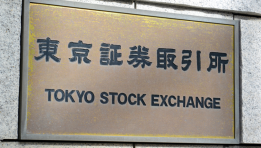
The Nikkei 225 (^N225) recorded a sharp single-day rebound, surging 4.03% (2,494.59 points) on July 31, 2026, to settle
- sagi habasov
- •
- 6 Min Read
- •
- ago 11 hours
SKN | Japan and the U.S. Reportedly Prepare Joint Yen Strategy as Currency Markets Face Rising Intervention Risk
The Japanese yen experienced a sharp rally after reports suggested that Japan and the United States could unveil a
- ago 11 hours
- •
- 6 Min Read

The Japanese yen experienced a sharp rally after reports suggested that Japan and the United States could unveil a
- orshu
- •
- 5 Min Read
- •
- ago 11 hours
SKN | Apple Suffers Worst Single-Day Stock Decline Since 2020 as Investors Reassess Growth Outlook
Apple experienced its largest single-day stock decline since 2020, with shares falling nearly 10% during the trading session, according
- ago 11 hours
- •
- 5 Min Read

Apple experienced its largest single-day stock decline since 2020, with shares falling nearly 10% during the trading session, according


