


- Lior mor
- •
- 7 Min Read
- •
- 1 month ago
Key Points
- The S&P 500’s latest advance reflects sustained institutional demand rather than speculative excess.
- Earnings visibility and stable liquidity conditions continue to support elevated valuations.
- Near-record levels increase sensitivity to macro data, making disciplined risk management essential.
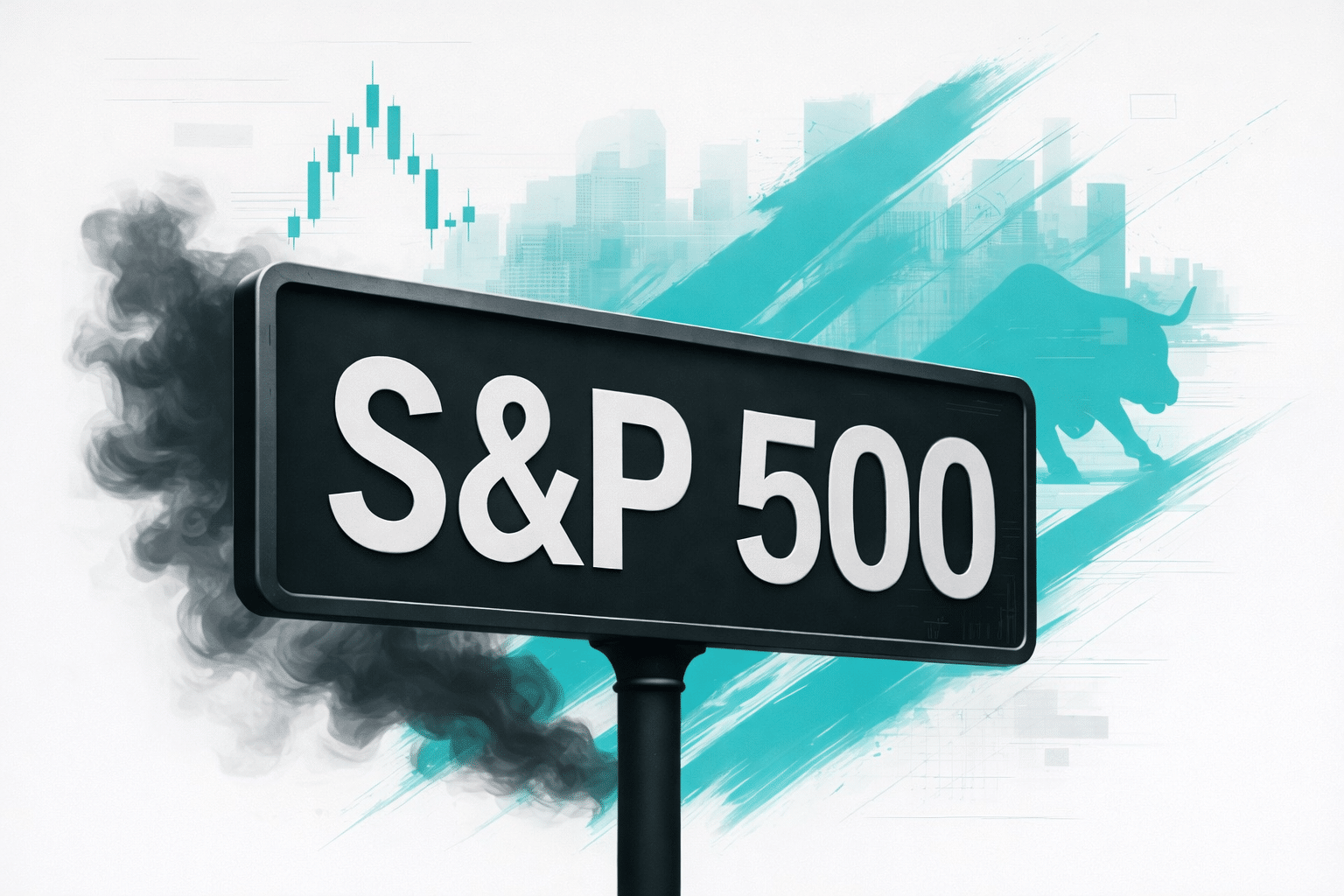
The U.S. equity market extended its upward momentum as the S&P 500 closed at 6,902.09, advancing 0.64% on the session and reinforcing the index’s position near historic highs. The move reflects a market that remains resilient in the face of tightening financial conditions rhetoric, elevated valuations, and lingering macro uncertainty. For investors in both the U.S. and Israel, the latest price action underscores a familiar but increasingly important question: is this rally still driven by fundamentals, or by a recalibration of risk tolerance at the start of 2026?
The latest advance was broad enough to signal continued institutional participation rather than a narrow, speculative surge. While intraday volatility persisted, the index held gains into the close, suggesting that buyers remain willing to absorb supply even at elevated levels. From a macro perspective, this behavior aligns with expectations that U.S. economic growth, while moderating, remains strong enough to support earnings visibility across large-cap equities.
Momentum Anchored by Earnings Visibility and Liquidity Dynamics
A key driver behind the S&P 500’s resilience has been improving confidence in forward earnings. Despite selective downward revisions in certain cyclical sectors, aggregate earnings expectations for 2026 have stabilized, reducing fears of an abrupt profit slowdown. Large-cap balance sheets remain strong, and free cash flow generation continues to underpin buybacks and dividend support, particularly in technology, communication services, and select industrial names.
Liquidity conditions, while no longer expanding aggressively, have not tightened to a degree that forces systematic deleveraging. This has allowed trend-following strategies and long-only allocators to maintain exposure, reinforcing upward momentum. For global investors, including Israeli institutions with U.S. equity allocations, this environment favors disciplined participation rather than defensive repositioning.
Valuation Stretch Meets Behavioral Discipline
At current levels, valuation is no longer a secondary concern. The S&P 500 is trading near the upper end of historical multiples, particularly when measured against long-term real interest rate assumptions. However, markets rarely reverse solely on valuation. Instead, price action suggests investors are balancing valuation risk against the opportunity cost of staying underinvested in a market that continues to grind higher.
Psychologically, this phase of the cycle often rewards patience and risk management rather than aggressive positioning. The steady nature of recent gains indicates confidence, but not euphoria. That distinction matters. It suggests the market is climbing with awareness of downside risks rather than ignoring them outright.
Technical Structure Signals Strength, Not Exhaustion
From a technical perspective, the S&P 500 remains firmly above key medium- and long-term support levels. Pullbacks over recent months have been shallow and well-bid, reinforcing the idea that dips are still viewed as opportunities rather than warnings. The index’s ability to recover quickly from short-term weakness reflects underlying demand from both domestic and international capital.
That said, the proximity to record highs increases sensitivity to macro catalysts, including inflation data, Federal Reserve communication, and geopolitical developments. Any shift in these variables could test sentiment quickly, even if the broader trend remains intact.
Looking ahead, investors should focus less on predicting a precise turning point and more on monitoring whether earnings momentum, liquidity conditions, and risk appetite remain aligned. A sustained break above current levels could invite further inflows, while failure to hold recent gains may trigger a period of consolidation rather than a sharp reversal.
Comparison, examination, and analysis between investment houses
Leave your details, and an expert from our team will get back to you as soon as possible
* This article, in whole or in part, does not contain any promise of investment returns, nor does it constitute professional advice to make investments in any particular field.
To read more about the full disclaimer, click here
- Lior mor
- •
- 7 Min Read
- •
- ago 1 month
SKN | Nasdaq 100 Retreats as Investors Lock in Gains Near Record Levels
The Nasdaq 100 edged lower in the latest session, retreating to around the 25,665 level after recently trading close to
- ago 1 month
- •
- 7 Min Read
The Nasdaq 100 edged lower in the latest session, retreating to around the 25,665 level after recently trading close to

- sagi habasov
- •
- 5 Min Read
- •
- ago 1 month
SKN | Intel Rallies Over 6% as Earnings Surprise Lifts Semiconductor Sentiment
Shares of Intel Corporation (INTC) jumped sharply in the latest session, climbing more than 6% to trade around $42.5, as
- ago 1 month
- •
- 5 Min Read

Shares of Intel Corporation (INTC) jumped sharply in the latest session, climbing more than 6% to trade around $42.5, as

- Ronny Mor
- •
- 4 Min Read
- •
- ago 1 month
SKN | Nasdaq 100 Advances Toward Record Territory as Big Tech Leadership Stays Intact
Nasdaq 100 closed higher on Tuesday, rising 0.94% to 25,639.71, as persistent strength in mega-cap technology stocks continued to anchor
- ago 1 month
- •
- 4 Min Read

Nasdaq 100 closed higher on Tuesday, rising 0.94% to 25,639.71, as persistent strength in mega-cap technology stocks continued to anchor
- Ronny Mor
- •
- 7 Min Read
- •
- ago 1 month
SKN | Is Baidu’s Surge Among the Most Active Stocks Signaling a Deeper Market Repricing?
The U.S. equity market opened the new year with selective intensity, and few names captured investor attention as forcefully as
- ago 1 month
- •
- 7 Min Read

The U.S. equity market opened the new year with selective intensity, and few names captured investor attention as forcefully as

