


- sagi habasov
- •
- 6 Min Read
- •
- 5 months ago
Key Points
- Gold and silver face short-term pressure from benchmark index reweighting despite strong fundamentals.
- Passive selling could amplify volatility due to thin early-year liquidity.
- Longer-term support from rate cuts, central-bank demand, and dollar weakness remains intact.
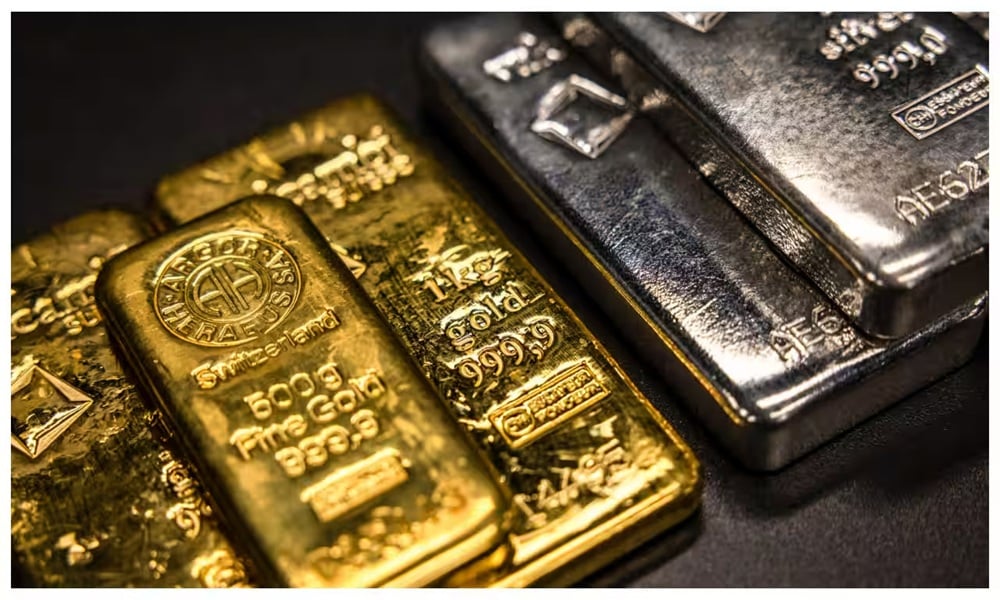
Gold and silver began the new year on a cautious footing after delivering their strongest annual performances since 1979, as investors turned their attention to an impending reweighting of a major commodity benchmark that could trigger sizeable near-term selling. While the longer-term macro backdrop remains broadly supportive for precious metals, the first weeks of 2026 may test market conviction as passive flows come into play.
Index Rebalancing Looms Over Precious Metals
At the center of near-term concerns is the upcoming reweighting of the Bloomberg Commodities Index, one of the most widely tracked gauges in global commodity markets. Silver futures currently represent about 9% of the index, but that allocation is set to fall to just under 4% for 2026. The adjustment implies that more than $5 billion worth of silver futures may need to be sold during the five-day roll period starting next week. Gold is also affected, with an estimated $6 billion in futures potentially heading for the exit.
Because these trades are driven by passive index tracking rather than discretionary views, they can weigh on prices regardless of fundamentals. Thin liquidity in early January — with major markets such as China and Japan still closed — raises the risk that price swings could be amplified.
Volatility Follows a Historic Rally
The potential selling comes after an extraordinary year for precious metals. Gold surged to multiple record highs in 2025, supported by sustained central-bank buying, easing monetary policy from the Federal Reserve, and a weaker U.S. dollar. Heightened geopolitical risk and trade uncertainty further reinforced gold’s role as a strategic hedge.
Silver outperformed even gold, benefiting not only from haven demand but also from its industrial exposure and concerns that U.S. trade policy under President Donald Trump could eventually extend tariffs to refined metals. By year-end, prices had moved into territory that many investors previously considered extreme, setting the stage for profit-taking and technical pullbacks.
Macro Tailwinds Still Favor Precious Metals
Despite the looming index-related pressure, the broader macro narrative remains constructive. Expectations for additional U.S. interest-rate cuts in 2026, combined with a softer dollar and continued fiscal uncertainty, are factors that historically support gold and silver. Central banks, particularly in emerging markets, are also expected to remain net buyers as they diversify reserves away from dollar-denominated assets.
Among major banks, optimism persists. Goldman Sachs recently reiterated a bullish medium-term outlook, citing the potential for gold prices to approach $4,900 per ounce under scenarios involving deeper rate cuts or renewed financial stress. Such forecasts suggest that any index-driven weakness could prove temporary rather than structural.
Shortdier Near-Term Pressure, Longer-Term Focus
As 2026 begins, precious metals appear caught between powerful long-term drivers and short-term technical headwinds. Index rebalancing may introduce volatility and price softness in the coming weeks, but strategic demand tied to monetary policy, geopolitics, and reserve diversification remains intact. For investors, the key question is whether near-term dislocations create opportunity — or signal the start of a broader consolidation after a historic run.
Comparison, examination, and analysis between investment houses
Leave your details, and an expert from our team will get back to you as soon as possible
* This article, in whole or in part, does not contain any promise of investment returns, nor does it constitute professional advice to make investments in any particular field.
To read more about the full disclaimer, click here
- omer bar
- •
- 8 Min Read
- •
- ago 5 hours
SKN | Can Oil Markets Sustain Momentum as Geopolitical Risk in the Strait of Hormuz Intensifies?
Global oil markets rebounded as geopolitical tensions escalated following reports of US strikes on targets linked to Iranian positions near
- ago 5 hours
- •
- 8 Min Read

Global oil markets rebounded as geopolitical tensions escalated following reports of US strikes on targets linked to Iranian positions near

- sagi habasov
- •
- 8 Min Read
- •
- ago 7 hours
SKN | Will Oil Prices Escalate Further After US Strike on Iranian Military Site Triggers Market Repricing?
Global oil markets rebounded after reports that US forces conducted strikes on an Iranian military site, reigniting concerns over geopolitical
- ago 7 hours
- •
- 8 Min Read

Global oil markets rebounded after reports that US forces conducted strikes on an Iranian military site, reigniting concerns over geopolitical

- Lior mor
- •
- 7 Min Read
- •
- ago 9 hours
SKN | Are Asian Equities Losing Momentum as Gulf Tensions Prolong Global Risk Aversion?
Asian equity markets paused their recent upward momentum as prolonged geopolitical tensions in the Gulf region weighed on investor sentiment
- ago 9 hours
- •
- 7 Min Read

Asian equity markets paused their recent upward momentum as prolonged geopolitical tensions in the Gulf region weighed on investor sentiment
- omer bar
- •
- 8 Min Read
- •
- ago 17 hours
SKN | Canada Redirects Aluminium Trade Toward Europe as Iran Conflict Drives Prices Higher
Global aluminium markets are experiencing renewed volatility as escalating geopolitical tensions involving Iran fuel concerns over supply disruptions, higher
- ago 17 hours
- •
- 8 Min Read

Global aluminium markets are experiencing renewed volatility as escalating geopolitical tensions involving Iran fuel concerns over supply disruptions, higher


