


- Ronny Mor
- •
- 7 Min Read
- •
- 2 months ago
Key Points
- Washington is only beginning to engage with AI bubble risks already debated in tech and financial markets.
- Lawmakers are increasingly focused on concentration risk and systemic spillovers rather than valuations alone.
- Policy tensions persist between deregulation to maintain U.S. competitiveness and concerns over economic and social fallout.
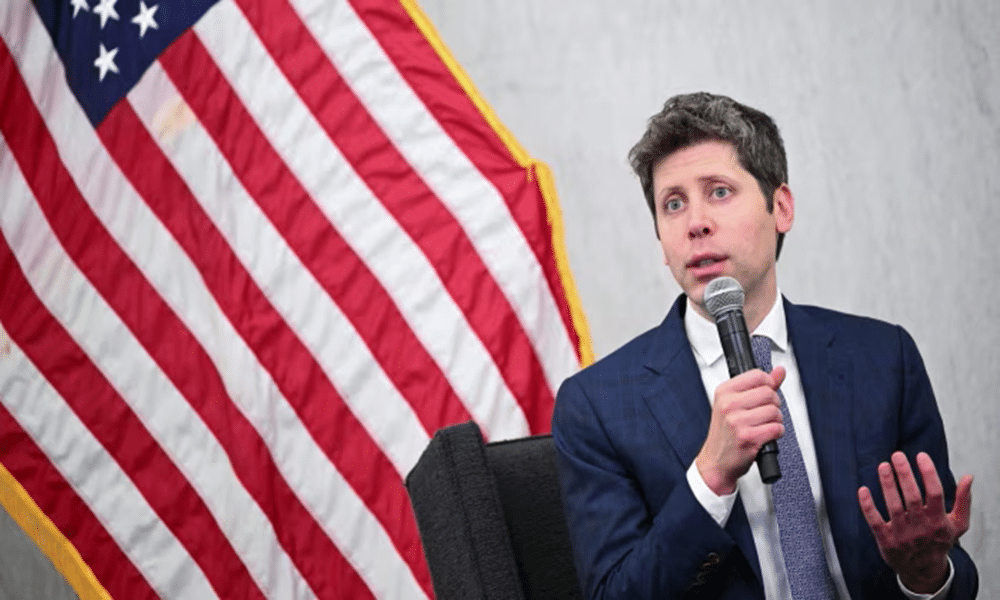
The question of whether artificial intelligence has entered bubble territory has dominated conversations in Silicon Valley and on Wall Street for much of the past year. Only now, however, is that debate gaining real traction in Washington, where lawmakers are beginning to grapple with the economic risks posed by massive capital flows into AI infrastructure, data centers, and speculative growth narratives tied to the technology.
The lag is striking. While investors and executives have spent months debating valuations and sustainability, policymakers are still forming their views—often cautiously—on whether the AI boom represents transformative innovation or a familiar cycle of overinvestment that could reverberate across the broader economy.
From Tech Anxiety to Political Awareness
The AI bubble discussion intensified last summer after OpenAI CEO Sam Altman warned that investor enthusiasm may have run ahead of reality. Comparisons to the late-1990s dot-com era soon followed, with critics pointing to circular spending patterns among major tech firms and the sheer scale of capital being deployed into AI compute capacity. Those concerns have since been echoed by market volatility in mega-cap technology stocks, reinforcing fears that expectations may be outrunning near-term profitability.
On Capitol Hill, responses have been notably restrained. Lawmakers representing technology-heavy districts, such as Rep. Ro Khanna, have openly admitted the uncertainty surrounding AI valuations. Even among senators closely watching the sector, there is acknowledgment that the industry itself lacks consensus on whether a bubble exists.
Concentration Risk and Economic Spillovers
Some policymakers are less focused on the label and more on systemic risk. Sen. Elizabeth Warren has warned that the concentration of economic activity in AI-related equities makes the broader economy more fragile. If valuations correct sharply, the fallout would likely extend beyond tech stocks into employment, pensions, and consumer confidence.
The sharpest rhetoric has come from Rep. Alexandria Ocasio-Cortez, who has described the current environment as potentially a “massive economic bubble” with echoes of the 2008 financial crisis. Her comments underscore a growing concern among progressives that unchecked AI investment could create moral hazard, particularly if losses are later socialized through government intervention.
Deregulation Push Meets Bubble Anxiety
The emerging debate is unfolding against a backdrop of pro-industry policy moves. President Donald Trump has largely downplayed bubble concerns while advancing an agenda aimed at limiting state-level AI regulation. Republicans such as Sen. Ted Cruz argue that regulatory restraint is necessary for the U.S. to maintain its competitive edge against China, even if economic uncertainty accompanies rapid technological change.
That stance has not gone unchallenged. A group of lawmakers led by Rep. Bill Foster has formally urged the Treasury Department to assess systemic risks tied to AI investment, signaling early efforts to treat the sector as a potential source of financial instability rather than a purely growth-driven success story.
Beyond Valuations: Social and Labor Implications
For others, the bubble question is secondary to AI’s impact on workers and consumers. Sen. Josh Hawley has argued that even a sustainable AI boom could still impose social costs through job displacement, data exploitation, and behavioral manipulation. This framing suggests that Washington’s eventual response may hinge less on market timing and more on political pressure tied to inequality and labor disruption.
Looking ahead, the AI bubble debate is likely to intensify as capital spending accelerates in 2026 and earnings expectations are tested. Whether Washington moves toward proactive oversight or remains focused on geopolitical competition will shape not only the trajectory of AI investment, but also how resilient the broader economy proves if the boom begins to crack.
Comparison, examination, and analysis between investment houses
Leave your details, and an expert from our team will get back to you as soon as possible
* This article, in whole or in part, does not contain any promise of investment returns, nor does it constitute professional advice to make investments in any particular field.
To read more about the full disclaimer, click here
- sagi habasov
- •
- 6 Min Read
- •
- ago 1 month
SKN | Intel’s Strategic Gamble: Why Some Investors Remain Deeply Skeptical
Intel’s stock continues to divide investors, but skepticism remains pronounced among those focused on execution risk and capital discipline.
- ago 1 month
- •
- 6 Min Read
Intel’s stock continues to divide investors, but skepticism remains pronounced among those focused on execution risk and capital discipline.

- Lior mor
- •
- 8 Min Read
- •
- ago 2 months
SKN | A ‘Backseat Fed’? Why White House Pressure Has Quietly United Central Bank Insiders
Calls for a more restrained, lower-profile Federal Reserve have gained traction as Washington recalibrates its approach to monetary authority under
- ago 2 months
- •
- 8 Min Read
Calls for a more restrained, lower-profile Federal Reserve have gained traction as Washington recalibrates its approach to monetary authority under
- sagi habasov
- •
- 7 Min Read
- •
- ago 3 months
SKN | Will Chile’s Markets Enter a New Pro-Business Cycle After Kast’s Decisive Election Win?
Chilean financial markets reacted positively after right-wing candidate José Antonio Kast won the presidency by a wide margin, delivering clarity
- ago 3 months
- •
- 7 Min Read

Chilean financial markets reacted positively after right-wing candidate José Antonio Kast won the presidency by a wide margin, delivering clarity
- sagi habasov
- •
- 7 Min Read
- •
- ago 3 months
SKN | Why Netflix’s Bid for Warner Bros. Marks a Defining — and Risky — Moment for Hollywood
Netflix’s proposed $82.6 billion acquisition of Warner Bros. has emerged as one of the most consequential and controversial media deals
- ago 3 months
- •
- 7 Min Read

Netflix’s proposed $82.6 billion acquisition of Warner Bros. has emerged as one of the most consequential and controversial media deals

