


- orshu
- •
- 6 Min Read
- •
- 3 hours ago
Key Points
- The United States has introduced new sanctions aimed at restricting Venezuela’s oil exports and financial flows.
- The measures are reshaping global energy supply dynamics at a time of heightened geopolitical sensitivity.
- Energy markets and investors are reassessing price risks, compliance exposure, and alternative supply routes into 2026.

The United States has rolled out a new round of sanctions targeting Venezuela’s oil sector, reinforcing its hardline stance toward Caracas while injecting fresh uncertainty into global energy markets. The move comes as oil prices remain sensitive to geopolitical disruptions, supply discipline from OPEC+, and slowing—but still resilient—global demand.
Sanctions Scope and Strategic Intent
The latest measures are designed to tighten restrictions on Venezuela’s ability to export crude, access international financial systems, and engage with foreign intermediaries. US officials framed the sanctions as a response to governance and electoral concerns, signaling that limited sanction relief granted earlier is now being partially reversed.
For Venezuela, oil remains the backbone of the economy, accounting for the majority of export revenue. Any renewed constraint on shipments or payment channels directly impacts state finances and the operational capacity of PDVSA. From Washington’s perspective, the sanctions aim to increase leverage without triggering immediate global supply shocks, a delicate balance given fragile energy markets.
Market Reaction and Oil Price Sensitivity
Oil markets responded cautiously rather than dramatically, reflecting expectations that Venezuelan barrels had already been trading at discounted and opaque levels. However, traders are increasingly pricing in tail risks related to enforcement intensity, shipping compliance, and the role of intermediaries in Asia and the Middle East.
For global equities, particularly energy stocks, the sanctions reinforce a supportive backdrop for prices by limiting incremental supply. Integrated oil majors, refiners reliant on heavy crude, and shipping firms are reassessing exposure, while volatility expectations have ticked higher. Israeli investors, closely watching global energy flows due to regional security considerations, are particularly sensitive to any shift that tightens supply or raises transportation costs.
Geopolitical and Macroeconomic Implications
Beyond oil prices, the sanctions highlight the growing intersection of energy policy and geopolitics. Venezuela’s isolation underscores how sanctions have become a structural feature of global trade rather than a temporary tool. For emerging markets, the message is clear: access to energy markets increasingly depends on political alignment and regulatory compliance.
At the macro level, higher energy uncertainty complicates central bank planning, especially if oil prices drift higher into 2026. For importing economies, persistent volatility could weigh on inflation trajectories, while exporters benefit from firmer pricing. Israel, as a regional energy producer and exporter, stands to gain indirectly from tighter global supply conditions, though heightened geopolitical risk remains a counterbalance.
Looking ahead, investors will closely monitor enforcement rigor, potential diplomatic backchannels, and whether alternative supply sources can offset Venezuelan constraints. The sanctions may not immediately remove barrels from the market, but they reinforce a longer-term trend toward fragmented energy trade. For markets, the key risk lies in escalation—where compliance actions or geopolitical spillovers transform a targeted policy move into a broader supply shock with lasting consequences for prices, volatility, and global growth.
Comparison, examination, and analysis between investment houses
Leave your details, and an expert from our team will get back to you as soon as possible
* This article, in whole or in part, does not contain any promise of investment returns, nor does it constitute professional advice to make investments in any particular field.
To read more about the full disclaimer, click here
- sagi habasov
- •
- 7 Min Read
- •
- ago 3 days
SKN | US Visa Ban on Former EU Digital Chief Sparks Call for Europe to Push Back
The transatlantic rift over technology regulation deepened this week after the United States imposed a visa ban on former European
- ago 3 days
- •
- 7 Min Read
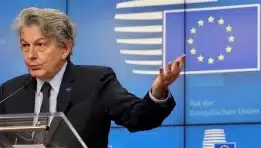
The transatlantic rift over technology regulation deepened this week after the United States imposed a visa ban on former European

- Ronny Mor
- •
- 7 Min Read
- •
- ago 2 weeks
SKN | EU Approves Over $105 Billion Ukraine Aid Package: What It Means for Europe’s Economy and Global Markets
The European Union has formally approved a more than $105 billion aid package for Ukraine covering the next two years,
- ago 2 weeks
- •
- 7 Min Read

The European Union has formally approved a more than $105 billion aid package for Ukraine covering the next two years,

- Lior mor
- •
- 7 Min Read
- •
- ago 2 weeks
SKN | Crypto’s Washington Honeymoon: Are 2025 Wins Setting the Stage for a 2026 Reality Check?
The US cryptocurrency industry is closing 2025 with a sense of vindication and momentum, buoyed by sweeping regulatory reversals and
- ago 2 weeks
- •
- 7 Min Read

The US cryptocurrency industry is closing 2025 with a sense of vindication and momentum, buoyed by sweeping regulatory reversals and
- sagi habasov
- •
- 7 Min Read
- •
- ago 2 weeks
SKN | Is a New US–EU Trade Clash Brewing as Washington Threatens Retaliation Over Digital Taxes
The transatlantic trade relationship has entered a more confrontational phase after the Trump administration warned it may retaliate against European
- ago 2 weeks
- •
- 7 Min Read

The transatlantic trade relationship has entered a more confrontational phase after the Trump administration warned it may retaliate against European

