


- Lior mor
- •
- 7 Min Read
- •
- 6 hours ago
Key Points
- Western governments are treating rare earth magnets as strategic infrastructure, not just industrial inputs.
- Demand growth across EVs, renewables, AI, and defense supports long-term investment despite near-term cost pressures.
- China’s dominance will be challenged incrementally, but meaningful diversification will require patience, capital, and policy stability.
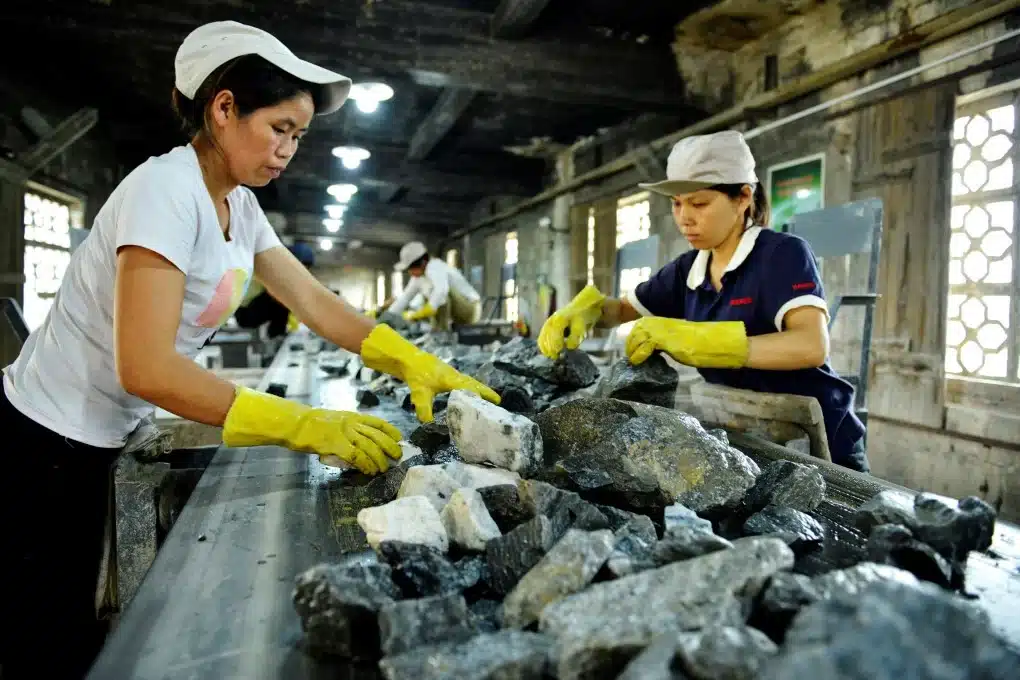
Western rare earth magnet makers are moving into the global spotlight as supply-chain security becomes a defining economic and geopolitical issue. A year marked by export restrictions, tariff threats, and escalating U.S.-China rivalry has forced policymakers and investors alike to reassess long-standing dependencies on China for critical minerals. In an environment where industrial resilience is increasingly equated with national security, magnets — a niche but indispensable component — have become strategically vital.
Strategic Minerals Move to the Center of Industrial Policy
Rare earth magnets sit at the heart of modern economies, enabling electric vehicles, wind turbines, smartphones, medical devices, robotics, and military systems. China’s overwhelming dominance — accounting for roughly 60% of rare earth mining and more than 90% of magnet manufacturing — has long been tolerated in the name of cost efficiency. That tolerance is eroding as governments confront the risks of concentrated supply in an era of geopolitical fragmentation.
The U.S., European Union, and Australia are now deploying industrial policy with renewed urgency. Subsidies, direct government loans, and regulatory support are being directed toward building “mine-to-magnet” ecosystems designed to reduce strategic exposure. This marks a departure from decades of market-led sourcing toward a more interventionist model aimed at long-term resilience rather than short-term cost optimization.
Europe’s Manufacturing Push Takes Shape
One of the most visible symbols of this shift is the new rare earth magnet facility operated by Neo Performance Materials in Estonia. Positioned close to the EU’s eastern border, the plant has been framed by European officials as a cornerstone of industrial sovereignty. The facility is expected to produce roughly 2,000 metric tons of magnets initially, with plans to scale toward 5,000 tons over time.
Neo’s management argues that demand growth is structural rather than cyclical, driven by physical efficiency requirements across multiple industries. Global magnet demand is projected to more than double over the next decade, rising from about 250,000 tons to roughly 600,000 tons. For Europe, the strategic calculus is clear: even partial domestic capacity offers insurance against future disruptions.
The U.S. Bets on Security-Driven Scale
In the United States, defense considerations are accelerating momentum. Federal funding is flowing directly to magnet producers to ensure supply for military and aerospace applications. North Carolina-based Vulcan Elements, for example, recently secured substantial backing from the Department of Defense to expand domestic production.
The logic mirrors earlier investments in semiconductors and battery manufacturing. While higher costs may pressure near-term margins, policymakers view magnet supply as a strategic asset rather than a commodity input. Investors, meanwhile, are increasingly distinguishing between scalable, vertically integrated players and those overly exposed to upstream bottlenecks.
Breaking China’s Orbit Remains a Long Game
Despite the momentum, skepticism persists. Analysts warn that replacing China’s deeply entrenched ecosystem — spanning mining, refining, and manufacturing — will take years and sustained political commitment. Innovation, process efficiency, and customer alignment will be critical, particularly as Western producers attempt to compete without China’s cost advantages.
For markets, rare earth magnets are emerging as a barometer of how far industrial policy can reshape global supply chains. Success would signal a durable shift toward strategic redundancy; failure would reinforce the limits of decoupling in a deeply interconnected world.
Comparison, examination, and analysis between investment houses
Leave your details, and an expert from our team will get back to you as soon as possible
* This article, in whole or in part, does not contain any promise of investment returns, nor does it constitute professional advice to make investments in any particular field.
To read more about the full disclaimer, click here
- Ronny Mor
- •
- 7 Min Read
- •
- ago 1 hour
SKN | Is Gold Entering a New Monetary Regime as Prices Push Toward $4,500?
Gold prices surged to new record levels in late December, pushing toward the $4,500 per ounce mark as expectations for
- ago 1 hour
- •
- 7 Min Read

Gold prices surged to new record levels in late December, pushing toward the $4,500 per ounce mark as expectations for

- Lior mor
- •
- 6 Min Read
- •
- ago 8 hours
SKN | Loaded Supertanker Returns to Venezuelan Waters as US Interceptions Raise Oil Market Tensions
A supertanker carrying Venezuelan crude has reversed course and returned to Venezuelan waters after heightened scrutiny and interceptions by
- ago 8 hours
- •
- 6 Min Read

A supertanker carrying Venezuelan crude has reversed course and returned to Venezuelan waters after heightened scrutiny and interceptions by
- Lior mor
- •
- 7 Min Read
- •
- ago 12 hours
SKN | Is Copper Signaling a New Structural Supecrycle as Prices Hit a Five-Month High?
Copper extended its powerful rally in late December, rising to around $5.5 per pound, its highest level in five months
- ago 12 hours
- •
- 7 Min Read

Copper extended its powerful rally in late December, rising to around $5.5 per pound, its highest level in five months
- Lior mor
- •
- 7 Min Read
- •
- ago 21 hours
SKN | Is Gold’s Record Run Signaling a Structural Shift in Global Risk Appetite?
Gold prices climbed to fresh record territory on Tuesday, extending a historic rally that has now delivered its 50th record-breaking
- ago 21 hours
- •
- 7 Min Read

Gold prices climbed to fresh record territory on Tuesday, extending a historic rally that has now delivered its 50th record-breaking

