


- Ronny Mor
- •
- 7 Min Read
- •
- 3 months ago
Key Points
- Trump’s order signals the most meaningful federal shift on marijuana policy in decades.
- Reclassification could ease research, financing, and institutional barriers without full legalization.
- Regulatory complexity remains, keeping execution and policy risk firmly in focus.
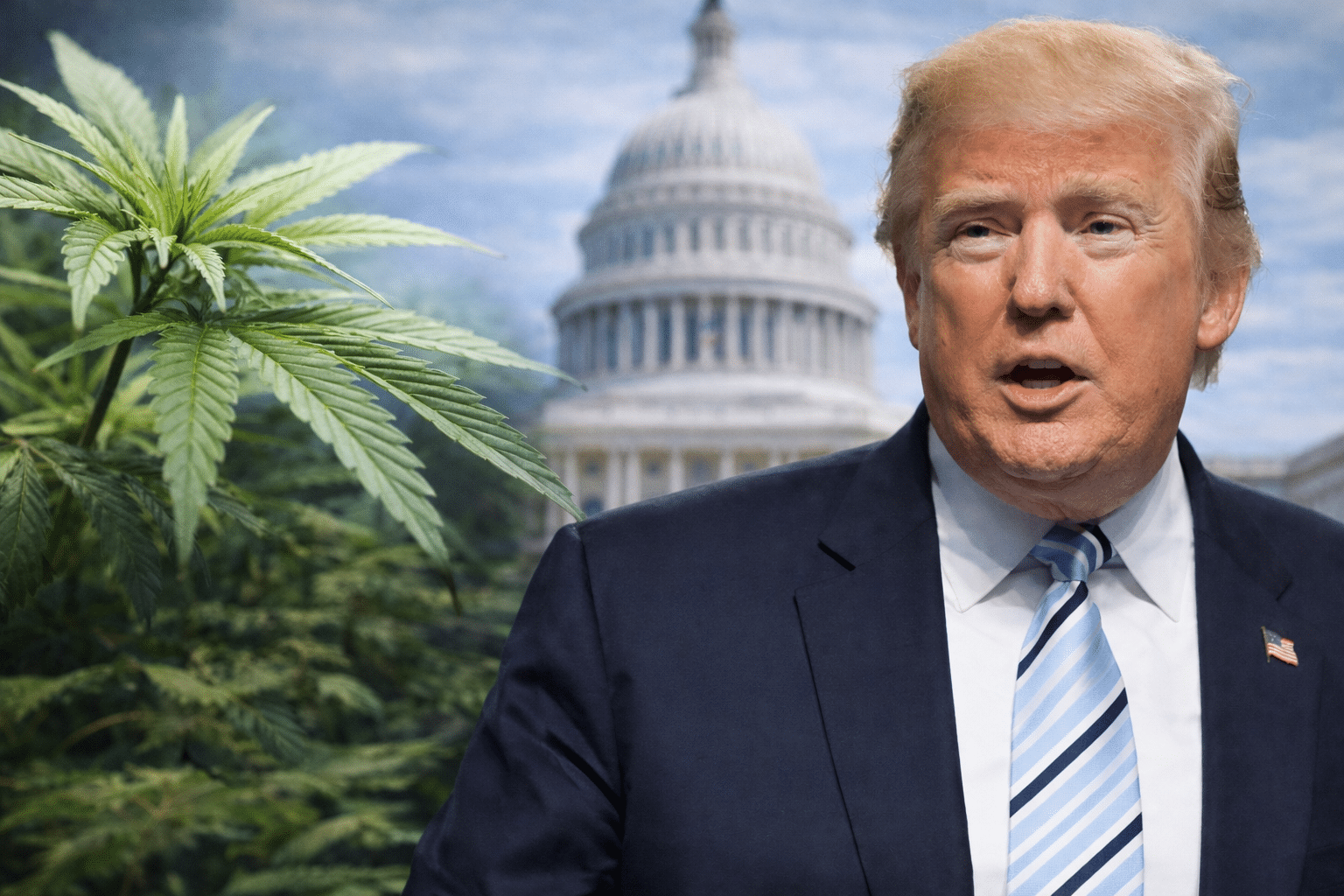
U.S. cannabis markets moved back into focus after President Donald Trump announced plans to sign an executive order recommending the easing of federal marijuana regulations. The directive, which would push the attorney general to advance reclassification under the Controlled Substances Act, marks one of the most consequential federal policy signals on cannabis in decades. While the move stops short of legalization, it reflects a broader recalibration of risk, economics, and political incentives surrounding a substance long treated as a hardline law-enforcement issue.
A Regulatory Reclassification With Broad Market Implications
At the core of the announcement is a push to move marijuana from Schedule I — alongside heroin and ecstasy — to Schedule III, a category that includes drugs such as ketamine and certain anabolic steroids. This shift would formally recognize medical use and lower perceived abuse risk, even as federal controls remain in place. For the cannabis industry, the implications are substantial. Schedule III status could unlock new avenues for clinical research, expand insurance-related discussions, and significantly reduce the legal friction that has constrained corporate strategy for years.
From a market perspective, the announcement immediately lifted cannabis-related equities, reflecting pent-up investor interest. The sector has long suffered from restricted access to traditional banking and institutional capital, forcing companies into high-cost financing structures. Any regulatory signal that reduces legal ambiguity tends to compress risk premiums quickly, even if full reform remains distant.
Banking, Capital Access, and Industry Psychology
Perhaps the most transformative effect of reclassification would be psychological rather than immediate. Cannabis operators have operated under a persistent cloud of federal illegality, discouraging major lenders, custodians, and institutional investors from participation. While Trump’s order does not directly legalize marijuana or mandate banking reform, it strengthens the argument that cannabis is transitioning into a regulated medical and consumer product rather than a prohibited substance.
This shift matters for balance sheets. Lower financing costs, expanded credit availability, and improved merger and acquisition flexibility could gradually follow. For an industry that remains fragmented and capital-intensive, incremental regulatory clarity may prove as powerful as sweeping legislative change.
Politics, Public Opinion, and Policy Contradictions
Trump’s stance underscores how cannabis policy has evolved beyond traditional partisan boundaries. Public opinion has steadily moved toward legalization over the past three decades, with a majority of Americans now supporting broad reform. The decision also reflects pragmatic considerations: millions of users, billions in state-level tax revenues, and a rapidly maturing global cannabis market.
Yet contradictions remain. Marijuana would still be illegal at the federal level, subject to a patchwork of state laws that complicate interstate commerce, taxation, and compliance. Enforcement authority would not disappear, and regulatory uncertainty would persist for operators navigating overlapping jurisdictions. The Drug Enforcement Administration still retains final authority on reclassification, adding another layer of unpredictability.
What Comes Next for Markets and Policymakers
Attention now shifts to the DEA’s review process and how quickly it moves. Investors will also monitor whether related reforms — particularly around banking access and tax treatment — gain momentum in Congress. For global cannabis players, the U.S. signal carries symbolic weight, potentially accelerating regulatory debates in other jurisdictions.
In the near term, volatility is likely as optimism collides with legal reality. Over the longer horizon, however, the direction of travel appears clearer: cannabis is being pulled steadily into the mainstream regulatory framework, even if the final destination remains contested.
Comparison, examination, and analysis between investment houses
Leave your details, and an expert from our team will get back to you as soon as possible
* This article, in whole or in part, does not contain any promise of investment returns, nor does it constitute professional advice to make investments in any particular field.
To read more about the full disclaimer, click here
- orshu
- •
- 7 Min Read
- •
- ago 45 minutes
SKN | Israel Market Close – March 12, 2026: Tel Aviv Stocks Slide Sharply as Broad Selloff Hits Mid-Caps and Value Shares
Israeli markets closed significantly lower on March 12, 2026, as widespread selling pressure pushed most major indices into negative territory.
- ago 45 minutes
- •
- 7 Min Read

Israeli markets closed significantly lower on March 12, 2026, as widespread selling pressure pushed most major indices into negative territory.
- orshu
- •
- 7 Min Read
- •
- ago 9 hours
SKN | Tel Aviv Stock Market Slips as Broad Declines Weigh on Israeli Equities
The Tel Aviv Stock Exchange opened the session with broad-based declines across most major indices, signaling cautious sentiment among investors
- ago 9 hours
- •
- 7 Min Read

The Tel Aviv Stock Exchange opened the session with broad-based declines across most major indices, signaling cautious sentiment among investors
- orshu
- •
- 8 Min Read
- •
- ago 14 hours
SKN | Global Markets Wrap: March 12, 2026 Performance Highlights and What to Watch on March 13 – Tel Aviv Stocks Slide Amid Global Volatility
Global financial markets experienced a broadly negative session on March 12, 2026, with equities under pressure across the Americas, Europe,
- ago 14 hours
- •
- 8 Min Read

Global financial markets experienced a broadly negative session on March 12, 2026, with equities under pressure across the Americas, Europe,

- Lior mor
- •
- 8 Min Read
- •
- ago 16 hours
SKN | Asian Markets Slide in Friday Morning Trade as Regional Indices Face Broad Selling Pressure
Asian equity markets are trading mostly lower on Friday morning, March 13, as investors across the region adopt a cautious
- ago 16 hours
- •
- 8 Min Read

Asian equity markets are trading mostly lower on Friday morning, March 13, as investors across the region adopt a cautious

