




- Ronny Mor
- •
- 6 Min Read
- •
- 9 months ago


Key Points
- Mark Carney’s recent shift toward a more pragmatic stance on fossil fuels has surprised climate experts and parts of the business community.
- The pivot reflects growing tension between energy security, inflation control, and decarbonization goals in a fragile global economy.
- Investors are reassessing transition assumptions as policy signals around climate finance and energy investment become less linear.

Mark Carney, long viewed as a leading advocate for climate-aligned finance, is facing scrutiny after comments and positions that appear to soften his stance on fossil fuel investment during the energy transition. The shift comes at a moment when governments and markets are grappling with the competing demands of energy security, price stability, and net-zero commitments, forcing a reassessment of how quickly capital can realistically move away from hydrocarbons.
From Climate Champion to Transition Pragmatist
As former governor of both the Bank of England and the Bank of Canada, Carney built a reputation as a central figure in linking climate risk to financial stability. His leadership roles at the Financial Stability Board and as a UN climate finance envoy positioned him at the forefront of efforts to steer capital toward low-carbon assets. Recent remarks acknowledging the need for continued fossil fuel investment during the transition, however, have unsettled climate advocates who fear backsliding on decarbonization.
Carney’s argument centers on realism: global energy systems remain heavily dependent on oil and gas, and underinvestment risks supply shocks, higher inflation, and geopolitical instability. While he has not abandoned net-zero targets, critics argue that the shift in emphasis blurs the clarity of climate signals that investors and policymakers have relied on.
Market Signals and Business Community Reaction
For business leaders and investors, the pivot has landed amid already mixed signals from governments. Energy companies have pointed to years of constrained capital spending, while renewable developers warn that policy inconsistency could slow clean-energy deployment. Carney’s comments have been interpreted by some market participants as tacit validation of a “both-and” strategy, where fossil fuels and renewables coexist longer than previously expected.
In capital markets, this ambiguity matters. Transition strategies embedded in valuations, credit analysis, and ESG frameworks depend on credible policy trajectories. A perceived softening from influential figures risks widening the gap between stated climate goals and actual investment flows, complicating risk assessment for long-term assets.
Implications for Global and Israeli Investors
The debate carries implications beyond Europe and North America, including for Israeli institutional investors with exposure to global energy, infrastructure, and financial stocks. A slower or less predictable transition could support near-term cash flows in traditional energy sectors while increasing long-term regulatory and stranded-asset risk. At the same time, climate-focused investments may face more uneven returns if policy momentum falters.
Looking ahead, markets will watch how Carney reconciles transition pragmatism with climate commitments in formal policy frameworks and advisory roles. Key risks include diluted climate credibility and delayed capital reallocation, while opportunities may emerge in transitional technologies such as carbon capture, grid resilience, and energy efficiency. The central question is whether this recalibration represents a temporary adjustment to economic reality—or a more durable shift in how the energy transition is financed.
Comparison, examination, and analysis between investment houses
Leave your details, and an expert from our team will get back to you as soon as possible
* This article, in whole or in part, does not contain any promise of investment returns, nor does it constitute professional advice to make investments in any particular field.
To read more about the full disclaimer, click here
- orshu
- •
- 7 Min Read
- •
- ago 3 hours
SKN | Global Markets Wrap: September 9, 2026 – U.S. and European Markets Decline as Asia Trades Mixed While Tel Aviv Remains Under Pressure; Outlook for September 10
Global markets ended September 9, 2026, with declines across the major U.S. and European equity benchmarks, while Asian markets delivered
- ago 3 hours
- •
- 7 Min Read
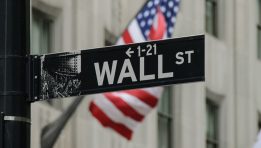
Global markets ended September 9, 2026, with declines across the major U.S. and European equity benchmarks, while Asian markets delivered

- sagi habasov
- •
- 6 Min Read
- •
- ago 4 hours
SKN | ECB Set to Raise Rates as Iran War Revives Eurozone Inflation Fears
The European Central Bank is expected to raise interest rates again as the war between the US and Iran pushes
- ago 4 hours
- •
- 6 Min Read
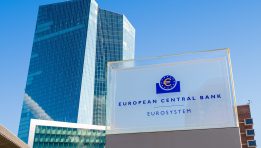
The European Central Bank is expected to raise interest rates again as the war between the US and Iran pushes

- Lior mor
- •
- 8 Min Read
- •
- ago 6 hours
SKN | Asian Markets Decline on September 10 as Australia, Japan and South Korea Lead Losses
Asian equity markets traded broadly lower during Thursday morning’s session on September 10, with declines extending across Australia, Japan, South
- ago 6 hours
- •
- 8 Min Read

Asian equity markets traded broadly lower during Thursday morning’s session on September 10, with declines extending across Australia, Japan, South

- omer bar
- •
- 6 Min Read
- •
- ago 8 hours
SKN | U.S. 10-Year Treasury Yield Hits Highest Level Since 2023 as Rate and Inflation Risks Intensify
The U.S. 10-year Treasury yield climbed to its highest level since 2023 on September 9 as investors reassessed the
- ago 8 hours
- •
- 6 Min Read

The U.S. 10-year Treasury yield climbed to its highest level since 2023 on September 9 as investors reassessed the
