


- Ronny Mor
- •
- 8 Min Read
- •
- 3 months ago
Key Points
- Treasury Secretary Scott Bessent said China will make “substantial” purchases of U.S. soybeans, signaling a thaw in trade relations after months of strain.
- The pledge follows high-level talks between Bessent and Chinese Vice Premier He Lifeng in Malaysia, just days before the Trump–Xi leaders’ meeting.
- Renewed Chinese buying could stabilize U.S. farm incomes but may have limited short-term market impact given China’s current stockpiles and diversification strategy.
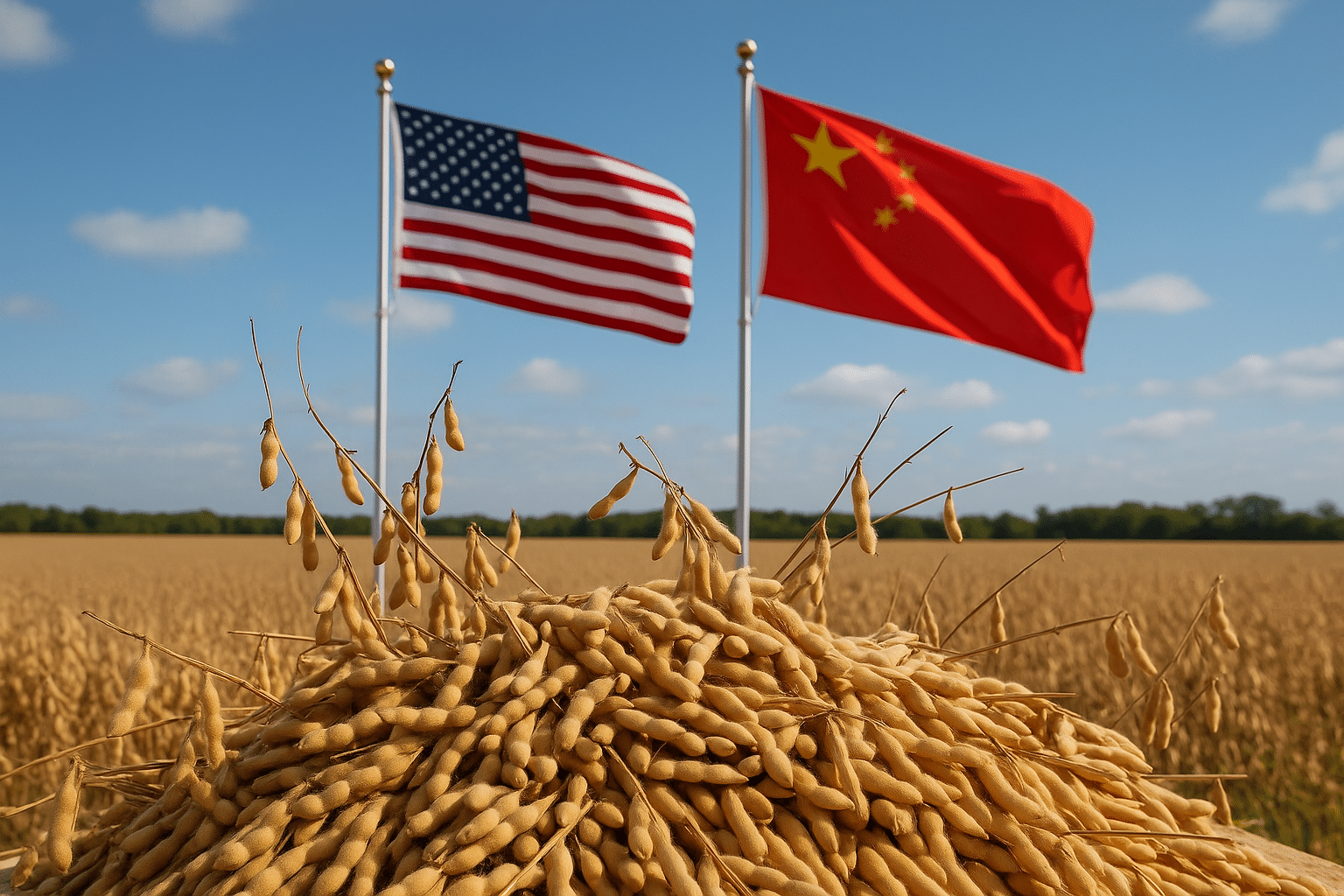
Diplomatic and Economic Signals Align
Trade diplomacy between the United States and China is showing early signs of recovery, as both governments appear eager to stabilize relations ahead of a potential summit between Presidents Donald Trump and Xi Jinping. U.S. Treasury Secretary Scott Bessent said Sunday that China plans to make “substantial” purchases of U.S. soybeans, marking one of the most tangible signs of goodwill in months of volatile economic dialogue.
The remarks came after two days of intensive discussions in Kuala Lumpur, Malaysia, where Bessent met with Chinese Vice Premier He Lifeng and other senior officials. According to a statement from China’s Ministry of Commerce, the meetings achieved an “initial consensus” on several issues, including agriculture and market access.
For Washington, the announcement offers a political and economic boost. Soybean exports are a cornerstone of the U.S. agricultural economy, and China — historically the largest buyer — has leveraged its demand as a strategic tool in trade negotiations. After an extended freeze in purchases, any resumption of large-scale buying could ease financial pressure on U.S. farmers, many of whom have faced declining incomes and shrinking export markets since tariffs and sanctions began to weigh on bilateral trade.
Relief for U.S. Farmers — But with Limits
While the tone shift is notable, analysts caution that the immediate market impact may be muted. China’s crushers and state buyers have already secured sufficient soybean supply through early 2026, primarily from Brazil and Argentina, leaving limited space for additional U.S. imports this year.
Still, U.S. Trade Representative Jamieson Greer emphasized that “China has not covered all its soybean needs for December and January,” noting that American shipments remain essential to bridge near-term supply gaps. His comments underscore the tactical importance of agriculture in restoring trade cooperation, as both sides seek concessions without escalating broader economic disputes.
Caleb Ragland, president of the American Soybean Association, welcomed Bessent’s statement as a “positive signal” for farmers but urged negotiators to translate commitments into contracts. “We’re encouraged that soybeans are back at the center of talks,” Ragland said, expressing hope that the Trump–Xi summit will deliver a durable trade framework that secures market access for U.S. growers.
However, renewed U.S. soybean imports could pressure soymeal prices in China, where margins for domestic processors remain razor thin. The influx of lower-cost U.S. product may deepen losses for crushers already grappling with high energy and feedstock costs, complicating Beijing’s internal balancing act between food security and industrial profitability.
A Pragmatic Partnership, Not Dependence
Strategically, Beijing’s gesture reflects pragmatism rather than reliance. China has learned from past trade disruptions that heavy dependence on U.S. agricultural goods carries geopolitical risk. Since the height of the trade war, it has diversified imports toward Brazilian suppliers, boosted local soybean production, and expanded strategic grain reserves.
Even as it reopens the door to U.S. purchases, China is expected to maintain this multi-sourcing strategy, ensuring that American soybeans remain a supplement, not a necessity. For Washington, the challenge lies in turning renewed buying into a sustained export channel, one that complements rather than competes with Beijing’s self-sufficiency goals.
The coming week’s Trump–Xi meeting will likely determine whether these agricultural overtures mature into a broader trade détente. For both nations — and for global markets — the outcome could mark either the start of a gradual realignment or yet another temporary pause in a long and unpredictable economic rivalry.
Comparison, examination, and analysis between investment houses
Leave your details, and an expert from our team will get back to you as soon as possible
* This article, in whole or in part, does not contain any promise of investment returns, nor does it constitute professional advice to make investments in any particular field.
To read more about the full disclaimer, click here
- Lior mor
- •
- 6 Min Read
- •
- ago 1 day
SKN | Is Dutch Inflation Finally Under Control After Hitting a Two-Year Low?
The Netherlands has delivered one of the clearest signs yet that Europe’s inflation wave may be losing momentum. Preliminary data
- ago 1 day
- •
- 6 Min Read

The Netherlands has delivered one of the clearest signs yet that Europe’s inflation wave may be losing momentum. Preliminary data

- sagi habasov
- •
- 6 Min Read
- •
- ago 2 days
SKN | Why Is Australia Hiking Rates Again After Three Cuts — and Is More Pain Ahead?
Australia’s monetary policy took a sharp and unexpected turn as the Reserve Bank of Australia lifted its benchmark cash rate
- ago 2 days
- •
- 6 Min Read

Australia’s monetary policy took a sharp and unexpected turn as the Reserve Bank of Australia lifted its benchmark cash rate

- Ronny Mor
- •
- 7 Min Read
- •
- ago 2 days
SKN | Minimum Wages in 2026: Which European Countries Really Pay the Most?
Minimum wages remain a central economic and political issue across Europe in 2026, as rising living costs continue to test
- ago 2 days
- •
- 7 Min Read

Minimum wages remain a central economic and political issue across Europe in 2026, as rising living costs continue to test
- Lior mor
- •
- 7 Min Read
- •
- ago 6 days
SKN | Is Taiwan’s AI-Fueled Boom Sustainable After Its Fastest Growth in 15 Years?
Taiwan’s economy delivered a standout performance in 2025, expanding by 8.6% year-on-year, the fastest pace in 15 years and well
- ago 6 days
- •
- 7 Min Read

Taiwan’s economy delivered a standout performance in 2025, expanding by 8.6% year-on-year, the fastest pace in 15 years and well

