


- orshu
- •
- 9 Min Read
- •
- 8 months ago

European markets opened the week with sharp declines as rising tensions in the Middle East and concerns over their consequences, alongside anticipation for the upcoming Fed meeting, stirred deep uncertainty among investors. The continent’s indices dropped significantly: Germany’s DAX fell about 1% to around 23,400 points, France’s CAC 40 lost 0.9%, and the U.K.’s FTSE 100 weakened by 0.5% to roughly 8,876 points. These declines reflect not just numerical shifts but a clear “risk-off” mood, with investors fleeing cyclical stocks like banks and consumer goods toward safer sectors — led by sharply rising energy stocks, and safe-haven assets such as the dollar, gold, and bonds.
Middle East Tensions: A Flashback of Uncertainty
Tensions between Israel and Iran exploded anew over the past weekend, with reports of a broad Israeli strike on Iranian nuclear facilities. Iran’s retaliatory missile attacks increased concerns this could escalate into a wider regional and global crisis. Former U.S. President Trump, attending the G7 summit, abruptly cut his participation and ordered American citizens to leave Tehran — a move that added to global apprehension.
Oil prices surged in response: Brent crude rose more than 7% on Friday, touching $74.34 per barrel, while U.S. WTI climbed to $72.82. Although prices have since eased slightly, they remain relatively high, weighing on Europe’s inflation forecasts and adding pressure on industrial companies’ profit margins. Additionally, Renault’s shares plunged 8% — their steepest drop since February 2022 — following the sudden resignation of CEO Luca de Meo, adding another layer of uncertainty to the already regulation-pressured European auto sector.
The Fed and Central Banks: Will We Get a Policy Signal?
This week’s Federal Reserve policy meeting started with clear expectations that interest rates will remain between 4.25% and 4.50%. However, investors are closely watching the overall tone and the possibility of hints toward a policy shift later this year. Any signal of rate cuts or even a softening of rhetoric could send markets into sharp volatility — not only in equities but also in forex and bonds.
Meanwhile, the Bank of England, Swiss National Bank, and Norway’s central bank are also expected to announce decisions in the coming days. The Bank of Japan kept rates at zero but indicated that bond purchases will be reduced in 2026 — signaling a cautious approach considering Asia’s fragile economic recovery.
FX and Bonds: Capital Flows Don’t Lie
Currency markets reflect a clear shift toward safe assets. The U.S. Dollar Index (DXY) strengthened to 105.2, the euro fell to $1.066, and the British pound weakened to $1.262. The Israeli shekel showed volatility against the dollar amid expectations of Bank of Israel intervention and concerns over further escalation in the regional conflict.
In bond markets, investors fled to safety: Germany’s 10-year yield dropped to 2.28%, France’s yield fell to 2.96%. In Italy, the yield spread over Germany widened to 156 basis points — levels signaling growing stress in European credit markets.
Technology Sector: The Quiet Casualty
Technology stocks also suffered. ASML declined 2.2% amid concerns over slowing demand for semiconductor equipment, and SAP weakened by about 1.5%. The EuroStoxx Technology index lost 1.4% as investors shifted toward less volatile sectors amid geopolitical uncertainty.
Insights from the Front Lines: What Fund Managers Think
According to a recent Bank of America survey among institutional fund managers, only 29% expect European growth this year, and 34% believe the indices will continue to rise. However, 68% identified geopolitical risks — especially Trump’s trade policies and Middle East tensions — as the primary risk factors. These data align with increased flows into gold, government bonds, and dollars — indicating a conflict between medium-term optimism and concrete short-term fear.
The Chinese Risk: The Elephant in the Room
Beyond security tensions, China is adding pressure as well. April’s exports dropped 6.8% year-on-year, and local consumption data fell short of expectations. Since Europe relies on exports to China in automotive, pharmaceuticals, and industrial equipment sectors, this is another negative signal, raising the likelihood of a slowdown in real economic activity in the coming months.
Looking Ahead: High Volatility and Tough Decisions
In summary, European markets now stand at a sensitive crossroads, with multiple forces acting simultaneously: a diplomatic confrontation with Iran, Fed uncertainty, tensions in China, and a local economic slowdown. Each factor could push markets sharply up or down. Therefore, investors are required to combine caution with thorough trend analysis — avoiding panic but also not betting on false stability.
In such situations, a solid, data-backed approach may provide an edge — especially when focusing on protective assets like commodities, safe currencies, or short-term bond ETFs. As the week progresses and decisions from the Fed and Bank of England arrive, alongside clarity on the geopolitical situation, clearer market directions may emerge — meanwhile, vigilance remains high.
Comparison, examination, and analysis between investment houses
Leave your details, and an expert from our team will get back to you as soon as possible
* This article, in whole or in part, does not contain any promise of investment returns, nor does it constitute professional advice to make investments in any particular field.
To read more about the full disclaimer, click here
- orshu
- •
- 5 Min Read
- •
- ago 2 hours
SKN | European Markets Surge as Broad-Based Rally Lifts Major Indices
European markets delivered a powerful rally on Thursday, February 26, 2026, with major indices across the region advancing sharply. The
- ago 2 hours
- •
- 5 Min Read
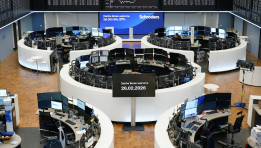
European markets delivered a powerful rally on Thursday, February 26, 2026, with major indices across the region advancing sharply. The

- omer bar
- •
- 6 Min Read
- •
- ago 3 hours
SKN | Asian Markets Rally After Nvidia Beat: Is the AI Boom Back in Full Force?
Asian equities mostly advanced Thursday after Nvidia delivered stronger-than-expected earnings, helping calm investor anxiety over the sustainability of artificial intelligence-driven
- ago 3 hours
- •
- 6 Min Read

Asian equities mostly advanced Thursday after Nvidia delivered stronger-than-expected earnings, helping calm investor anxiety over the sustainability of artificial intelligence-driven
- omer bar
- •
- 6 Min Read
- •
- ago 7 hours
SKN | Nvidia CEO Says Pentagon–Anthropic Rift Is ‘Not the End of the World’
Nvidia Chief Executive Jensen Huang sought to ease investor and industry concerns over reported tensions between the U.S. Department of
- ago 7 hours
- •
- 6 Min Read

Nvidia Chief Executive Jensen Huang sought to ease investor and industry concerns over reported tensions between the U.S. Department of

- Lior mor
- •
- 6 Min Read
- •
- ago 7 hours
SKN | Baidu’s $11 Billion Selloff Highlights Challenges in Meeting AI Expectations
Baidu Inc.’s stock has experienced a sharp decline, with shares retreating from January highs as investors reassess the company’s ability
- ago 7 hours
- •
- 6 Min Read
Baidu Inc.’s stock has experienced a sharp decline, with shares retreating from January highs as investors reassess the company’s ability

