




- sagi habasov
- •
- 7 Min Read
- •
- 17 seconds ago


Key Points
- Massive corporate investment in semiconductors and AI infrastructure is supporting U.S. fixed investment but simultaneously increasing imports of Asian-made technology components.
- The latest GDP data shows a sharp contrast between strong investment growth and a negative contribution from net exports.
- The divergence raises questions about how much of the AI spending boom is translating into domestic economic activity.
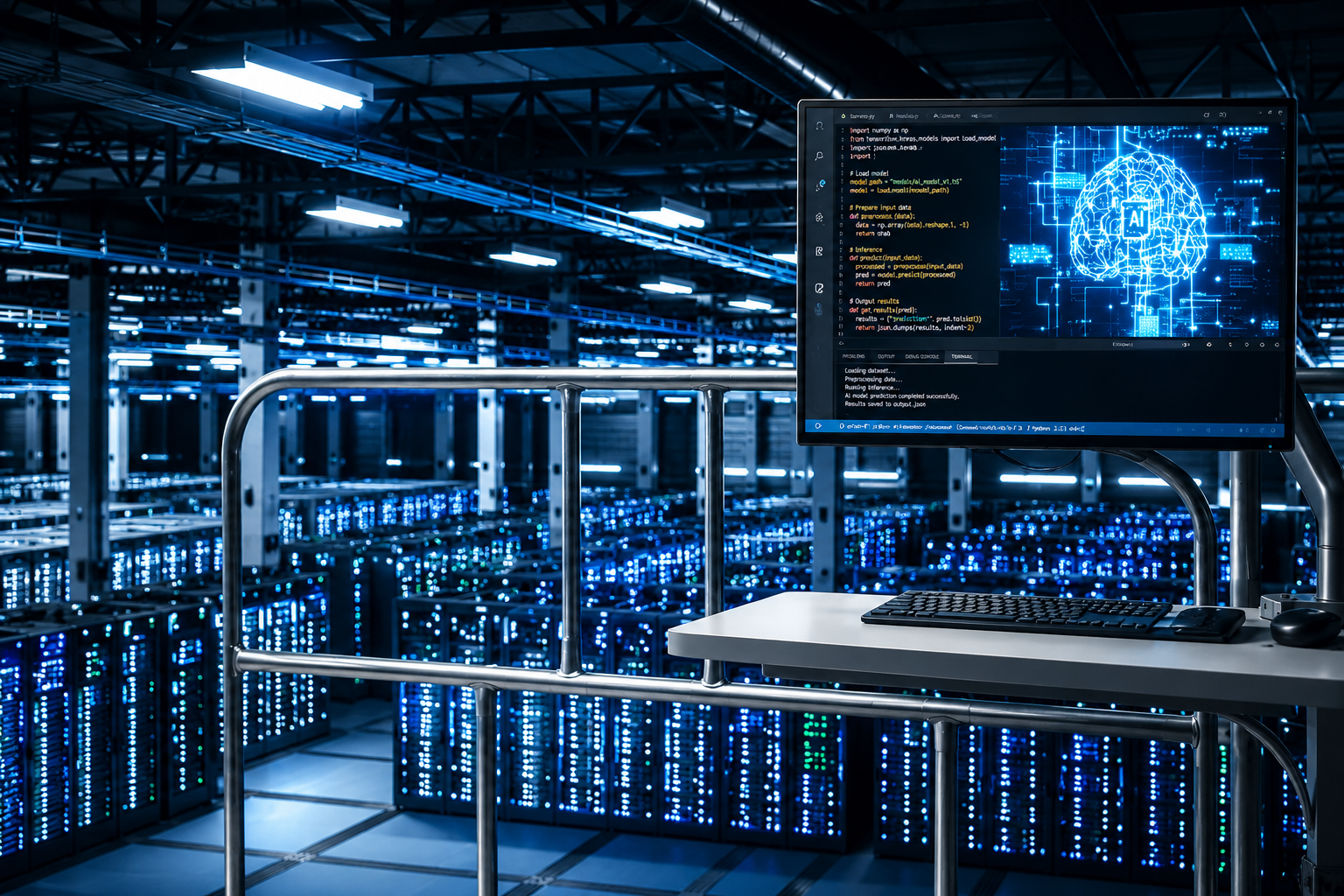
The extraordinary investment cycle surrounding artificial intelligence is becoming an increasingly important component of the U.S. economy, but its contribution to headline growth is more complicated than the spending numbers suggest. Companies are committing enormous amounts of capital to data centers, semiconductors, networking equipment, and related infrastructure, yet a substantial portion of that investment requires imported goods. As a result, the investment boom can strengthen fixed investment while simultaneously weighing on the trade component of gross domestic product. The latest figures illustrate this tension clearly, with real GDP growth slowing to an annualized 1.5% in the second quarter from 2.1% in the first.
AI Investment Is Driving a Major Capital-Spending Cycle
Fixed investment remained one of the strongest parts of the U.S. growth equation. Nonresidential fixed investment, which represents 16.0% of GDP in the data shown, increased at an annualized 8.4% rate in the second quarter. The figure demonstrates the scale of corporate spending on productive capacity, technology, and infrastructure as businesses accelerate investment in artificial intelligence.
The strength of this component is significant because corporate capital expenditure can improve productivity and expand future economic capacity. Data centers, advanced computing systems, semiconductor facilities, and supporting infrastructure can generate economic benefits well beyond the initial construction phase. However, the immediate GDP impact depends heavily on where the equipment is manufactured and how much of the spending remains within the domestic economy.
Imports Are Absorbing Part of the Investment Boom
The trade figures reveal the other side of the AI investment surge. Imports represented approximately 15.9% of GDP and increased at an annualized 11.5% rate in the second quarter, following an 11.8% increase in the first quarter. The acceleration reflects strong demand for foreign-produced technology components and other capital goods, particularly from Asian manufacturing centers.
Exports, meanwhile, account for approximately 11.5% of GDP and increased 4.5% in the second quarter. Because imports grew substantially faster than exports, net exports of goods and services made a negative contribution to GDP, with the component declining by 1.0% in the second quarter. This means that some of the economic activity generated by the AI investment boom is effectively appearing outside the United States through purchases of imported equipment.
The GDP Effect May Understate the Long-Term AI Opportunity
The negative trade contribution does not necessarily mean that AI investment is economically unproductive. GDP accounting captures the location of production, meaning imported equipment can reduce the immediate contribution from net exports even when the investment ultimately increases domestic productivity. The longer-term benefits could emerge through higher output, improved efficiency, stronger corporate earnings, and new technology-driven industries.
For policymakers and investors, the distinction between immediate GDP arithmetic and longer-term economic value is therefore critical. A capital-spending cycle that initially creates a trade deficit could eventually generate stronger domestic production if U.S. companies expand capacity and productivity sufficiently to offset the imported component.
Looking ahead, investors will monitor whether AI-related investment continues accelerating, whether domestic semiconductor and infrastructure production expands, and whether exports begin capturing more of the technology boom. If domestic capacity grows alongside AI demand, the negative trade effect could diminish over time. If imports continue rising faster than exports, however, the investment boom may remain a source of tension within the GDP growth equation even as it strengthens corporate capital spending.
Comparison, examination, and analysis between investment houses
Leave your details, and an expert from our team will get back to you as soon as possible
* This article, in whole or in part, does not contain any promise of investment returns, nor does it constitute professional advice to make investments in any particular field.
To read more about the full disclaimer, click here
- Ronny Mor
- •
- 7 Min Read
- •
- ago 48 minutes
SKN | Nvidia Accelerates AI Inference Push With Groq 3 LPX Rack Production
Nvidia is moving quickly to commercialize technology from Groq, with the Groq 3 LPX rack now in full production and
- ago 48 minutes
- •
- 7 Min Read
Nvidia is moving quickly to commercialize technology from Groq, with the Groq 3 LPX rack now in full production and

- sagi habasov
- •
- 6 Min Read
- •
- ago 7 hours
SKN | Xpeng Robotics Valued Above $6.3 Billion After Record $900 Million Funding Round
Xpeng is accelerating its push beyond electric vehicles as its robotics division secures more than $900 million in its first
- ago 7 hours
- •
- 6 Min Read

Xpeng is accelerating its push beyond electric vehicles as its robotics division secures more than $900 million in its first
- Ronny Mor
- •
- 6 Min Read
- •
- ago 16 hours
SKN | Cerebras Unveils Record-Setting CS-4 AI Accelerator: What It Means for CBRS Stock
Cerebras Systems is giving investors another reason to focus on its position in the rapidly expanding AI accelerator market after
- ago 16 hours
- •
- 6 Min Read

Cerebras Systems is giving investors another reason to focus on its position in the rapidly expanding AI accelerator market after

- Lior mor
- •
- 7 Min Read
- •
- ago 2 days
SKN | Judge Yvonne Gonzalez Rogers Becomes Silicon Valley’s Key Decision Maker in Meta’s Antitrust Battle
Silicon Valley’s largest technology companies are increasingly facing legal challenges that could reshape the future of the digital economy.
- ago 2 days
- •
- 7 Min Read

Silicon Valley’s largest technology companies are increasingly facing legal challenges that could reshape the future of the digital economy.
