




- orshu
- •
- 6 Min Read
- •
- 8 seconds ago


Key Points
- The KOSPI Composite Index (^KS11) finished the trading week at 6,912.95, posting a 5-day net decline of 0.93% following mid-week volatility across East Asian technology sectors.
- A Friday session rebound added 60.37 points (0.88%), lifting the index from a weekly intraday low of 6,742.44 toward a daily peak of 6,954.12 on moderate volume.
- For global and Israeli asset allocators, this consolidation highlights the need for a probability-based assessment of semiconductor and hardware export exposure, balancing technological demand against persistent currency volatility and elevated regional risk premiums.

The KOSPI Composite Index experienced a defensive trading week, ultimately settling at 6,912.95 to record a 5-day net contraction of 0.93%. This localized pullback across South Korea’s premier capital market benchmark reflects a tactical recalibration among institutional allocators, who are actively evaluating semiconductor supply chain demand against restrictive global monetary policy parameters and shifting real yield curves.
Deciphering the Late-Week Rebound and Technical Support
Trading activity on the Korea Exchange was defined by a mid-week sell-off that pushed the index down to test key support near 6,742.44 on August 19th before a late-week recovery emerged. The final trading session delivered a rebound of 60.37 points (0.88%), opening at 6,759.95 and advancing to an intraday ceiling of 6,954.12. Operating within the upper-middle decile of its broad 52-week trading bounds of 3,135.02 to 9,385.59, Friday’s trading volume reached 408,037 shares—slightly below the average volume of 436,786. This low-volume bounce indicates that while buyers stepped in to absorb localized weakness near the 6,750 technical floor, broader institutional participation remains measured ahead of upcoming global economic releases.
Macroeconomic Drivers and Global Semiconductor Cyclicality
As a crucial proxy for global tech hardware exports, automotive manufacturing, and battery technology, the operational trajectory of the KOSPI is heavily dependent on international trade volumes and comparative yield differentials. The 0.93% weekly decline highlights market re-assessments of enterprise hardware spending and consumer electronics demand as global central banks maintain cautious policy stances. This macroeconomic backdrop introduces clear downside risks; Korean exporters remain vulnerable to valuation compression if international industrial demand slows further or if cross-border tariff and trade frictions intensify. Furthermore, fluctuating sovereign debt-servicing costs and regional fiscal dynamics represent ongoing structural headwinds for forward corporate earnings expansion.
Strategic Portfolio Implications for Cross-Border Allocators
For globally diversified portfolio managers and the interconnected Tel Aviv financial ecosystem, tracking Korean market dynamics provides vital clues regarding high-tech manufacturing health and East Asian supply chain liquidity. Given the substantial synergy between Israel’s technology ecosystem and South Korea’s semiconductor hardware manufacturing, shifts in KOSPI momentum directly inform global risk budgets and corporate trade dynamics. Israeli institutional allocators must systematically evaluate this Asia-Pacific technology exposure alongside elevated regional security risk premiums and persistent shekel volatility. Implementing disciplined cross-border currency hedging frameworks remains essential, as sudden fluctuations in the won or international bond yields can mechanically introduce friction into multi-asset risk models.
Looking forward, the immediate structural trajectory centers on whether the KOSPI Composite Index can firmly consolidate above the 6,850 technical support floor or if a decisive breach will trigger an accelerated mean-reversion toward lower support bands near 6,500. Market participants must remain highly attentive to upcoming South Korean export metrics, global semiconductor sales figures, and central bank policy communications, which are poised to act as primary directional catalysts. The broader macroeconomic landscape presents a highly conditional outlook; while Friday’s gain demonstrates localized buying interest, asset allocators must maintain a rigorous, probability-based framework, actively managing downside risks and monitoring sovereign fiscal dynamics to safeguard long-term portfolio performance over the coming financial quarters.
Comparison, examination, and analysis between investment houses
Leave your details, and an expert from our team will get back to you as soon as possible
* This article, in whole or in part, does not contain any promise of investment returns, nor does it constitute professional advice to make investments in any particular field.
To read more about the full disclaimer, click here
- Ronny Mor
- •
- 6 Min Read
- •
- ago 43 minutes
SKN | Hang Seng Index Surges 3.55% Weekly to Cross 26,000: Is Asian Equity Outperformance Sustainable Amid Regional Trade Friction?
The Hang Seng Index demonstrated strong upward momentum over the trading week, ultimately settling at 26,009.46 to secure a
- ago 43 minutes
- •
- 6 Min Read

The Hang Seng Index demonstrated strong upward momentum over the trading week, ultimately settling at 26,009.46 to secure a

- omer bar
- •
- 6 Min Read
- •
- ago 2 hours
SKN | Euro Currency Index (^XDE) Gains 0.92% Weekly to 116.77: Is the Single Currency Stabilizing Ahead of Key Central Bank Policy Shifts?
The Euro Currency Index (^XDE) demonstrated steady structural resilience over the trading week, ultimately settling at 116.77 to record
- ago 2 hours
- •
- 6 Min Read
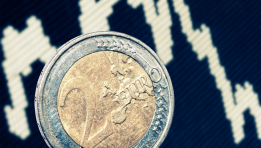
The Euro Currency Index (^XDE) demonstrated steady structural resilience over the trading week, ultimately settling at 116.77 to record

- Lior mor
- •
- 6 Min Read
- •
- ago 2 hours
SKN | British Pound Currency Index (^XDB) Advances 0.83% Weekly to 136.45: Is Sterling Capitalizing on Persistent Rate Differentials?
The British Pound Currency Index (^XDB) demonstrated steady upward momentum over the trading week, ultimately settling at 136.45 to
- ago 2 hours
- •
- 6 Min Read

The British Pound Currency Index (^XDB) demonstrated steady upward momentum over the trading week, ultimately settling at 136.45 to

- Arik Arkadi Sluzki
- •
- 6 Min Read
- •
- ago 2 hours
SKN | Euronext 100 Retracts 1.57% Weekly to 1,938.94: Are Pan-European Large-Caps Facing Valuation Drag Amid Sluggish Economic Growth?
The Euronext 100 Index navigated a defensive trading week, ultimately settling at 1,938.94 to record a 5-day net contraction
- ago 2 hours
- •
- 6 Min Read

The Euronext 100 Index navigated a defensive trading week, ultimately settling at 1,938.94 to record a 5-day net contraction
