





- omer bar
- •
- 7 Min Read
- •
- 3 hours ago
Key Points
- Honda raised its full-year operating profit forecast by 30% after reporting its first quarterly profit increase in six quarters.
- A weaker Japanese yen and the absence of U.S. tariff-related costs significantly boosted first-quarter earnings.
- The results highlight improving profitability for Japanese automakers despite ongoing industry challenges surrounding electrification and global competition.

Honda Motor delivered a stronger-than-expected start to its fiscal year, reporting its first quarterly profit increase in six quarters while raising its full-year financial guidance. The improved outlook reflects the favorable impact of a weaker yen, easing cost pressures, and resilient operational performance, providing fresh evidence that Japan’s major automakers continue to benefit from shifting currency dynamics despite a rapidly evolving global automotive market.
For investors in Israel and worldwide, Honda’s latest results demonstrate how exchange rates remain a significant driver of earnings for export-oriented manufacturers, even as the industry navigates the costly transition toward electric and software-defined vehicles.
Weaker Yen Drives Strong Earnings Recovery
Honda reported that operating profit more than doubled during the April-to-June quarter, comfortably surpassing analysts’ expectations. The company also recorded its first quarterly profit growth in six reporting periods, marking a notable turnaround after several quarters of pressure from higher costs and challenging market conditions.
A key contributor to the improved performance was the depreciation of the Japanese yen, which increased the value of overseas revenue when converted into Japan’s domestic currency. The company also benefited from the absence of U.S. tariff-related costs that negatively affected earnings during the same period last year.
Reflecting these stronger fundamentals, Honda increased its full-year operating profit forecast by 30% to 650 billion yen, up from its previous projection of 500 billion yen. The automaker also raised its forecasts for net profit and annual revenue, citing updated foreign exchange assumptions.
Improved Outlook Reflects Better Cost Environment
Honda’s upgraded guidance indicates that management expects favorable currency conditions and improved operational efficiency to continue supporting profitability throughout the remainder of the fiscal year. While supply chain disruptions and inflation have eased compared with previous years, automakers continue managing elevated investment requirements associated with electrification, autonomous driving technologies, and software development.
The absence of extraordinary tariff-related expenses also strengthened quarterly margins, allowing Honda to convert revenue growth into stronger earnings performance. This demonstrates how external policy changes can materially influence financial results for globally diversified manufacturers.
Nevertheless, management continues to monitor global economic conditions, consumer demand, and foreign exchange volatility, all of which could influence financial performance during the coming quarters.
Automotive Industry Faces Both Opportunities and Challenges
Honda’s results arrive during a period of significant transformation across the global automotive industry. Established manufacturers are increasing investment in electric vehicles while simultaneously protecting profitability in their traditional internal combustion businesses. Currency movements have become increasingly important as Japanese automakers compete globally against manufacturers from China, Europe, South Korea, and the United States.
For international investors, including those in Israel, Honda’s performance illustrates how macroeconomic factors such as exchange rates can substantially influence earnings even when underlying vehicle demand remains relatively stable. Strong financial flexibility may also provide the company with additional resources to accelerate investments in next-generation mobility technologies without significantly weakening profitability.
Competition within the global automotive market is expected to remain intense as manufacturers balance pricing strategies, technological innovation, and capital allocation while responding to changing consumer preferences and evolving regulatory requirements.
Looking ahead, investors will closely monitor Honda’s ability to sustain earnings momentum as currency conditions evolve, demand for hybrid and electric vehicles continues to develop, and global economic conditions influence automotive sales. Future exchange rate movements, competitive pressures, and execution of long-term electrification strategies are likely to remain key factors shaping the company’s financial performance over the remainder of the fiscal year.
Comparison, examination, and analysis between investment houses
Leave your details, and an expert from our team will get back to you as soon as possible
* This article, in whole or in part, does not contain any promise of investment returns, nor does it constitute professional advice to make investments in any particular field.
To read more about the full disclaimer, click here
- Lior mor
- •
- 6 Min Read
- •
- ago 3 hours
SKN | Uber Expands Robotaxi Investment Despite Soft Profit Outlook
Uber Technologies reaffirmed its commitment to autonomous transportation by unveiling plans to invest more than $10 billion in robotaxi
- ago 3 hours
- •
- 6 Min Read

Uber Technologies reaffirmed its commitment to autonomous transportation by unveiling plans to invest more than $10 billion in robotaxi

- sagi habasov
- •
- 6 Min Read
- •
- ago 22 hours
SKN | Walgreens Continues Store Closures as Retail Pharmacy Industry Faces Structural Challenges
Walgreens is continuing to reduce its physical retail footprint as the company advances a broader restructuring strategy aimed at improving
- ago 22 hours
- •
- 6 Min Read

Walgreens is continuing to reduce its physical retail footprint as the company advances a broader restructuring strategy aimed at improving
- Lior mor
- •
- 7 Min Read
- •
- ago 22 hours
SKN | Jetstar Introduces Fees for Overhead Cabin Bags: A New Revenue Strategy for Low-Cost Aviation?
Australia's low-cost carrier Jetstar is introducing a new fee for passengers who wish to place carry-on bags in overhead lockers,
- ago 22 hours
- •
- 7 Min Read
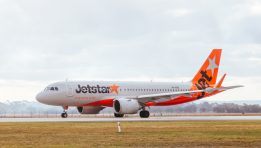
Australia's low-cost carrier Jetstar is introducing a new fee for passengers who wish to place carry-on bags in overhead lockers,

- omer bar
- •
- 7 Min Read
- •
- ago 1 day
SKN | SpaceX Nearly Doubles Revenue in First Public Earnings Report as Starlink and AI Drive Growth
SpaceX delivered a strong operational debut as a public company, reporting that second-quarter revenue nearly doubled while operating losses
- ago 1 day
- •
- 7 Min Read

SpaceX delivered a strong operational debut as a public company, reporting that second-quarter revenue nearly doubled while operating losses


