





- sagi habasov
- •
- 8 Min Read
- •
- 5 hours ago
Key Points
- Industrial Momentum Surges: India's industrial production hits a nearly two-year high, defying the slowdown trends seen across other developed and emerging markets.
- Unprecedented Financial Resilience: Foreign exchange reserves cross the $680 billion threshold, backed by aggressive government capital expenditure and steady foreign inflows.
- The Inflation and Rate Test: Ahead of the RBI's upcoming monetary policy meeting, the market is closely evaluating the impact of mixed PMI data and robust monsoon rains..
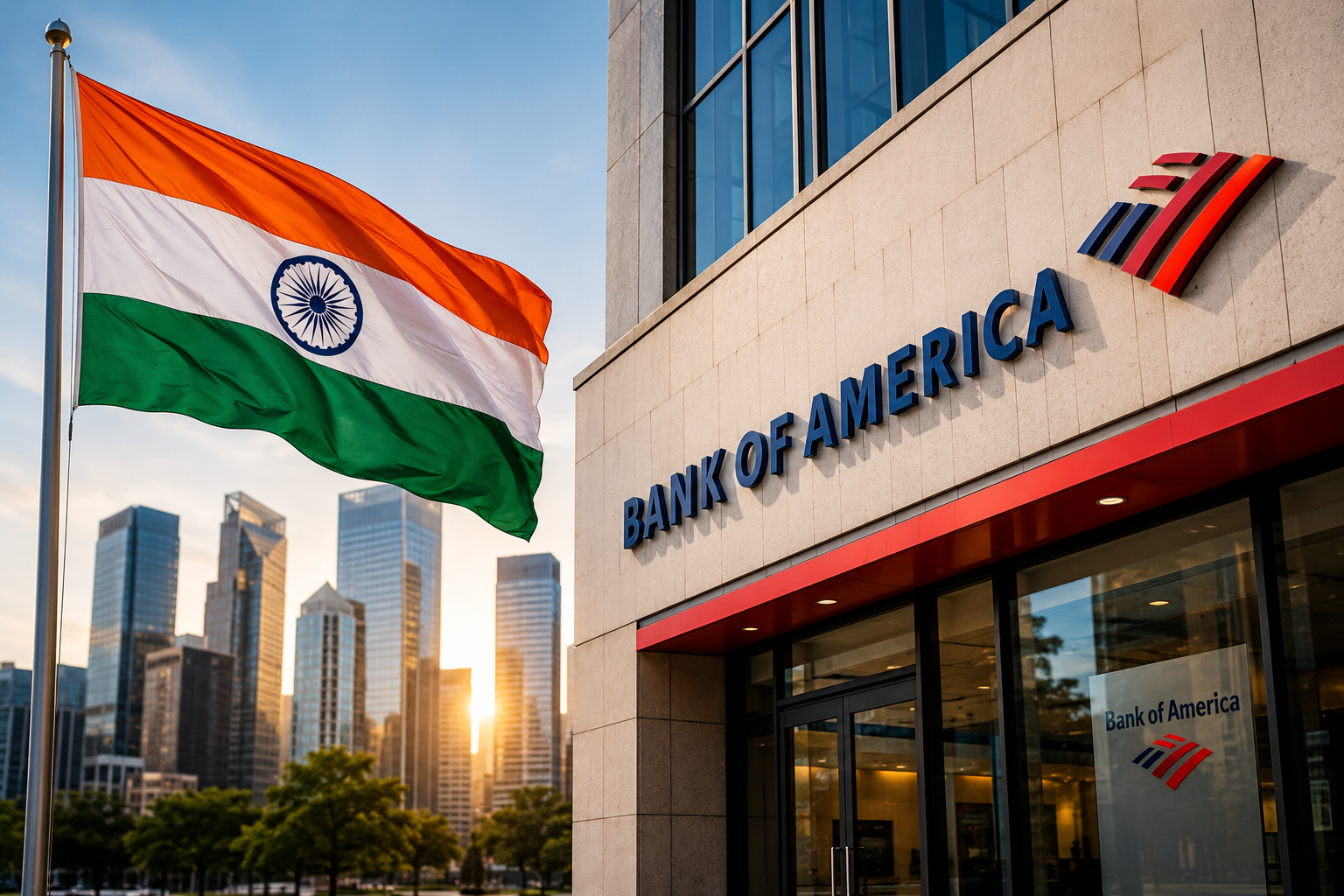
While the global economy continues to navigate through a thick fog of uncertainty—ranging from exhausting geopolitical crises to interest rate volatility in the West—the Indian economy presents a striking mirror image of resilience and structural stability. A recent review by Bank of America, analyzing high-frequency growth indicators for June and July 2026, reveals that India is not merely surviving macroeconomic shocks but is actively accelerating its pace of expansion. Against a backdrop of persistent weakness in other emerging markets and looming recession fears, the latest data illustrates how a vast domestic market, supported by expansionary fiscal policy, is successfully cultivating an ecosystem that attracts corporate and institutional capital at a blistering pace.
Industrial Growth: The Domestic Engine at Full Throttle
The most prominent figure from Bank of America’s latest growth gauge is the surge in industrial production, which recorded a 7.3% increase in June, marking a 23-month high. This robust trend is underpinned by a 7.8% year-over-year growth in the manufacturing sector, alongside a sharp 10.6% jump in electricity generation—a metric that historically serves as a reliable barometer for broad economic activity. As a direct result, average growth in the first quarter of fiscal year 2027 climbed to 5.7%, a significant improvement over the 3.9% recorded in the preceding quarter. Simultaneously, the Indian automotive market, across its various segments, demonstrated sustained stability. From a strategic standpoint, these figures signal to investors that domestic demand is providing India with a critical buffer against external trade shocks, a fact further validated by the rapid rebound in fuel consumption following a temporary easing of global geopolitical tensions.
Capital Influx and Institutional Trust: Historic FX Reserves
This deep-seated confidence in the subcontinent’s economy is translating directly into massive, positive capital inflows. By the third week of July, India’s foreign exchange reserves swelled to $682 billion, an impressive addition of $13 billion in a single month. Bank economists attribute this trend to a massive influx of foreign currency non-resident (FCNR) deposits, which totaled over $40.2 billion. This capital flow is not occurring in a vacuum; it reflects profound faith in the country’s accelerated infrastructure development. Government capital expenditures surged by 24% year-over-year in the first quarter, running parallel to a solid 15.4% growth in Goods and Services Tax (GST) collections. The combination of aggressive government investment and growing tax revenues illustrates an accelerating formalization of the Indian economy—a development that projects transparency and invites long-term capital commitments from global funds.
Data Dissonance: Supply Chain Warnings and the Climate Test
Despite the broad optimism presented by the macro numbers, the Indian economy exhibits a more complex picture at the micro level, particularly when examining purchasing sector data. July saw a slight decline in the Purchasing Managers’ Index (PMI) for both the services and manufacturing sectors, with the latter slipping to a near five-year low. This operational dynamic exposes a dual challenge: consumer selling prices rose while producer cost pressures dropped to a five-month low, yet transportation costs remained stubbornly high. These contradictions could eventually weigh on corporate profit margins. Concurrently, the psychology of the domestic market is deeply influenced by climate variables that dictate the fate of the rural economy. The progress of the monsoon season in July exceeded expectations, tracking 3% above average—a vital development for curbing agricultural and food inflation pressures heading into August.
Looking ahead, the most critical near-term inflection point for the Indian economy converges on the Reserve Bank of India’s (RBI) monetary policy committee meeting scheduled for August 5. While robust growth and massive FX reserves provide comfortable maneuvering room, the slight weakness in purchasing indicators presents central bank officials with a classic challenge of risk management and timing. Wall Street and institutional investors will be closely monitoring the nuances of the RBI’s statements, recognizing that India is cementing its position not just as an emerging promise, but as a genuine strategic alternative offering a rare blend of youthful demographics, organic growth, and exceptional monetary stability.
Comparison, examination, and analysis between investment houses
Leave your details, and an expert from our team will get back to you as soon as possible
* This article, in whole or in part, does not contain any promise of investment returns, nor does it constitute professional advice to make investments in any particular field.
To read more about the full disclaimer, click here
- Arik Arkadi Sluzki
- •
- 6 Min Read
- •
- ago 3 days
SKN | Dollar Weakens Against Yen as Intervention Risks Reshape Currency Market Expectations
The U.S. dollar weakened against the Japanese yen on July 31 as concerns over potential currency intervention by Japanese
- ago 3 days
- •
- 6 Min Read

The U.S. dollar weakened against the Japanese yen on July 31 as concerns over potential currency intervention by Japanese

- omer bar
- •
- 6 Min Read
- •
- ago 5 days
SKN | Is the Bank of Japan Preparing for a More Aggressive Fight Against Inflation?
Japan's long-standing era of ultra-loose monetary policy is facing renewed scrutiny after a prominent inflation expert suggested the Bank of
- ago 5 days
- •
- 6 Min Read
Japan's long-standing era of ultra-loose monetary policy is facing renewed scrutiny after a prominent inflation expert suggested the Bank of

- sagi habasov
- •
- 6 Min Read
- •
- ago 5 days
SKN | Middle East Escalation Drives Oil Prices Up: How Will the Fed Respond?
The Middle East is experiencing a sharp military escalation, triggering significant volatility across global energy markets. A ballistic missile
- ago 5 days
- •
- 6 Min Read
The Middle East is experiencing a sharp military escalation, triggering significant volatility across global energy markets. A ballistic missile

- Ronny Mor
- •
- 7 Min Read
- •
- ago 7 days
SKN | Oil Prices are Climbing, But Interest Rates Will Likely Pause: What Does This Mean for Your Money?
Why Would Oil Prices Rise, But Not Interest Rates? The U.S. central bank is in an interesting spot right now.
- ago 7 days
- •
- 7 Min Read
Why Would Oil Prices Rise, But Not Interest Rates? The U.S. central bank is in an interesting spot right now.


