





- Ronny Mor
- •
- 7 Min Read
- •
- 2 months ago


Key Points
- Airbus has paid just over £6.4 million to settle a UK investigation into export control violations involving several of its British entities.
- The investigation, announced in 2024, has now been resolved, bringing an end to a two-year regulatory probe by UK revenue and customs authorities.
- The settlement underscores the growing importance of export compliance for global aerospace and defense companies operating in highly regulated international markets.

Airbus has resolved a long-running UK export control investigation by paying just over £6.4 million to British revenue and customs authorities. The settlement closes a regulatory case first disclosed in 2024 and highlights the increasing scrutiny facing multinational aerospace companies as governments tighten oversight of cross-border exports involving strategic technologies and defense-related products.
The resolution comes as aerospace manufacturers continue navigating increasingly complex compliance requirements amid heightened geopolitical tensions, stricter sanctions regimes, and expanding export control regulations across major global economies.
Regulatory Investigation Comes to a Close
Airbus confirmed that it has reached a settlement with UK Revenue and Customs (HMRC), paying just over £6.4 million to resolve allegations related to export control violations. The investigation involved several of the company’s UK-based entities and had been under review for approximately two years.
The European aircraft manufacturer first disclosed the existence of the investigation in 2024. While Airbus acknowledged the settlement, the payment resolves the regulatory matter without extending uncertainty surrounding the company’s UK operations.
Although the financial impact is relatively modest for a company of Airbus’ size, the case illustrates the importance of maintaining robust compliance systems in industries where international trade is governed by strict licensing and export regulations.
Export Controls Remain a Strategic Business Risk
The aerospace and defense industry operates within one of the world’s most heavily regulated trade environments. Aircraft manufacturers routinely manage exports involving advanced technologies, military applications, dual-use components, and sensitive engineering systems that require regulatory approvals across multiple jurisdictions.
Governments in Europe, the United Kingdom, and the United States have strengthened export enforcement in recent years as geopolitical tensions have increased and national security considerations have become more prominent. Companies operating globally are therefore investing more heavily in compliance programs, internal controls, and supply chain oversight to reduce regulatory risk.
For multinational manufacturers such as Airbus, effective export compliance is increasingly viewed not only as a legal obligation but also as an important element of operational resilience and corporate governance.
Limited Financial Impact but Broader Governance Implications
While the £6.4 million payment is unlikely to have a material financial effect on Airbus’ overall business, investors often view regulatory settlements through the broader lens of governance, operational risk, and compliance standards. Aerospace companies depend heavily on long-term relationships with governments, defense agencies, and international regulators, making strong compliance practices essential to maintaining customer confidence.
The resolution also removes a source of regulatory uncertainty for Airbus at a time when global demand for commercial aircraft remains strong and defense spending continues to increase across Europe and other major economies.
For investors in Israel, the development carries broader relevance because Israel maintains close commercial and defense relationships with leading global aerospace companies. As export controls become increasingly important worldwide, companies participating in international aerospace supply chains—including Israeli manufacturers of avionics, electronics, cybersecurity solutions, and defense technologies—are likely to face continued emphasis on regulatory compliance and cross-border trade controls.
Looking ahead, investors will monitor whether Airbus implements additional compliance measures following the settlement and whether regulators continue expanding enforcement across the aerospace and defense sector. Growing geopolitical uncertainty and evolving export control frameworks are expected to keep regulatory compliance at the forefront of strategic planning for companies operating in global aviation and defense markets.
Comparison, examination, and analysis between investment houses
Leave your details, and an expert from our team will get back to you as soon as possible
* This article, in whole or in part, does not contain any promise of investment returns, nor does it constitute professional advice to make investments in any particular field.
To read more about the full disclaimer, click here
- Ronny Mor
- •
- 6 Min Read
- •
- ago 9 minutes
SKN | TA-SME60 Rebounds 0.68% on Friday, but Small-Cap Stocks Remain Under Pressure After a 5.98% Weekly Decline
The Tel Aviv Stock Exchange’s TA-SME60 index ended Friday, October 9, at 1,218.87, gaining 8.28 points, or 0.68%,
- ago 9 minutes
- •
- 6 Min Read
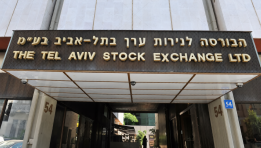
The Tel Aviv Stock Exchange’s TA-SME60 index ended Friday, October 9, at 1,218.87, gaining 8.28 points, or 0.68%,

- omer bar
- •
- 6 Min Read
- •
- ago 1 hour
SKN | Japanese Yen Currency Index (^XDN) Softens 0.28% Daily to 63.17 as 0.28% Weekly Pullback Holds Above 60.98 Support
The Japanese Yen Currency Index (^XDN) finished the trading session on October 9, 2026, lower, dropping 0.28% (0.18 points)
- ago 1 hour
- •
- 6 Min Read

The Japanese Yen Currency Index (^XDN) finished the trading session on October 9, 2026, lower, dropping 0.28% (0.18 points)

- Lior mor
- •
- 7 Min Read
- •
- ago 2 hours
SKN | KOSPI Composite Index (^KS11) Softens 2.62% Daily to 6,625.93 as 4.95% Weekly Pullback Holds Above 3,522 Support
The KOSPI Composite Index (^KS11) finished the trading session on October 8, 2026, lower, dropping 2.62% (177.97 points) to
- ago 2 hours
- •
- 7 Min Read

The KOSPI Composite Index (^KS11) finished the trading session on October 8, 2026, lower, dropping 2.62% (177.97 points) to

- Arik Arkadi Sluzki
- •
- 7 Min Read
- •
- ago 2 hours
SKN | Nikkei 225 (^N225) Softens 0.02% Daily to 69,030.92 as 1.31% Weekly Pullback Holds Above 46,544 Support
The Nikkei 225 Index (^N225) finished the trading session on October 9, 2026, virtually flat, edging lower by 0.02%
- ago 2 hours
- •
- 7 Min Read

The Nikkei 225 Index (^N225) finished the trading session on October 9, 2026, virtually flat, edging lower by 0.02%

