





- Ronny Mor
- •
- 7 Min Read
- •
- 2 hours ago
Key Points
- Global equity market capitalization has reportedly climbed to approximately 137% of global GDP, approaching the highest level on record, according to the information shown in the attached image.
- The ratio has increased by more than 40 percentage points since April 2025, reaching levels comparable to those seen during the 2021 equity market surge.
- The U.S. stock market accounts for roughly $77 trillion of the estimated $166 trillion global equity market, underscoring its dominant role in driving worldwide valuations.
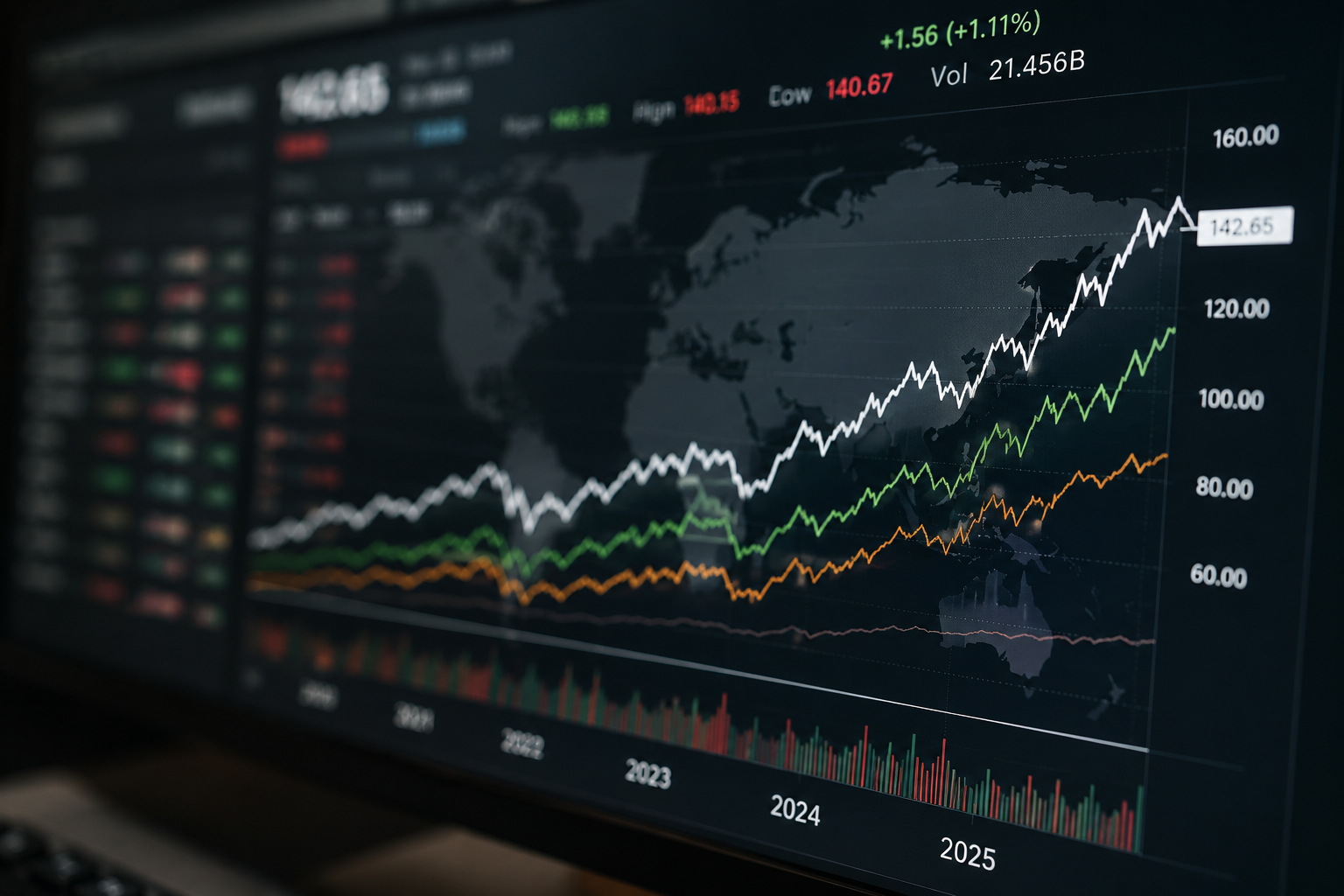
Global equity markets have continued their remarkable advance, fueled by sustained enthusiasm for artificial intelligence, resilient corporate earnings, and improving investor sentiment. According to the information presented in the attached image, global stock market capitalization has reached approximately 137% of global gross domestic product (GDP), placing valuations near historic highs.
While elevated market capitalization relative to GDP often attracts attention from investors assessing valuation risks, the ratio should be interpreted alongside evolving economic conditions, technological innovation, and corporate profitability. The figures presented in the attached image have not been independently verified and should be considered in that context.
Market Capitalization Has Expanded Faster Than the Global Economy
The reported ratio of 137% of global GDP indicates that the total value of publicly traded companies has grown substantially faster than worldwide economic output. According to the attached image, the ratio has risen by more than 40 percentage points since April 2025, approaching the elevated levels observed during the technology-driven market rally of 2021.
Historically, a rising market capitalization-to-GDP ratio has reflected periods of strong investor optimism, expanding corporate earnings expectations, and abundant capital flowing into equity markets. However, the indicator should not be viewed as a standalone measure of whether markets are overvalued, as structural changes in globalization, multinational corporate revenues, and capital markets can influence the ratio over time.
Artificial Intelligence Continues to Drive Equity Market Leadership
The current market expansion has been heavily influenced by artificial intelligence, which continues to attract significant investment across semiconductor manufacturers, cloud computing providers, software developers, and digital infrastructure companies. Investors have increasingly assigned premium valuations to businesses expected to benefit from long-term AI adoption.
The attached image also notes that the global equity market has reached an estimated $166 trillion, with the United States representing approximately $77 trillion, or about 46% of worldwide market capitalization. This concentration highlights the dominant role of U.S. technology companies in shaping global equity performance.
Continued earnings growth from major AI-related companies has reinforced investor confidence, although higher valuations also increase market sensitivity to earnings disappointments, interest rate changes, or slowing economic growth.
Historical Comparisons Provide Context Rather Than Certainty
The chart included in the attached image compares current valuation levels with previous market peaks, including periods preceding the 2008 Global Financial Crisis and the 2021 technology rally. While historical comparisons are valuable for understanding market cycles, they do not necessarily predict future performance.
Today’s environment differs from previous cycles in several respects, including stronger corporate balance sheets, continued digital transformation, widespread artificial intelligence adoption, and higher profitability among many large-cap technology companies. These structural differences may influence how valuation metrics should be interpreted.
For investors in Israel, elevated U.S. market valuations remain particularly relevant because Israeli institutional investors and technology companies maintain significant exposure to global equity markets. Developments in AI infrastructure, semiconductor investment, and multinational technology earnings continue to influence capital flows across international markets.
Looking ahead, investors will closely monitor corporate earnings, inflation trends, central bank policy, and the pace of artificial intelligence investment to determine whether current valuations remain supported by underlying fundamentals. While record market capitalization reflects continued confidence in long-term economic growth and technological innovation, future market performance will likely depend on companies’ ability to translate elevated expectations into sustainable revenue and earnings expansion.
Comparison, examination, and analysis between investment houses
Leave your details, and an expert from our team will get back to you as soon as possible
* This article, in whole or in part, does not contain any promise of investment returns, nor does it constitute professional advice to make investments in any particular field.
To read more about the full disclaimer, click here
- Lior mor
- •
- 6 Min Read
- •
- ago 15 hours
SKN | S&P 500 Earnings Growth Poised for Strongest Quarter Since 2021
The S&P 500 is on track to deliver its strongest quarterly earnings growth since 2021, according to the latest
- ago 15 hours
- •
- 6 Min Read
The S&P 500 is on track to deliver its strongest quarterly earnings growth since 2021, according to the latest

- omer bar
- •
- 7 Min Read
- •
- ago 16 hours
SKN | Is Wall Street Approaching a Turning Point After a Historic Bull Market?
Wall Street has delivered remarkable returns over the past 17 years, with the Dow Jones Industrial Average, S&P 500,
- ago 16 hours
- •
- 7 Min Read

Wall Street has delivered remarkable returns over the past 17 years, with the Dow Jones Industrial Average, S&P 500,
- omer bar
- •
- 5 Min Read
- •
- ago 2 days
SKN | S&P 500 Reverses Gains as Iran Conflict Escalation Pressures Technology Stocks
The S&P 500 reversed earlier gains and turned lower during the trading session as escalating tensions surrounding the Iran
- ago 2 days
- •
- 5 Min Read
The S&P 500 reversed earlier gains and turned lower during the trading session as escalating tensions surrounding the Iran

- orshu
- •
- 7 Min Read
- •
- ago 2 days
SKN | Dow Rebounds While Technology Extends Slide as Markets Close Mixed on July 24
Wall Street closed mixed on Friday, July 24, 2026, as investors balanced bargain hunting in blue-chip stocks against continued weakness
- ago 2 days
- •
- 7 Min Read
Wall Street closed mixed on Friday, July 24, 2026, as investors balanced bargain hunting in blue-chip stocks against continued weakness


