





- orshu
- •
- 6 Min Read
- •
- 6 hours ago
Key Points
- The Nikkei 225 Index (^N225) secured a modest 5-day advance of 0.73%, closing near 64,611.15 despite facing a steep late-week pullback.
- A sharp Friday session drop of 2.73% (1,811.45 points) saw the Japanese benchmark retreat from weekly peaks near 67,000 to test intraday lows of 64,201.03.
- Despite semiconductor sector volatility and Yen fluctuations, corporate governance reforms and long-term institutional inflows continue to provide structural support for Japanese large-caps.

The Nikkei 225 Index registered a net weekly gain of roughly 0.73%, settling near 64,611.15 after absorbing a heavy late-week correction. The price action reflects a broader re-evaluation of high-beta technology valuations across Asian equities in July 2026, as institutional allocators balance Bank of Japan monetary policy expectations against corporate earnings guidance. For global investors, including institutional allocators in Israel expanding Asia-Pacific exposure, Tokyo’s premier stock benchmark remains a vital barometer for global trade health and regional technology supply chains.
Late-Week Tech Pullback Interrupts Early-Week Rally
The Nikkei 225’s weekly trajectory was characterized by strong early gains that pushed the index past 67,000 on July 22, before experiencing a sharp reversal during Friday’s trading session. On July 24, the benchmark opened at 65,584.25 and tumbled 1,811.45 points (or 2.73%) within a daily range of 64,201.03 to 65,720.81, down from its previous close of 66,422.60. This late-week sell-off was accompanied by an average daily trading volume of 170,760,000, illustrating systematic profit-taking among derivative desks and technology funds following multi-week rallies. Despite the single-day contraction, the index maintained a positive weekly trajectory, demonstrating underlying institutional demand near established support baselines.
Governance Reforms and Export Leadership Support Long-Term Valuations
A central structural pillar supporting the Japanese equity market remains the ongoing wave of Tokyo Stock Exchange corporate governance reforms and balance sheet optimizations. Leading industrial, automotive, and technology enterprises within the index continue to implement record share buybacks, increase dividend payouts, and streamline capital structures to enhance shareholder returns. Global asset managers continue utilizing these structural tailwinds within broader strategic asset allocation models to achieve durable risk-adjusted yields. Consequently, despite near-term technical friction, the Nikkei 225 remains comfortably positioned within its broader 52-week range of 39,850.52 to 72,831.73, reinforcing global confidence in resilient capital markets across developed Asian economies.
BOJ Rate Trajectories and Currency Volatility Present Ongoing Risks
While long-term fundamentals remain constructive, market participants continue closely monitoring potential macroeconomic friction points, particularly surrounding the Bank of Japan’s monetary policy normalization path. Any unexpected hawkish adjustments to Japanese sovereign yields or rapid Yen strengthening could compress export earnings for multinational constituents. At the same time, persistent geopolitical premiums across critical maritime shipping corridors and ongoing currency volatility raise potential risks for international trade flows and foreign exchange translation. Israeli institutional investors maintaining Japanese equity overlays remain focused on tracking these macroeconomic variables to ensure cross-border risk pricing remains aligned with market expectations.
Outlook: The outlook for the Nikkei 225 Index remains neutrally balanced, with technical momentum favoring a period of orderly consolidation near major support boundaries to foster broader economic stabilization. Further sustainable advances toward historical resistance levels will likely depend on verified semiconductor sector earnings acceleration, predictable monetary policy guidance from the Bank of Japan, and a stabilizing foreign exchange environment. However, professional asset allocators should remain highly attentive to prominent downside risks, including potential global economic slowdowns, trade policy adjustments, and geopolitical developments that could elevate financial market volatility. Ultimately, future equity performance will depend on the delicate balance between corporate operational resilience and evolving global macroeconomic conditions.
Comparison, examination, and analysis between investment houses
Leave your details, and an expert from our team will get back to you as soon as possible
* This article, in whole or in part, does not contain any promise of investment returns, nor does it constitute professional advice to make investments in any particular field.
To read more about the full disclaimer, click here
- sagi habasov
- •
- 7 Min Read
- •
- ago 30 minutes
SKN | Nvidia Strengthens AI Supply Chain with Landmark SK Hynix Partnership
Nvidia is reinforcing its leadership in artificial intelligence infrastructure by securing one of the industry's most critical resources: high-bandwidth
- ago 30 minutes
- •
- 7 Min Read

Nvidia is reinforcing its leadership in artificial intelligence infrastructure by securing one of the industry's most critical resources: high-bandwidth

- Arik Arkadi Sluzki
- •
- 6 Min Read
- •
- ago 51 minutes
SKN | U.S. Defense Spending Reaches Historic Levels—Could Ondas Be Among the Biggest Beneficiaries?
The United States continues to increase its commitmeant to defense modernization as Congress advances the $1.2 trillion National Defense
- ago 51 minutes
- •
- 6 Min Read
The United States continues to increase its commitmeant to defense modernization as Congress advances the $1.2 trillion National Defense
- sagi habasov
- •
- 6 Min Read
- •
- ago 5 hours
SKN | Broadcom and Samsung Reportedly Sign $200 Billion Semiconductor Agreement Through 2030
Broadcom Inc. (NASDAQ: AVGO) has reportedly entered into a five-year memorandum of understanding (MOU) with Samsung Electronics valued at
- ago 5 hours
- •
- 6 Min Read

Broadcom Inc. (NASDAQ: AVGO) has reportedly entered into a five-year memorandum of understanding (MOU) with Samsung Electronics valued at

- Ronny Mor
- •
- 6 Min Read
- •
- ago 6 hours
SKN | KOSPI Composite Slips to 6,690 Despite 2.68% Weekly Gain as Friday Tech Sell-Off Triggers Heavy Pullback
The KOSPI Composite Index recorded a net weekly advance of roughly 2.68%, settling near 6,690.62 despite experiencing a severe
- ago 6 hours
- •
- 6 Min Read
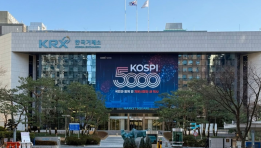
The KOSPI Composite Index recorded a net weekly advance of roughly 2.68%, settling near 6,690.62 despite experiencing a severe


