





- orshu
- •
- 6 Min Read
- •
- 2 hours ago
Key Points
- The Korea Exchange briefly halted program selling after the KOSPI declined approximately 5%, triggering market stabilization measures.
- More than ₩277.5 trillion (approximately $185 billion) in market value was reportedly erased from South Korean equities during the selloff.
- The sharp decline reflects heightened investor risk aversion as global markets respond to geopolitical uncertainty and broad-based equity weakness.
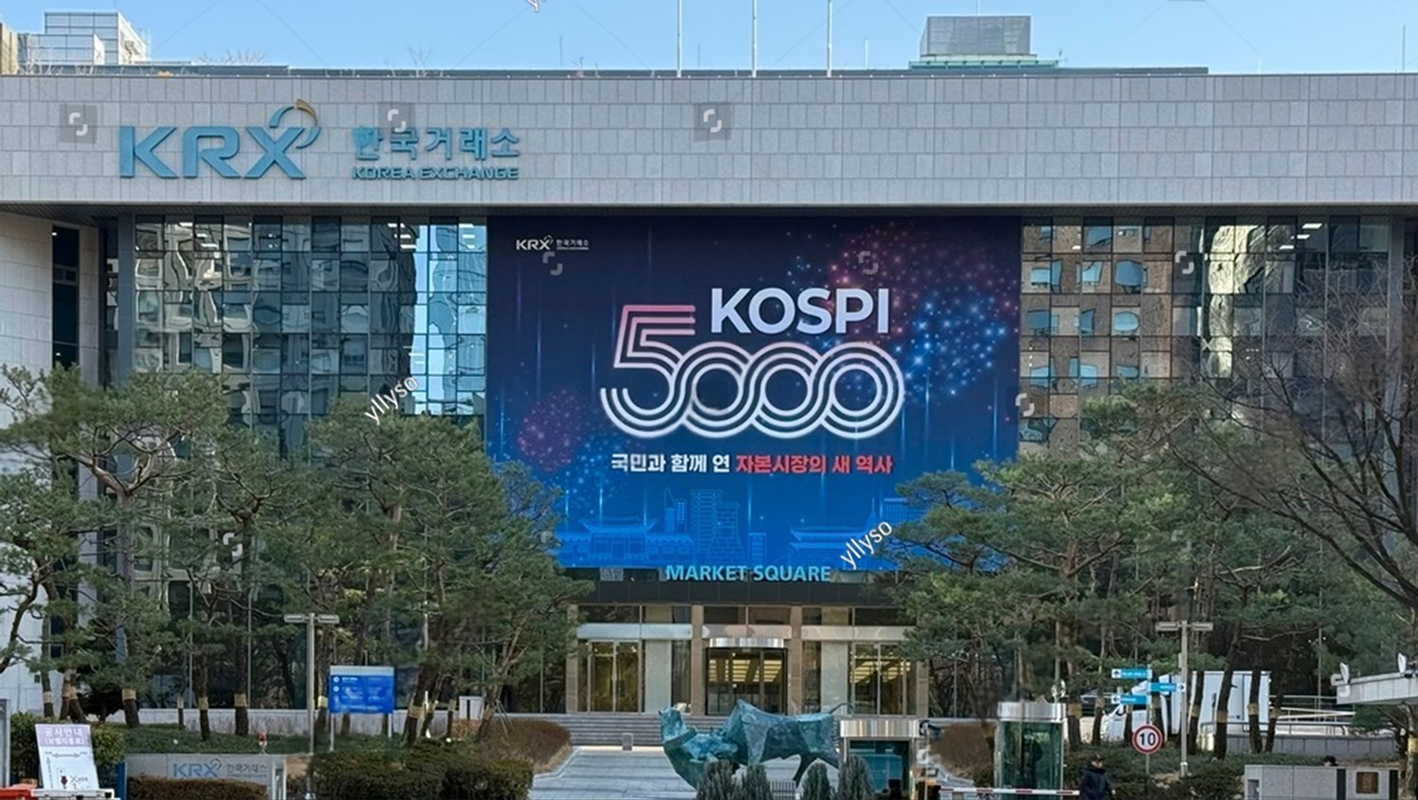
South Korean equities experienced a sharp selloff after the KOSPI Index fell approximately 5%, prompting the Korea Exchange (KRX) to briefly halt program selling in an effort to reduce market volatility. According to the market update shared on X, more than ₩277.5 trillion, equivalent to approximately $185 billion, was wiped from the value of South Korean listed companies during the session.
The decline comes amid a broader deterioration in global investor sentiment, as geopolitical tensions and weakness in technology shares continue to pressure risk assets across international financial markets.
Trading Halt Reflects Elevated Market Volatility
The Korea Exchange’s decision to temporarily suspend program selling was designed to moderate excessive downward pressure caused by automated trading strategies. Program trading, which often involves simultaneous transactions across baskets of stocks and derivatives, can amplify market declines during periods of heightened volatility.
Such market stabilization mechanisms are commonly used by major exchanges worldwide to help restore orderly trading conditions when rapid price movements threaten market liquidity and investor confidence.
Technology and Export Stocks Face Heavy Selling
South Korea’s equity market is heavily weighted toward technology, semiconductor, automotive, and industrial exporters, making it particularly sensitive to shifts in global economic expectations. A broad decline in these sectors contributed significantly to the sharp fall in the KOSPI.
The latest selloff also reflects growing investor caution toward export-oriented economies as geopolitical risks, supply chain concerns, and uncertainty surrounding global economic growth continue to weigh on market sentiment. Companies with significant international exposure are often among the first to experience selling pressure during periods of rising uncertainty.
Global Markets Continue to Price in Geopolitical Risks
The reported loss of approximately $185 billion in market capitalization underscores the speed at which geopolitical developments can affect regional financial markets. While South Korea’s domestic economic fundamentals remain an important consideration, external events increasingly influence investor positioning given the country’s deep integration into global trade and technology supply chains.
For international investors, including those in Israel, the KOSPI serves as an important indicator of risk appetite across Asia. Sharp movements in the index frequently influence sentiment toward semiconductor manufacturers, electronics producers, and broader emerging-market equities.
Looking ahead, investors will closely monitor whether volatility stabilizes following the temporary trading measures and whether geopolitical developments continue to drive capital flows away from risk assets. Market participants will also watch upcoming economic data, corporate earnings, and policy responses for signs that confidence can recover after one of the steepest declines in the South Korean equity market in recent months.
Comparison, examination, and analysis between investment houses
Leave your details, and an expert from our team will get back to you as soon as possible
* This article, in whole or in part, does not contain any promise of investment returns, nor does it constitute professional advice to make investments in any particular field.
To read more about the full disclaimer, click here
- Ronny Mor
- •
- 6 Min Read
- •
- ago 1 hour
SKN | Michael Burry Expands Bearish Bets on AI and Semiconductors While Adding Selective Long Positions
Michael Burry, the investor best known for anticipating the U.S. housing market collapse before the 2008 financial crisis, has
- ago 1 hour
- •
- 6 Min Read

Michael Burry, the investor best known for anticipating the U.S. housing market collapse before the 2008 financial crisis, has

- Lior mor
- •
- 5 Min Read
- •
- ago 2 hours
SKN | Salesforce Wins $1.6 Billion VA Contract to Accelerate Digital Transformation for U.S. Veterans
Salesforce Inc. (NYSE: CRM) has secured a $1.6 billion contract spanning three years with the U.S. Department of Veterans
- ago 2 hours
- •
- 5 Min Read

Salesforce Inc. (NYSE: CRM) has secured a $1.6 billion contract spanning three years with the U.S. Department of Veterans

- omer bar
- •
- 6 Min Read
- •
- ago 2 hours
SKN | U.S. Stocks Gain $680 Billion as Reports of Potential U.S.-Iran Talks Boost Risk Appetite
U.S. equity markets staged a sharp recovery after reports emerged that Pakistan is pushing to restart diplomatic talks between
- ago 2 hours
- •
- 6 Min Read
U.S. equity markets staged a sharp recovery after reports emerged that Pakistan is pushing to restart diplomatic talks between

- sagi habasov
- •
- 6 Min Read
- •
- ago 2 hours
SKN | China’s CXMT IPO Signals New Chapter in the Global Memory Chip Race
ChangXin Memory Technologies (CXMT) is preparing to make its public market debut in China, a milestone that underscores the
- ago 2 hours
- •
- 6 Min Read
ChangXin Memory Technologies (CXMT) is preparing to make its public market debut in China, a milestone that underscores the


