





- omer bar
- •
- 8 Min Read
- •
- 3 hours ago
Key Points
- AMD announced a strategic partnership with Anthropic that includes a potential investment of up to $5 billion and deployment of AMD’s next-generation AI systems.
- Anthropic will use 2 gigawatts of AMD Instinct MI450 Series GPUs through AMD Helios rack-scale solutions, expanding AMD’s challenge to NVIDIA’s AI hardware leadership.
- The agreement highlights the growing race among chipmakers, cloud providers, and AI developers to secure computing capacity as demand for advanced AI models accelerates.
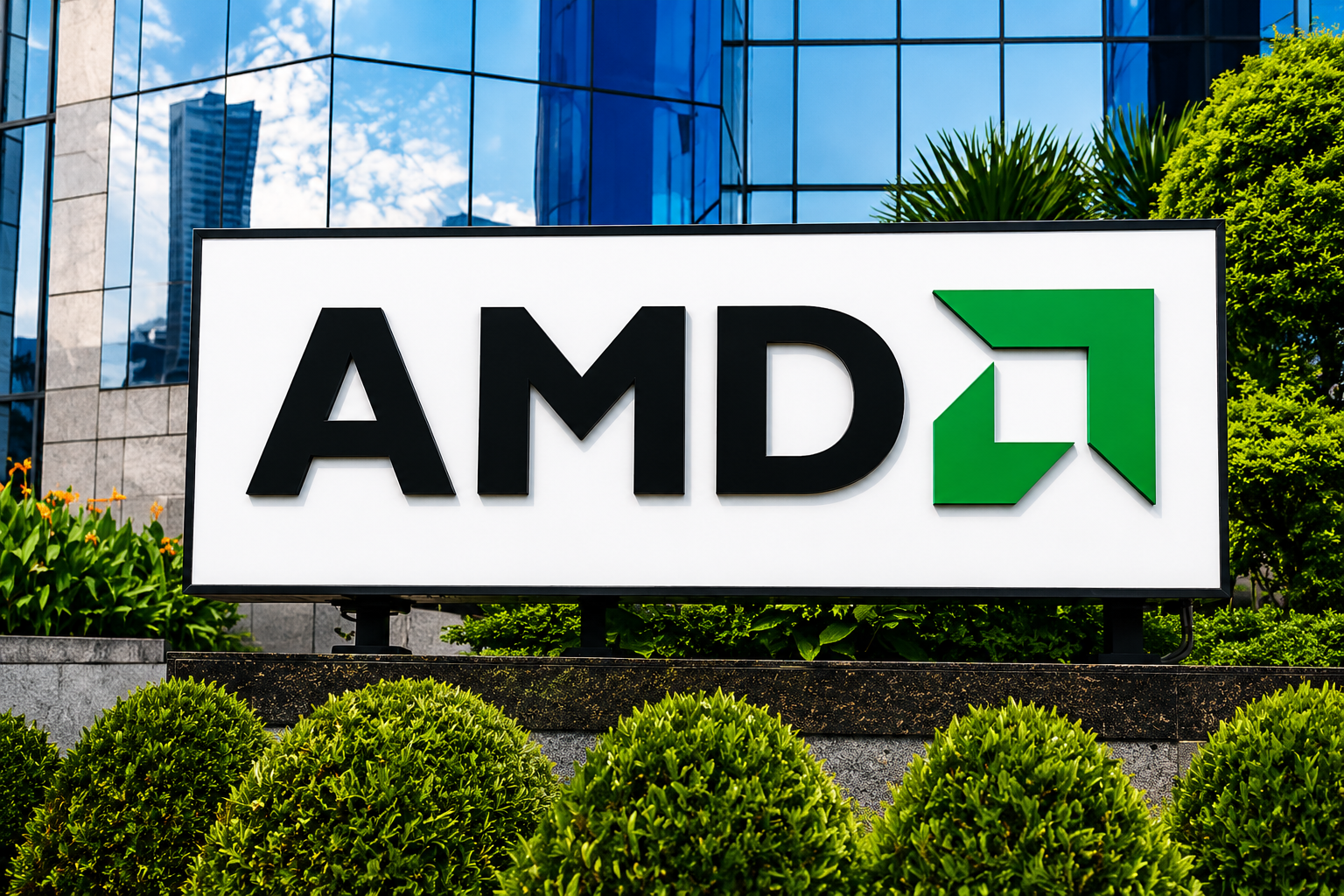
Advanced Micro Devices is strengthening its position in the artificial intelligence infrastructure market through a major agreement with Anthropic, one of the world’s leading AI model developers. The partnership, which includes a potential $5 billion investment from AMD and a large-scale computing deployment, reflects the growing importance of securing AI processing capacity as companies compete to develop increasingly powerful models.
The deal also represents another step in AMD’s strategy to challenge NVIDIA’s dominance in AI accelerators by building relationships with major AI companies and expanding adoption of its Instinct GPU ecosystem.
AMD Expands AI Hardware Footprint Through Anthropic Partnership
Under the agreement, Anthropic will deploy 2 gigawatts of AMD Instinct MI450 Series GPUs through AMD Helios rack-scale solutions. The first gigawatt of capacity is expected to be deployed during the first half of next year, marking one of AMD’s largest AI infrastructure commitments to date.
Gigawatt-scale computing agreements have become a key measurement of AI infrastructure expansion as companies require enormous amounts of processing power to train and operate advanced models. Anthropic’s growing demand for computing resources reflects the broader industry trend where AI developers are competing not only on model quality but also on access to sufficient hardware capacity.
AMD CEO Lisa Su highlighted the importance of the partnership as the company continues positioning its AI products as alternatives to NVIDIA’s dominant GPU platform.
The AI Hardware Competition Intensifies
AMD has emerged as one of the primary challengers to NVIDIA in the AI semiconductor market, benefiting from the rapid expansion of artificial intelligence applications. While NVIDIA maintains a significant lead in AI accelerators, AMD has increased its presence through partnerships with major technology companies, including OpenAI and now Anthropic.
The company’s Helios rack-scale systems are designed to compete at the infrastructure level rather than simply as individual chips. This approach mirrors NVIDIA’s strategy of providing complete AI computing platforms that combine processors, networking technology, and software optimization.
The competition is becoming increasingly important as AI companies seek alternatives to reduce dependency on a single supplier and secure the computing resources required for future growth.
Anthropic’s Growing Infrastructure Needs Reflect AI Demand Surge
Anthropic’s agreement with AMD follows a series of major infrastructure deals as demand for its Claude AI models continues accelerating. The company has previously secured large-scale computing partnerships with Amazon, Google, Broadcom, and SpaceX as it expands its AI capabilities.
The company has indicated that demand for its AI products has created infrastructure pressure, affecting reliability and performance during periods of high usage. This challenge highlights a fundamental issue facing the AI industry: technological progress is increasingly limited by available computing power.
Anthropic’s rapid commercial expansion has also attracted significant investor interest. The company has reported substantial revenue growth driven partly by Claude Code, its AI coding assistant, and has been preparing for a potential public offering.
Market Implications for AMD and the AI Industry
The AMD-Anthropic agreement reinforces the view that AI infrastructure spending remains one of the strongest investment themes in global technology markets. For AMD, winning large-scale customers could accelerate its transition from a secondary AI chip supplier into a more significant competitor.
However, NVIDIA’s established ecosystem, software advantage, and customer relationships remain major competitive barriers. The long-term outcome of the AI semiconductor race will likely depend not only on hardware performance but also on software compatibility, supply availability, and the ability to deliver complete computing solutions.
Going forward, investors will monitor AMD’s execution of Helios deployments, Anthropic’s expansion plans, and whether AI infrastructure demand continues growing at the pace expected by the market. The ability to secure strategic partnerships with leading AI developers may become one of the most important factors determining winners in the next phase of the artificial intelligence economy.
Comparison, examination, and analysis between investment houses
Leave your details, and an expert from our team will get back to you as soon as possible
* This article, in whole or in part, does not contain any promise of investment returns, nor does it constitute professional advice to make investments in any particular field.
To read more about the full disclaimer, click here
- Lior mor
- •
- 7 Min Read
- •
- ago 10 hours
SKN | Big Tech’s Massive AI Spending Remains Market Catalyst as Investors Await Earnings Signals
Big Tech’s unprecedented investment in artificial intelligence infrastructure continues to shape investor sentiment as markets assess whether the current AI
- ago 10 hours
- •
- 7 Min Read

Big Tech’s unprecedented investment in artificial intelligence infrastructure continues to shape investor sentiment as markets assess whether the current AI

- omer bar
- •
- 6 Min Read
- •
- ago 12 hours
SKN | NVIDIA’s Next-Generation Vera Rubin AI Platform Stays on Track as Customers Begin Hardware Testing
NVIDIA’s next-generation Vera Rubin artificial intelligence platform remains on schedule, with several major customers already testing hardware, highlighting the company’s
- ago 12 hours
- •
- 6 Min Read
NVIDIA’s next-generation Vera Rubin artificial intelligence platform remains on schedule, with several major customers already testing hardware, highlighting the company’s
- Lior mor
- •
- 6 Min Read
- •
- ago 13 hours
SKN | China’s Rare-Earth Exports to the U.S. Remain Restricted as Supply Chain Risks Increase
China’s rare-earth exports to the United States remain significantly constrained, highlighting growing concerns over access to critical materials used across
- ago 13 hours
- •
- 6 Min Read
China’s rare-earth exports to the United States remain significantly constrained, highlighting growing concerns over access to critical materials used across

- Ronny Mor
- •
- 7 Min Read
- •
- ago 20 hours
SKN | Rocket Lab’s Neutron Rocket Could Define the Company’s Next Growth Chapter
Rocket Lab USA, Inc. (NASDAQ: RKLB) is approaching one of the most important milestones in its corporate history as
- ago 20 hours
- •
- 7 Min Read
Rocket Lab USA, Inc. (NASDAQ: RKLB) is approaching one of the most important milestones in its corporate history as


