





- orshu
- •
- 8 Min Read
- •
- 2 hours ago
Key Points
- The TA-125 Index fell 0.25% on July 8 as selling pressure remained concentrated in mid-cap and sector stocks despite a stable performance from large-cap shares.
- The TA-35 ended virtually unchanged with a slight 0.03% gain, while the TA-90 declined 1.02%, highlighting continued weakness outside Israel's largest companies.
- Israel's bond market also edged lower, with the All-Bond General Index declining 0.08% as investors maintained a cautious approach across asset classes.
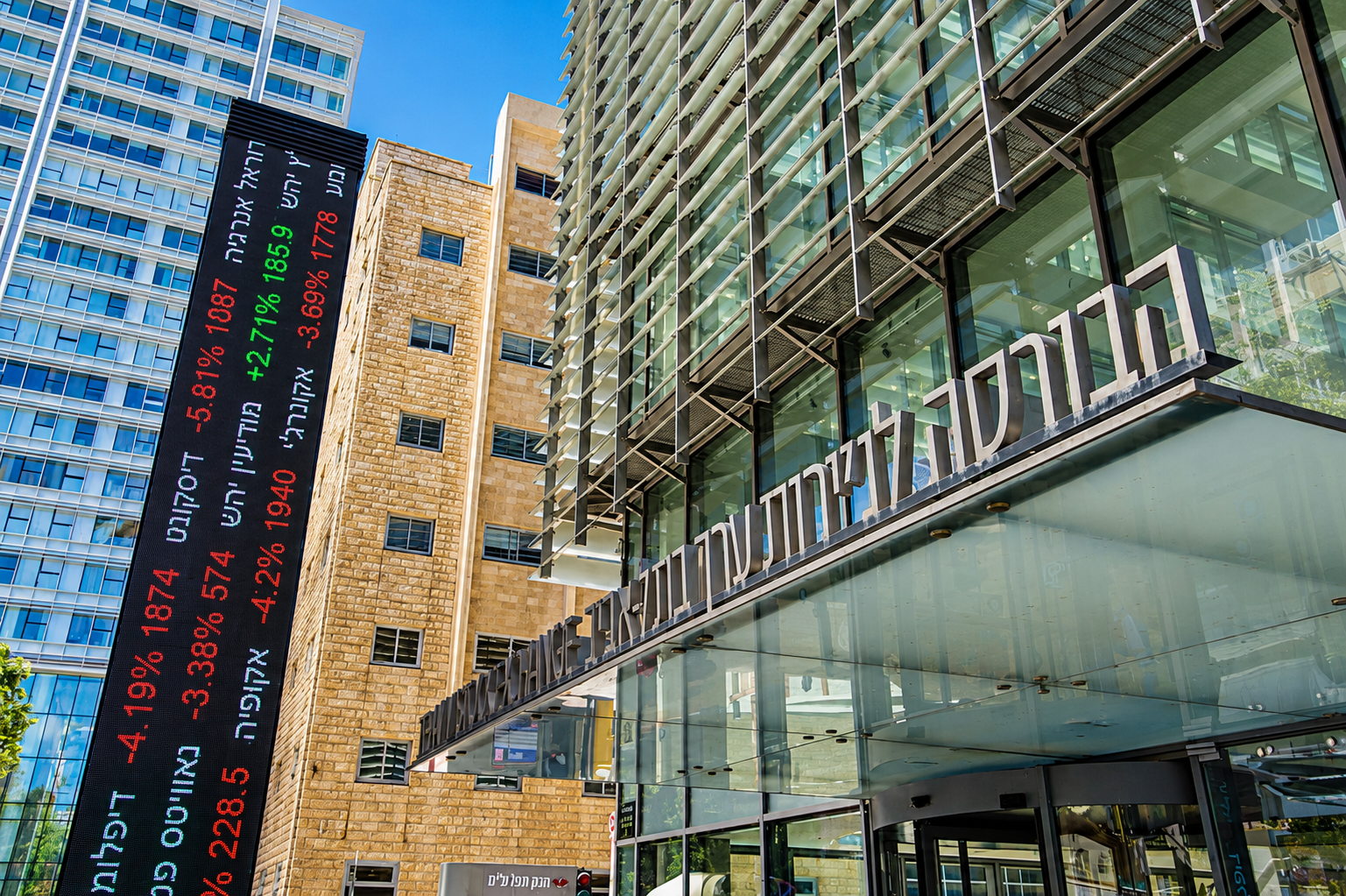
Israeli equities closed modestly lower on Wednesday, July 8, as investors remained cautious following the previous session’s broad market selloff. While blue-chip stocks stabilized and managed to finish slightly higher, weakness across mid-cap and value-oriented shares prevented the broader market from recovering, resulting in another day of declines for the benchmark indices.
The cautious sentiment also extended to fixed-income markets, where bond indices posted modest losses despite healthy trading activity. The session reflected an ongoing search for direction as investors balanced recent market volatility against longer-term economic and corporate fundamentals.
TA-125 Edges Lower Despite Stability in Large-Cap Stocks
The benchmark TA-125 Index slipped 0.25% to close at 4,052.52 points. Market breadth remained negative, with only 34 advancing securities compared with 89 decliners, while two issues finished unchanged, underscoring the persistence of selling pressure across much of the market.
Large-cap stocks proved more resilient than the broader market. The TA-35 Index gained a marginal 0.03% to close at 4,087.17 points. Although fourteen constituents advanced while twenty-one declined, strength among several heavyweight stocks helped offset broader weakness and kept the benchmark in positive territory.
Stock market turnover totaled approximately NIS 4.44 billion, remaining consistent with recent trading sessions and indicating continued investor participation despite the cautious tone. The stable trading volume suggests investors are repositioning portfolios rather than exiting the market entirely.
The TA-125 continues to trade above the psychologically important 4,000-point level, but repeated tests of this support area indicate that investors remain hesitant to aggressively rebuild equity positions.
Mid-Cap and Sector Indices Continue to Face Selling Pressure
Mid-cap stocks remained the weakest segment of the market. The TA-90 Index declined 1.02% to close at 3,938.11 points after only 20 stocks advanced while 68 declined, highlighting ongoing pressure on companies outside the blue-chip segment.
The combined TA-90 and Banks Index fell 0.28% to 4,008.77 points. Banking stocks performed better than many mid-cap shares, helping limit losses in the combined benchmark, although overall financial sector sentiment remained cautious.
The TA-125 Value Index slipped 0.26% to finish at 4,015.65 points, while the Tel Aviv Sector-Balance Index lost 0.64% to close at 4,658.06 points. Only 27 securities advanced compared with 71 decliners, demonstrating that weakness remained widespread across multiple industries.
The divergence between the relatively stable TA-35 and weaker mid-cap indices suggests investors continue favoring larger, more established companies while remaining cautious toward higher-risk segments of the market.
Bond Market Extends Pullback as Investors Remain Defensive
Israel’s fixed-income market also recorded another modest decline, extending the cautious tone across financial markets.
The All-Bond General Index fell 0.08% to close at 432.49 points. Declining bond issues outnumbered advancing securities by 325 to 220, while 61 issues remained unchanged, indicating a moderately defensive environment.
Corporate bond benchmarks also weakened. The Tel Bond-Adjoined A Index declined 0.05% to 439.23 points, while the Tel Bond 60 Adjacent Index slipped 0.07% to 427.81 points. The short-term bond index remained unchanged at 476.14 points, reflecting continued stability in shorter-duration fixed-income securities.
Bond market turnover reached approximately NIS 7.28 billion, significantly exceeding equity turnover. The elevated activity suggests institutional investors remained active in fixed-income markets despite relatively small price movements.
The combination of softer equities and modest bond declines indicates that investors continue to adopt a selective approach rather than making broad shifts between asset classes.
Looking ahead, investors will focus on whether Israel’s equity market can stabilize after two consecutive sessions of declines. Maintaining support above the 4,000-point level on the TA-125 will remain an important technical indicator, while stronger market breadth and renewed buying in mid-cap shares would signal improving investor confidence. Market participants will also continue monitoring corporate earnings, macroeconomic developments, central bank policy expectations, and geopolitical events that could influence sentiment. A recovery led by both large-cap and mid-cap stocks, supported by improving trading volumes, would provide stronger evidence that the recent weakness represents a temporary consolidation rather than the start of a broader downturn.
Comparison, examination, and analysis between investment houses
Leave your details, and an expert from our team will get back to you as soon as possible
* This article, in whole or in part, does not contain any promise of investment returns, nor does it constitute professional advice to make investments in any particular field.
To read more about the full disclaimer, click here
- orshu
- •
- 7 Min Read
- •
- ago 2 hours
SKN | European Markets Slide as Investors Reassess Growth Risks and Regional Economic Outlook
European equity markets closed lower on July 8, with broad-based selling pressure affecting major indices across the region. The
- ago 2 hours
- •
- 7 Min Read

European equity markets closed lower on July 8, with broad-based selling pressure affecting major indices across the region. The
- orshu
- •
- 7 Min Read
- •
- ago 4 hours
SKN | Wall Street Pulls Back as Investors Turn Cautious Amid Broad-Based Selling
U.S. equities traded lower during Wednesday's session on July 8, as investors adopted a more defensive stance following recent
- ago 4 hours
- •
- 7 Min Read

U.S. equities traded lower during Wednesday's session on July 8, as investors adopted a more defensive stance following recent
- orshu
- •
- 7 Min Read
- •
- ago 8 hours
SKN | Can Rising Oil Prices and Middle East Tensions Derail Global Equity Markets?
Global financial markets faced renewed uncertainty on Wednesday as oil prices surged more than 3% following U.S. military strikes on
- ago 8 hours
- •
- 7 Min Read

Global financial markets faced renewed uncertainty on Wednesday as oil prices surged more than 3% following U.S. military strikes on
- orshu
- •
- 6 Min Read
- •
- ago 9 hours
SKN | Asia Markets Slide on July 8, 2026 as South Korea Drops 5.35% Despite Hong Kong Rally
Asian markets closed mostly lower on July 8, 2026, as another wave of selling swept across the region. Sharp declines
- ago 9 hours
- •
- 6 Min Read

Asian markets closed mostly lower on July 8, 2026, as another wave of selling swept across the region. Sharp declines


