





- orshu
- •
- 7 Min Read
- •
- 2 hours ago
Key Points
- Global equities weakened on July 7, 2026, with U.S., European, and Israeli markets posting broad declines as technology and cyclical sectors came under pressure.
- Asia experienced another divergent session, with steep losses in South Korea, Japan, and China outweighing modest gains in India.
- Investor attention now shifts to July 8, with markets focused on inflation expectations, central bank policy signals, and broader global risk sentiment.

Global markets ended July 7, 2026 on a weaker footing as selling pressure spread across most major regions. U.S. equities retreated, led by technology shares, while European benchmarks broadly declined and Asian markets remained under pressure amid sharp losses in several key indices. Israeli equities also recorded broad-based declines, reflecting cautious investor sentiment across global financial markets.
America: Technology Stocks Lead Broad Market Pullback
U.S. equities finished lower on July 7, 2026, with technology shares driving the decline. The Nasdaq fell 1.16%, marking the weakest performance among the major U.S. benchmarks. The S&P 500 declined 0.45%, while the Dow Jones slipped 0.25%. Small-cap stocks also weakened, with the Russell 2000 falling 0.90%.
Risk sentiment softened during the session. The VIX rose 3.60% to 16.13, while the U.S. Dollar Index edged up 0.09%, indicating modest demand for defensive positioning.
Elsewhere in the Americas, Canada’s S&P/TSX Composite gained 0.17%, outperforming the broader region, while Brazil’s IBOVESPA declined 0.25%, resulting in mixed performance outside the United States.
Europe: Broad-Based Weakness Overshadows Limited UK Strength
European equities broadly declined on July 7, 2026, as investors reduced exposure across major regional benchmarks. Germany’s DAX fell 1.37%, representing the largest decline among Europe’s major indices. The EURO STOXX 50 lost 1.22%, while the Euronext 100 declined 1.12%.
The MSCI Europe Index fell 0.50%, and France’s CAC 40 dropped 0.51%. The FTSE 100 was the only major benchmark to finish higher, gaining 0.13%, providing limited support to the region.
Currency markets were weaker, with the Euro Index falling 0.29% and the British Pound Index declining 0.28%, reflecting softer demand for European currencies.
Asia: Regional Selling Continues Despite Selective Strength
Asian markets delivered another mixed session on July 7, 2026, although declines dominated regional trading. South Korea’s KOSPI plunged 4.91%, extending recent volatility and posting the region’s steepest loss. Japan’s Nikkei 225 fell 2.12%, while China’s Shanghai Composite declined 1.26%.
Hong Kong’s Hang Seng lost 0.51%, and Australia’s S&P/ASX 200 slipped 0.31%, reflecting continued weakness across several major markets.
India stood out as one of the few bright spots, with the Sensex advancing 0.13%. Currency trading was mixed, as the Australian Dollar Index rose 0.61% while the Japanese Yen Index fell 0.61%.
Tel Aviv: Broad Declines Weigh on Israeli Equities
Israeli equities recorded broad losses on July 7, 2026, with selling pressure extending across large-cap and mid-cap shares. The TA-35 declined 1.95%, while the TA-125 fell 1.98%. The TA-90 dropped 2.08%, underperforming the broader market as mid-cap stocks weakened.
Market breadth was notably negative, with declining shares significantly outnumbering advancing stocks across the major indices. Trading activity remained active despite the widespread decline, reflecting continued investor repositioning.
Outlook for July 8, 2026: Markets Monitor Risk Sentiment After Global Pullback
Global markets enter July 8, 2026 with investors assessing whether the recent wave of selling represents a short-term consolidation or the beginning of a broader risk-off phase. Market participants are expected to closely monitor developments in U.S. technology shares, which remain a key driver of global equity performance.
Attention will also remain focused on inflation expectations, central bank policy outlooks, and incoming economic indicators that could influence interest-rate expectations. Investors are likely to evaluate corporate developments and macroeconomic data for additional direction.
Key risks include continued volatility across Asian markets, renewed weakness in European equities, fluctuations in currency markets, and changes in global investor positioning. Technology-sector performance and overall market liquidity are also expected to influence trading conditions.
Overall, July 8 is expected to bring a cautious trading environment, with investors balancing macroeconomic risks against opportunities created by recent market weakness as regional divergence continues to shape global market direction.
Comparison, examination, and analysis between investment houses
Leave your details, and an expert from our team will get back to you as soon as possible
* This article, in whole or in part, does not contain any promise of investment returns, nor does it constitute professional advice to make investments in any particular field.
To read more about the full disclaimer, click here
- orshu
- •
- 8 Min Read
- •
- ago 4 hours
SKN | Asian Markets Open Mixed as South Korea Leads Gains While China and Australia Face Selling Pressure
Asian equity markets traded with mixed momentum during Wednesday's morning session on July 8, highlighting diverging investor sentiment across
- ago 4 hours
- •
- 8 Min Read
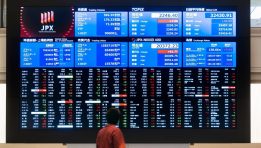
Asian equity markets traded with mixed momentum during Wednesday's morning session on July 8, highlighting diverging investor sentiment across
- orshu
- •
- 7 Min Read
- •
- ago 8 hours
SKN | U.S. Stocks Pull Back on July 7, 2026 as Technology Shares Lead Declines
U.S. equity markets ended Tuesday, July 7, 2026, on a weaker note as investors took profits after a strong run
- ago 8 hours
- •
- 7 Min Read

U.S. equity markets ended Tuesday, July 7, 2026, on a weaker note as investors took profits after a strong run

- omer bar
- •
- 6 Min Read
- •
- ago 9 hours
SKN | Why Did the Dow Retreat From Record Highs as AI Stocks Slumped and Oil Prices Jumped?
U.S. equity markets turned lower on Tuesday as investors rotated away from high-growth artificial intelligence stocks while renewed geopolitical tensions
- ago 9 hours
- •
- 6 Min Read

U.S. equity markets turned lower on Tuesday as investors rotated away from high-growth artificial intelligence stocks while renewed geopolitical tensions
- orshu
- •
- 7 Min Read
- •
- ago 13 hours
SKN | European Markets End Lower as German and Eurozone Stocks Lead Broad Selloff
European equity markets finished the trading session on July 7 with broad-based declines, as investors reduced exposure to continental
- ago 13 hours
- •
- 7 Min Read

European equity markets finished the trading session on July 7 with broad-based declines, as investors reduced exposure to continental


