





- orshu
- •
- 8 Min Read
- •
- 2 hours ago
Key Points
- KOSPI outperformed major Asian markets during Wednesday's morning session, reflecting continued investor confidence in South Korean equities.
- Chinese and Australian equities declined as investors remained cautious about economic growth and regional market momentum.
- Currency markets remained relatively stable, while investors monitored global interest rate expectations and upcoming economic data.
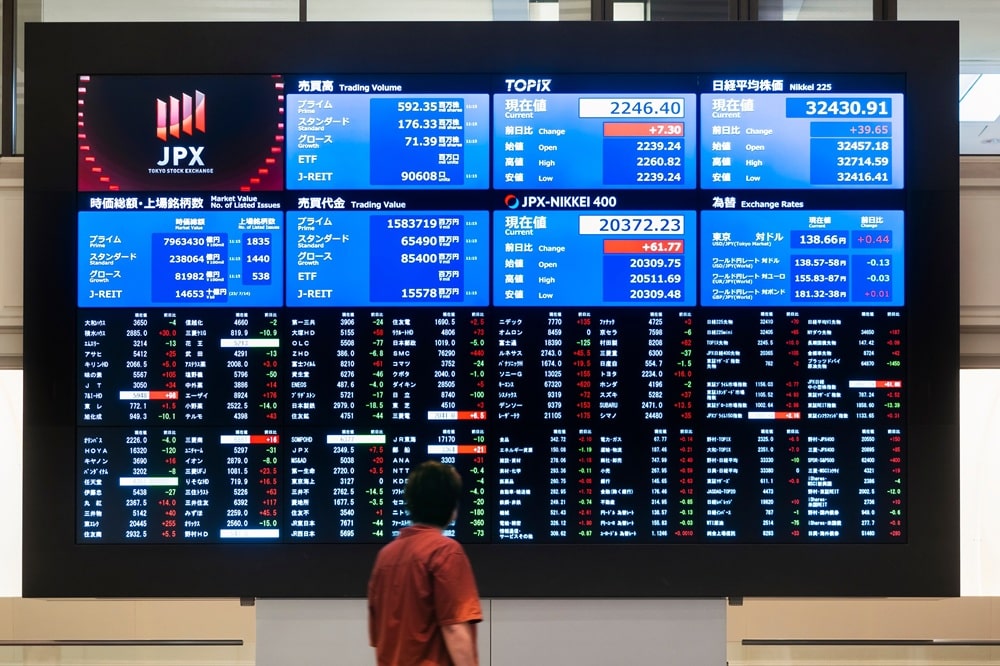
Asian equity markets traded with mixed momentum during Wednesday’s morning session on July 8, highlighting diverging investor sentiment across the region. While South Korea extended its recent gains and Japan remained marginally positive, broader weakness in mainland China and Australia reflected continued caution over regional economic growth and global monetary policy expectations.
The session comes as investors continue evaluating corporate earnings prospects, central bank policy, and international trade developments. Market participants across Asia are also monitoring the performance of U.S. technology stocks, commodity prices, and currency movements for additional direction as the trading day progresses.
South Korea Extends Leadership While Japan Holds Steady
South Korea emerged as the strongest-performing major market during the morning session, with the KOSPI Composite Index rising by 0.89% to 7,724.72. The continued advance reflects sustained investor interest in semiconductor manufacturers, technology companies, and export-oriented businesses that remain central to South Korea’s economy.
The positive performance follows continued optimism surrounding global artificial intelligence investment, which has supported demand for semiconductor producers and technology supply chains throughout Asia. South Korean companies remain among the primary beneficiaries of expanding global investment in data centers, advanced memory chips, and next-generation computing infrastructure.
Japan’s Nikkei 225 posted a modest gain of 0.05% to 68,289.12, indicating relatively stable investor sentiment. While gains remained limited, the index continued holding near elevated levels as investors balanced stronger corporate earnings expectations against concerns surrounding currency fluctuations and global trade conditions.
Meanwhile, the Japanese Yen Index edged lower by 0.01%, suggesting little change in foreign exchange markets as investors await further signals from the Bank of Japan and the U.S. Federal Reserve regarding future monetary policy.
China and Australia Weigh on Regional Performance
Chinese equities remained under pressure, with the SSE Composite Index declining by 1.32% to 3,990.24. The weakness reflects continued investor caution surrounding domestic economic recovery, property market conditions, and the pace of consumer demand. Although policymakers continue introducing targeted support measures, investor confidence remains measured as markets seek stronger evidence of sustained economic acceleration.
Hong Kong’s Hang Seng Index remained unchanged during the morning session, reflecting a balanced trading environment after recent market volatility. Investors continued monitoring technology stocks, mainland capital flows, and geopolitical developments influencing Chinese-listed companies.
Australia also experienced broad weakness, with the S&P/ASX 200 falling by 1.19% to 8,699.40. The decline was accompanied by a 0.39% fall in the Australian Dollar Index, indicating softer sentiment toward commodity-linked assets and resource-focused companies. Australia’s equity market remains highly sensitive to fluctuations in global commodity demand, particularly from China.
India Shows Resilience as Investors Monitor Regional Risk Appetite
India’s S&P BSE SENSEX declined modestly by 0.13% to 78,180.72, reflecting profit-taking following recent gains rather than a broad deterioration in market sentiment. India’s long-term economic outlook remains supported by resilient domestic demand, infrastructure investment, and ongoing foreign capital inflows, although investors continue evaluating valuation levels after an extended rally.
Across the broader region, investors remain selective as they assess multiple macroeconomic themes simultaneously. Expectations surrounding U.S. interest rates, global technology spending, China’s economic recovery, and geopolitical developments continue shaping capital flows across Asian markets.
For Israeli investors, developments in Asian markets remain particularly significant due to the region’s central role in semiconductor manufacturing, electronics exports, industrial production, and global supply chains. Performance across South Korea, Japan, and China frequently influences technology shares listed in the United States and Europe, creating indirect implications for globally diversified portfolios.
Outlook: Markets Await Fresh Economic Catalysts
As trading continues through Wednesday’s session, investors will closely monitor economic data releases, central bank commentary, corporate earnings announcements, and developments in global technology markets. Particular attention will remain focused on China’s economic recovery, semiconductor demand, currency movements, and commodity prices, all of which could influence regional market direction. For global and Israeli investors, Asia continues to serve as an important barometer for international economic activity, making today’s divergence between technology-driven gains in South Korea and broader weakness in China and Australia an important trend to watch as the week progresses.
Comparison, examination, and analysis between investment houses
Leave your details, and an expert from our team will get back to you as soon as possible
* This article, in whole or in part, does not contain any promise of investment returns, nor does it constitute professional advice to make investments in any particular field.
To read more about the full disclaimer, click here
- orshu
- •
- 7 Min Read
- •
- ago 6 hours
SKN | U.S. Stocks Pull Back on July 7, 2026 as Technology Shares Lead Declines
U.S. equity markets ended Tuesday, July 7, 2026, on a weaker note as investors took profits after a strong run
- ago 6 hours
- •
- 7 Min Read

U.S. equity markets ended Tuesday, July 7, 2026, on a weaker note as investors took profits after a strong run

- omer bar
- •
- 6 Min Read
- •
- ago 7 hours
SKN | Why Did the Dow Retreat From Record Highs as AI Stocks Slumped and Oil Prices Jumped?
U.S. equity markets turned lower on Tuesday as investors rotated away from high-growth artificial intelligence stocks while renewed geopolitical tensions
- ago 7 hours
- •
- 6 Min Read

U.S. equity markets turned lower on Tuesday as investors rotated away from high-growth artificial intelligence stocks while renewed geopolitical tensions
- orshu
- •
- 7 Min Read
- •
- ago 11 hours
SKN | European Markets End Lower as German and Eurozone Stocks Lead Broad Selloff
European equity markets finished the trading session on July 7 with broad-based declines, as investors reduced exposure to continental
- ago 11 hours
- •
- 7 Min Read
European equity markets finished the trading session on July 7 with broad-based declines, as investors reduced exposure to continental
- orshu
- •
- 7 Min Read
- •
- ago 11 hours
SKN | Tel Aviv Stocks Retreat Nearly 2% as Broad Selling Hits Equities and Bond Market Softens
Israeli equities reversed the previous session's gains on Tuesday, July 7, as investors broadly reduced exposure across nearly every sector
- ago 11 hours
- •
- 7 Min Read

Israeli equities reversed the previous session's gains on Tuesday, July 7, as investors broadly reduced exposure across nearly every sector


