





- sagi habasov
- •
- 6 Min Read
- •
- 2 hours ago
Key Points
- The TA-RealEstate Index finished the trading week lower at 1,425.08, locking in a 2.50% percentage change over the trailing five-day window.
- A persistent mid-week slide drove the property benchmark to an intraday low of 1,415.28 before establishing a marginal technical recovery.
- Global and domestic asset allocators are adjusting exposure to property developers as structural credit constraints compress near-term project capitalization rates.
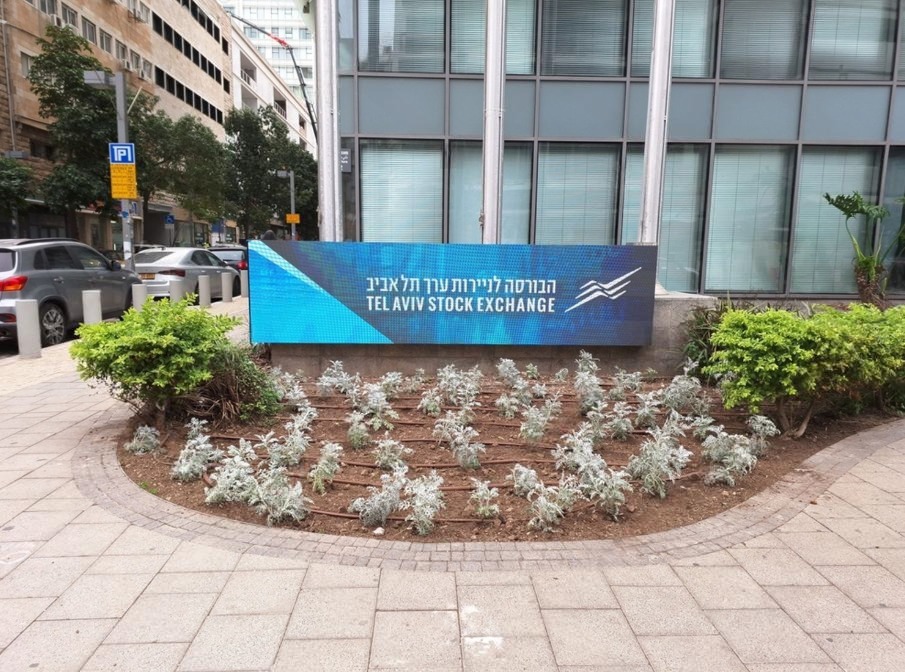
The TA-RealEstate Index finished the week lower at 1,425.08, reflecting a pressured and cautious performance across the domestic property sector, amounting to a negative percent return of 2.50% over the trailing five-day session. Although local growth assets exhibited intermittent intra-week stabilization phases, developer shares ultimately contracted as investors balanced demanding project capitalization costs with a highly restrictive monetary backdrop that continues to guide national capital flows.
Index Demonstrates Vulnerability to Technical Retracements
The weekly trading architecture highlighted an index searching for structural support as global and local de-risking accelerated across interest-rate-sensitive benchmarks. Opening the weekly window at 1,422.81, the index initially advanced to test local technical boundaries at an intraday high of 1,435.53 before systematic institutional selling reversed these gains. Friday’s trading session induced a further 0.44% daily change, bottoming near an intraday low of 1,415.28 before localized buying flattened the close. While the index’s broad 52-week range of 1,247.75 to 1,762.38 indicates that long-term structural baselines are still intact, this near-term breach of technical support levels reflects a tactical capital preservation stance among major market participants.
Monetary Stance and Structural Borrowing Pressures
Real estate equities remain exceptionally sensitive to evolving central bank forward guidance and sticky core inflation metrics. Institutional allocators continue evaluating the Bank of Israel’s monetary policy path, especially as a prolonged restrictive stance creates headwinds for highly leveraged developers. Higher capitalization rates and elevated construction financing costs are systematically altering net asset value (NAV) calculations across commercial and residential portfolios. This lack of near-term visibility regarding monetary easing has compressed project development margins, dampening investor confidence and restricting the liquidity flows that typically drive the property ecosystem.
Portfolio Implications, Geopolitical Premiums, and Currency Risks
For internationally diversified asset managers and local multi-asset portfolios, the property sector correction underscores the critical impact of currency volatility and shifting geopolitical premiums. Fluctuations in the Israeli Shekel against the U.S. Dollar and Euro alter cross-border financing metrics and the absolute return profile of property-backed debt. Furthermore, evolving domestic fiscal configurations and sovereign security requirements mean that institutional allocators demand a higher structural risk premium. This has driven a rotating trend away from highly leveraged property entities and toward premium, cash-flow-resilient industrial and large-cap components to shield multi-asset frameworks from localized shocks.
Outlook: Looking ahead, the outlook for the TA-RealEstate Index remains carefully balanced, but near-term stability will likely depend on upcoming core inflation numbers, construction start prints, and explicit forward guidance from central bank officials ahead of upcoming policy updates. Markets will also monitor domestic fiscal adjustments and sovereign bond yield spreads that could trigger sudden asset reallocations. While the domestic property sector retains long-term structural appeal due to baseline demographic demand, meaningful downside risks remain prominent if borrowing costs stay elevated longer than modeled or if macroeconomic growth slows abruptly. Conversely, clear evidence of sustained disinflation and resilient corporate guidance from leading property executives could catalyze a steady, non-linear recovery back toward intermediate resistance zones near 1,450, though future gains are highly likely to remain gradual rather than linear.
Comparison, examination, and analysis between investment houses
Leave your details, and an expert from our team will get back to you as soon as possible
* This article, in whole or in part, does not contain any promise of investment returns, nor does it constitute professional advice to make investments in any particular field.
To read more about the full disclaimer, click here
- Ronny Mor
- •
- 6 Min Read
- •
- ago 9 minutes
SKN | Gold Futures Consolidate Over Five-Day Horizon as Safe-Haven Flows Battle Monetary Constraints
The Gold Aug 26 Futures contract (GC=F) finished the week lower at 4,096.30, reflecting a negative percent return of
- ago 9 minutes
- •
- 6 Min Read

The Gold Aug 26 Futures contract (GC=F) finished the week lower at 4,096.30, reflecting a negative percent return of

- omer bar
- •
- 6 Min Read
- •
- ago 27 minutes
SKN | Platinum Futures Under Pressure Despite Late-Week Surge as Industrial and Macro Uncertainties Linger
The Platinum Jul 26 Futures contract (PL=F) finished the week lower at 1,647.30, reflecting a negative percent return of
- ago 27 minutes
- •
- 6 Min Read

The Platinum Jul 26 Futures contract (PL=F) finished the week lower at 1,647.30, reflecting a negative percent return of

- Lior mor
- •
- 6 Min Read
- •
- ago 1 hour
SKN | TA 35 Index Faces Late-Week Liquidation as Monetary Caution and Fiscal Headwinds Weigh on Israeli Blue-Chips
The flagship TA 35 Index finished the week lower at 4,028.22, registering a negative percent return of 2.79% over
- ago 1 hour
- •
- 6 Min Read

The flagship TA 35 Index finished the week lower at 4,028.22, registering a negative percent return of 2.79% over

- Arik Arkadi Sluzki
- •
- 7 Min Read
- •
- ago 2 hours
SKN | TA 125 Index Faces Late-Week Liquidation as Monetary Caution and Fiscal Headwinds Weigh on Israeli Blue-Chips
The benchmark TA 125 Index finished the week significantly lower at 3,968.09, registering a negative percent return of 2.78% over
- ago 2 hours
- •
- 7 Min Read

The benchmark TA 125 Index finished the week significantly lower at 3,968.09, registering a negative percent return of 2.78% over


