





- Ronny Mor
- •
- 6 Min Read
- •
- 5 hours ago
Key Points
- The Chinese benchmark SSE Composite Index (000001.SS) concluded the week lower at 4,027.27, representing a 1.55% decline over the trailing five days.
- A sharp late-week sell-off dragged the index down 2.26% during Friday's session, forcing it to test an intraday low of 4,007.86.
- Global allocators and institutional investors remain focused on regional growth trajectories, regulatory dynamics, and shifting currency risks.
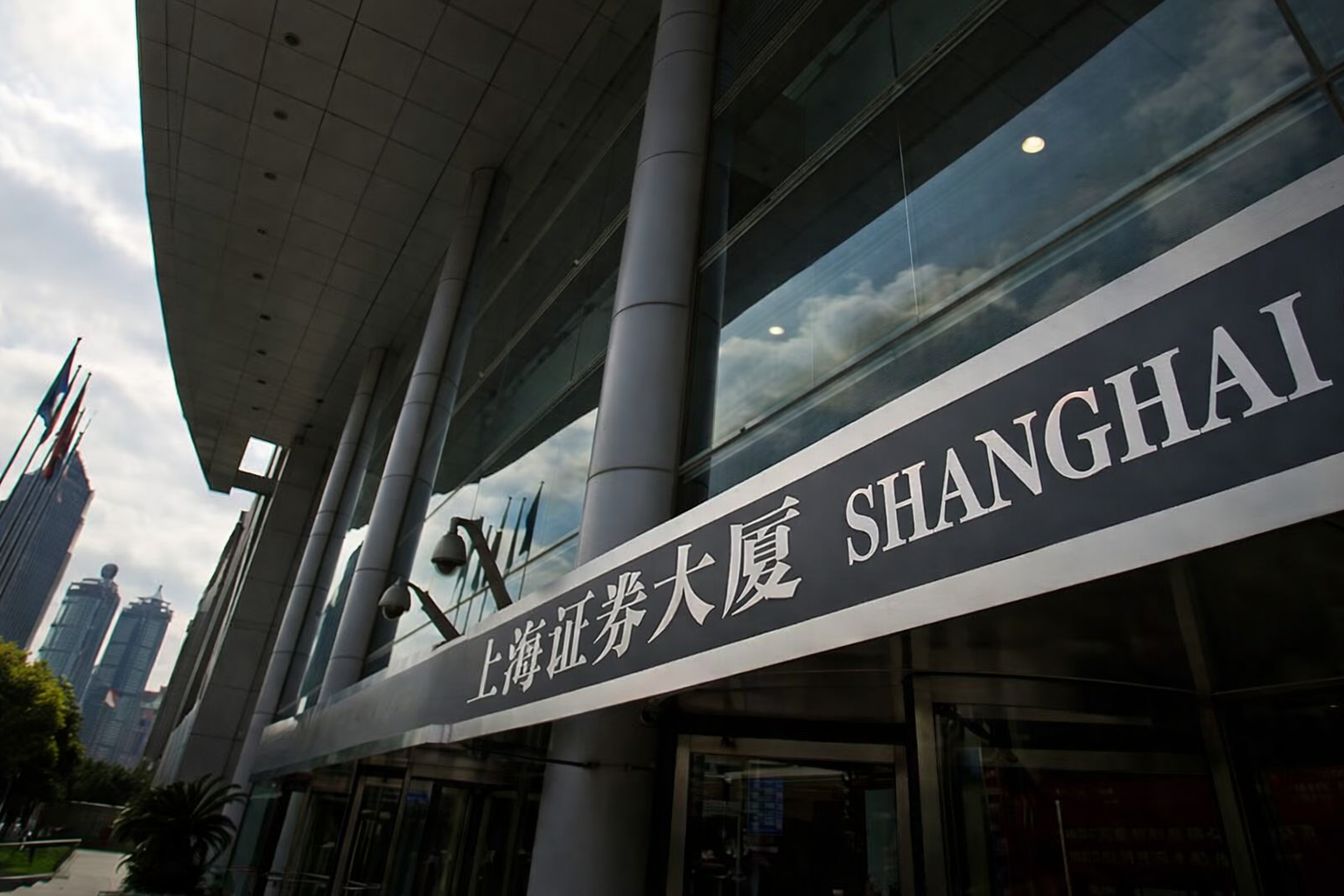
The Chinese benchmark SSE Composite Index (000001.SS) finished the week lower at 4,027.27, reflecting a pressured and cautious performance across domestic equity markets. Although regional equities showed brief signs of stabilization mid-week, the index ultimately contracted sharply as global investors balanced complex macroeconomic signals with an evolving policy framework that continues to impact international capital flows.
Index Demonstrates Vulnerability to Late-Week Selling Pressure
The five-day trading pattern highlighted a market searching for structural direction. Early-week trading saw the index face downward momentum from its 4,098.69 opening level, hitting local troughs around June 24 before a brief stabilization attempt. However, intensifying selling pressure toward the weekend triggered a significant 2.26% contraction during Friday’s session, driving the benchmark down to an intraday low of 4,007.86 before a minor recovery right before the close. While the index’s broad 52-week range of 3,420.11 to 4,258.86 points to an established long-term baseline, the swift breach of recent technical support levels suggests a tactical risk reduction by major market participants.
Macroeconomic Headwinds and Regional Policy Trajectories
Chinese equities remain highly sensitive to evolving economic indicators, industrial output metrics, and monetary actions from the People’s Bank of China (PBoC). Investors continue evaluating whether localized fiscal stimulus programs will be sufficient to counter cooling consumer demand and real estate vulnerabilities. This ongoing uncertainty regarding growth visibility has compressed equity valuations across key industrial and financial sectors. External factors, including global trade policies and shifting interest-rate expectations from the Federal Reserve, also add layers of complexity as international allocators adjust their emerging market exposure.
Global Portfolio Implications and Currency Risks
For Israeli institutional investors and internationally diversified asset allocators, the correction in Shanghai highlights the impact of currency volatility and geopolitical premiums on multi-asset portfolios. Fluctuations between the Chinese Yuan (CNY), the U.S. Dollar, and the Israeli Shekel alter total return profiles, making active currency risk management a vital component of cross-border allocations. Underlying regional structural shifts require sophisticated hedging strategies to safeguard international equity exposure from unexpected capital outflows or shifting trade dynamics.
Outlook: Looking ahead, the outlook for the SSE Composite Index remains carefully balanced, but near-term stability will likely depend on upcoming manufacturing purchasing managers’ index (PMI) prints, export data, and explicit policy guidance from domestic authorities. Markets will also monitor geopolitical developments and corporate credit spreads that could trigger sudden changes in investor risk appetite. While domestic equities maintain long-term valuation appeal, downside risks remain prominent if economic stabilization slows or global financial-market volatility intensifies. Conversely, evidence of consistent macroeconomic support and resilient corporate guidance could catalyze a steady, non-linear recovery toward previous resistance zones near 4,100, though future gains are likely to remain gradual rather than linear.
Comparison, examination, and analysis between investment houses
Leave your details, and an expert from our team will get back to you as soon as possible
* This article, in whole or in part, does not contain any promise of investment returns, nor does it constitute professional advice to make investments in any particular field.
To read more about the full disclaimer, click here
- sagi habasov
- •
- 7 Min Read
- •
- ago 45 minutes
SKN | Wall Street Ends a Volatile Week as AI Momentum Cools and Oil Prices Retreat
U.S. financial markets concluded the week with a noticeably different tone than recent months, as two of the market's
- ago 45 minutes
- •
- 7 Min Read

U.S. financial markets concluded the week with a noticeably different tone than recent months, as two of the market's

- Arik Arkadi Sluzki
- •
- 6 Min Read
- •
- ago 4 hours
SKN | Nikkei 225 Sharpens Correction as Bank of Japan Normalization and Global Tech De-risking Weigh on Japanese Equities
The Japanese benchmark Nikkei 225 Index (^N225) finished the week sharply lower at 69,360.88, reflecting a highly pressured and
- ago 4 hours
- •
- 6 Min Read

The Japanese benchmark Nikkei 225 Index (^N225) finished the week sharply lower at 69,360.88, reflecting a highly pressured and
- sagi habasov
- •
- 6 Min Read
- •
- ago 4 hours
SKN | KOSPI Composite Index Sharpens Decline as Tech Sector Pressures and Global Macro Headwinds Weigh on South Korean Equities
The South Korean benchmark KOSPI Composite Index (^KS11) finished the week sharply lower at 8,411.21, reflecting a highly pressured
- ago 4 hours
- •
- 6 Min Read

The South Korean benchmark KOSPI Composite Index (^KS11) finished the week sharply lower at 8,411.21, reflecting a highly pressured

- orshu
- •
- 6 Min Read
- •
- ago 4 hours
SKN | Japanese Yen Index Hovers Near Annual Lows as Markets Reassess Global Rate Trajectories
The Japanese Yen Currency Index (^XDN) finished the week marginally lower at 61.82, reflecting a pressured and cautious performance
- ago 4 hours
- •
- 6 Min Read

The Japanese Yen Currency Index (^XDN) finished the week marginally lower at 61.82, reflecting a pressured and cautious performance


