





- sagi habasov
- •
- 7 Min Read
- •
- 1 day ago
Key Points
- Oracle reduced its workforce by approximately 21,000 employees over the past year, representing a 13% decline.
- The company directly linked workforce reductions to the growing adoption of artificial intelligence across its operations.
- Massive AI infrastructure investments across the technology sector are increasingly reshaping hiring, productivity, and workforce strategies.

Oracle’s latest workforce reduction highlights a growing transformation unfolding across the technology sector as companies redirect resources toward artificial intelligence infrastructure and automation. The software giant disclosed that its full-time workforce fell from 162,000 employees in 2025 to 141,000 in 2026, eliminating roughly 21,000 positions over a 12-month period. While cost-cutting initiatives are not uncommon in the technology industry, Oracle’s filing stands out because it explicitly identified AI deployment as a contributing factor behind workforce reductions, reinforcing concerns about how artificial intelligence may reshape employment across the sector.
AI Investment Drives Organizational Restructuring
Oracle stated that the adoption of artificial intelligence technologies throughout its operations has already resulted in workforce reductions and may continue to do so in the future. The company spent approximately $1.8 billion on restructuring activities during the fiscal year, a dramatic increase from $374 million the previous year, reflecting severance costs and broader organizational changes.
The workforce reductions come as Oracle aggressively expands its cloud computing and AI capabilities. Earlier this year, the company announced plans to raise $50 billion through debt and equity financing to support its artificial intelligence infrastructure strategy. Capital expenditures surged 162% to $55.7 billion during the fiscal year, while free cash flow fell deeply into negative territory at approximately $23.7 billion. These figures underscore the enormous financial commitment required to compete in the rapidly expanding AI market.
Management emphasized that resources are being reallocated toward cloud and AI product development, suggesting the layoffs are less about short-term weakness and more about repositioning the company for future growth.
Big Tech Faces a New Balancing Act
Oracle is far from alone in pursuing workforce reductions while simultaneously increasing AI-related spending. Across the technology sector, companies are committing unprecedented amounts of capital to data centers, semiconductor infrastructure, and advanced computing platforms. Industry estimates suggest that Meta, Microsoft, Amazon, Google, and Oracle could collectively invest hundreds of billions of dollars annually to support artificial intelligence expansion.
At the same time, many of these companies are reducing headcount. Meta eliminated approximately 8,000 positions earlier this year, while Microsoft implemented voluntary workforce reduction programs. Other major technology firms, including Salesforce and IBM, have also announced substantial layoffs linked to automation and AI-driven efficiency initiatives.
The trend reflects a broader shift in corporate priorities. Rather than expanding workforces to drive growth, technology companies are increasingly investing in systems designed to improve productivity while reducing reliance on labor-intensive operations.
Long-Term Implications for Technology Employment
Oracle acknowledged that restructuring efforts carry meaningful risks, including reduced productivity, employee morale challenges, shortages of specialized talent, and the loss of institutional knowledge. These concerns are becoming increasingly common across corporate America as businesses attempt to balance operational efficiency with innovation.
For investors, the workforce reductions may signal management’s commitment to protecting margins while funding AI expansion. However, the broader economic implications are more complex. The technology sector has traditionally been a major source of high-paying jobs, and the acceleration of AI-driven restructuring raises questions about future employment trends in knowledge-based industries.
Looking ahead, Oracle’s actions may serve as a preview of what many large corporations could face over the next decade. As artificial intelligence becomes more deeply integrated into business operations, companies will continue evaluating which functions can be automated and which require human expertise. The key challenge for both businesses and policymakers will be ensuring that productivity gains generated by AI are balanced against workforce disruption. For now, Oracle’s restructuring demonstrates that the AI revolution is no longer just transforming products and services—it is increasingly transforming the structure of corporate employment itself.
Comparison, examination, and analysis between investment houses
Leave your details, and an expert from our team will get back to you as soon as possible
* This article, in whole or in part, does not contain any promise of investment returns, nor does it constitute professional advice to make investments in any particular field.
To read more about the full disclaimer, click here
- orshu
- •
- 7 Min Read
- •
- ago 6 hours
SKN | Nasdaq Holds Near Record Territory as Technology Stocks Extend Market Leadership
The Nasdaq Composite traded higher on June 24, rising by 0.16% to 25,628.23 as investors continued to favor growth-oriented
- ago 6 hours
- •
- 7 Min Read

The Nasdaq Composite traded higher on June 24, rising by 0.16% to 25,628.23 as investors continued to favor growth-oriented

- Ronny Mor
- •
- 9 Min Read
- •
- ago 10 hours
SKN | Is Nvidia Still a Buy? The AI Giant’s Growth Story May Be Far From Over
Nvidia continues to stand at the center of the artificial intelligence revolution, and despite a recent pullback in its share
- ago 10 hours
- •
- 9 Min Read
Nvidia continues to stand at the center of the artificial intelligence revolution, and despite a recent pullback in its share
- Ronny Mor
- •
- 11 Min Read
- •
- ago 11 hours
SKN | Two AI Stocks Positioned to Benefit From the Next Decade of Cloud and Artificial Intelligence Growth
The artificial intelligence revolution is rapidly transforming the global technology landscape, creating new opportunities for companies that provide the infrastructure
- ago 11 hours
- •
- 11 Min Read

The artificial intelligence revolution is rapidly transforming the global technology landscape, creating new opportunities for companies that provide the infrastructure

- sagi habasov
- •
- 7 Min Read
- •
- ago 13 hours
SKN | Is Agility Robotics’ $2.5 Billion SPAC Deal a Sign That Humanoid Robots Are Entering the Mainstream?
The race to commercialize humanoid robots is entering a new phase as Agility Robotics prepares to go public through a
- ago 13 hours
- •
- 7 Min Read
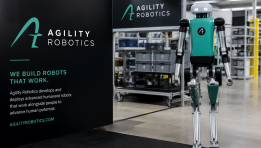
The race to commercialize humanoid robots is entering a new phase as Agility Robotics prepares to go public through a


