


- omer bar
- •
- 8 Min Read
- •
- 16 seconds ago
Key Points
- South Korean equities are navigating a volatile environment driven by global semiconductor demand cycles
- Technology-heavy exposure makes the market highly sensitive to AI-driven chip trends and export dynamics
- ETF flows reflect a cautious but structurally constructive view on Korea’s long-term innovation base

South Korean equities are drawing renewed attention from global investors as shifting semiconductor cycles, artificial intelligence demand, and global trade dynamics reshape expectations for export-driven economies. The iShares MSCI South Korea ETF serves as a key benchmark for exposure to one of Asia’s most technology-intensive markets, where index performance is closely tied to a small number of large-cap industrial and tech names.
The broader context for Korea’s equity market is the ongoing rebalancing of global growth, where manufacturing cycles and advanced electronics demand remain central to earnings visibility. For investors in Israel and other export-oriented economies, Korea often acts as a leading indicator for global technology and industrial demand trends.
Technology Concentration Drives Market Sensitivity
A defining characteristic of South Korea’s equity market is its heavy concentration in semiconductor and electronics giants, which makes performance highly sensitive to global chip cycles. Companies linked to memory semiconductors and advanced manufacturing account for a significant share of index weight, meaning shifts in pricing and demand can quickly translate into broader market volatility.
Recent global trends in artificial intelligence infrastructure investment have provided a supportive backdrop for advanced chipmakers, but the cycle remains uneven. Periods of strong AI-driven demand are often offset by inventory corrections or weaker consumer electronics consumption, creating oscillations in earnings expectations.
This concentration risk means that ETF performance is less driven by broad macro diversification and more by the earnings trajectory of a few dominant exporters. As a result, sentiment can shift quickly in response to semiconductor pricing data, US technology demand, and global supply chain adjustments.
Export Dependence Links Korea to Global Growth Cycles
South Korea’s economy remains structurally tied to external demand, particularly from the United States and China. This export dependence means that global industrial activity, trade policy shifts, and currency fluctuations play a critical role in shaping equity performance.
A stronger global growth environment typically benefits Korean exporters, while slowing demand in major economies can quickly weigh on earnings expectations. Currency movements also influence competitiveness, as a weaker won can support exports but introduce volatility in foreign investor returns.
For global portfolio managers, including those in Israel with exposure to Asia through diversified ETF allocations, Korea is often viewed as a high-beta play on global manufacturing and technology cycles. This makes it both a growth opportunity and a volatility source within broader emerging Asia allocations.
ETF Flows Reflect Balanced but Cautious Positioning
Flow data into South Korea-focused ETFs indicates a mixed but stable investor stance, with allocations reflecting long-term confidence in the country’s technology ecosystem while acknowledging near-term cyclical uncertainty. Institutional investors continue to view Korea as strategically important due to its leadership in memory semiconductors and advanced electronics manufacturing.
However, positioning has become more selective, with increased attention to earnings resilience, balance sheet strength, and exposure to artificial intelligence-related supply chains. This reflects a broader shift in global equity markets toward quality-driven and thematic allocation strategies.
At the same time, geopolitical risks in the broader Asia-Pacific region and global interest rate conditions continue to influence risk appetite. Higher yields in developed markets can reduce attractiveness of growth-sensitive emerging market exposures, including Korea.
Outlook: Semiconductor Cycle and Global Demand in Focus
Looking ahead, the performance trajectory of South Korean equities will depend heavily on the direction of the global semiconductor cycle and the durability of AI-driven hardware demand. Investors will closely monitor chip pricing trends, inventory levels, and capital expenditure plans from major global technology firms.
Key risks include a slowdown in global electronics demand, sharper-than-expected inventory corrections, and currency volatility affecting export competitiveness. On the positive side, sustained investment in artificial intelligence infrastructure and advanced semiconductor technologies could reinforce Korea’s strategic positioning in global supply chains.
Overall, South Korea remains a structurally important but cyclical market, where ETF performance is tightly linked to global technology demand and industrial momentum rather than domestic demand drivers.
Comparison, examination, and analysis between investment houses
Leave your details, and an expert from our team will get back to you as soon as possible
* This article, in whole or in part, does not contain any promise of investment returns, nor does it constitute professional advice to make investments in any particular field.
To read more about the full disclaimer, click here
- orshu
- •
- 8 Min Read
- •
- ago 3 days
SKN | SPY ETF Climbs Toward Record Highs as Investor Confidence Supports Broad US Equity Rally
The State Street SPDR S&P 500 ETF Trust (SPY), one of the world’s most actively traded exchange-traded funds, moved
- ago 3 days
- •
- 8 Min Read
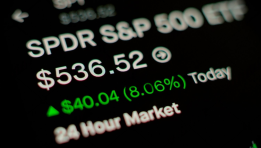
The State Street SPDR S&P 500 ETF Trust (SPY), one of the world’s most actively traded exchange-traded funds, moved

- Lior mor
- •
- 7 Min Read
- •
- ago 3 days
SKN | Why Lower-Fee QQQM Is Quietly Beating QQQ for Long-Term Investors
Two ETFs Tracking the Same Index QQQ and QQQM both provide exposure to the Nasdaq-100 Index, which is heavily concentrated
- ago 3 days
- •
- 7 Min Read
Two ETFs Tracking the Same Index QQQ and QQQM both provide exposure to the Nasdaq-100 Index, which is heavily concentrated
- Lior mor
- •
- 7 Min Read
- •
- ago 4 days
SKN | Silver ETF Strength Reflects Rising Industrial Demand and Safe-Haven Interest
Silver markets are regaining investor attention as macroeconomic uncertainty, shifting interest rate expectations, and evolving industrial demand converge. The iShares
- ago 4 days
- •
- 7 Min Read

Silver markets are regaining investor attention as macroeconomic uncertainty, shifting interest rate expectations, and evolving industrial demand converge. The iShares

- Ronny Mor
- •
- 6 Min Read
- •
- ago 4 days
SKN | AMD Earnings Surge Fuels Rally in Semiconductor ETFs Amid Expanding AI Demand
AMD Earnings Beat Strengthens AI Growth Narrative Advanced Micro Devices delivered stronger-than-expected first-quarter 2026 results, reinforcing investor confidence in the
- ago 4 days
- •
- 6 Min Read

AMD Earnings Beat Strengthens AI Growth Narrative Advanced Micro Devices delivered stronger-than-expected first-quarter 2026 results, reinforcing investor confidence in the

