


- orshu
- •
- 7 Min Read
- •
- 11 seconds ago
Key Points
- AI-driven earnings are accelerating among mega-cap tech firms, reshaping index performance.
- Market gains are increasingly concentrated, raising concerns about breadth and sustainability.
- Investors are split between long-term AI optimism and short-term valuation risks.

The latest earnings cycles have reinforced a powerful trend: artificial intelligence is becoming a primary driver of corporate profitability. However, as revenues surge among a handful of dominant players, markets are showing signs of divergence beneath the surface, raising questions about how broad and sustainable this growth truly is.
AI Leaders Drive Outsized Earnings Growth
Major technology companies at the forefront of artificial intelligence have reported significant earnings acceleration, fueled by demand for cloud computing, AI infrastructure, and advanced semiconductor capabilities. Firms involved in AI chip production, hyperscale cloud platforms, and enterprise AI services have delivered double-digit revenue growth, in some cases exceeding market expectations.
This surge has translated into outsized contributions to major indices such as the S&P 500 and Nasdaq, where a small group of large-cap stocks accounts for a disproportionate share of overall gains. The trend reflects not only strong earnings performance but also investor willingness to assign premium valuations to companies perceived as long-term AI beneficiaries.
However, this dynamic has created a narrow leadership structure, where index performance may mask weaker results across broader sectors. While headline earnings appear robust, the underlying distribution of growth remains uneven.
Market Breadth Weakens as Valuations Expand
The concentration of gains among AI leaders has led to declining market breadth, with fewer stocks participating in the rally. This raises structural concerns, particularly as valuations for leading firms continue to expand. In several cases, price-to-earnings multiples have risen well above historical averages, reflecting high expectations for future AI-driven revenues.
For investors, this creates a tension between growth potential and valuation risk. While AI adoption is expected to transform industries ranging from finance to healthcare, the pace at which these benefits translate into sustained earnings remains uncertain. Any deviation from projected growth trajectories could lead to sharp repricing, particularly in heavily weighted index constituents.
At the same time, sectors outside the AI ecosystem, including traditional الصنا industrials and consumer segments, have shown more moderate or uneven earnings performance, reinforcing the perception of a two-speed market.
Global and Israeli Market Implications
The AI earnings boom is not confined to the United States; it is influencing global capital flows and sector allocation. Israeli technology firms, particularly those specializing in cybersecurity, data infrastructure, and machine learning applications, are increasingly viewed as strategic beneficiaries of the AI expansion.
Israel’s tech ecosystem, often referred to as the “Startup Nation,” is well-positioned to integrate into global AI supply chains. However, local markets remain sensitive to external demand conditions and global funding cycles. As international investors allocate capital toward AI leaders, smaller or emerging players may face capital concentration challenges.
Additionally, currency dynamics and macroeconomic conditions, including interest rate expectations, will play a critical role in shaping how AI-driven growth translates into regional market performance. The interplay between global tech giants and regional innovation hubs will likely define the next phase of market development.
Looking ahead, investors will be closely monitoring earnings sustainability, valuation discipline, and market breadth indicators to assess whether the AI-driven rally can extend beyond a narrow group of leaders. Key risks include slower-than-expected monetization of AI investments, regulatory developments, and shifts in global liquidity conditions. At the same time, opportunities may emerge in adjacent sectors and secondary beneficiaries of AI adoption, particularly in infrastructure, software integration, and data services. The trajectory of AI earnings will remain a central theme in global markets, but its broader impact will depend on how widely growth can be distributed across the economic landscape.
Comparison, examination, and analysis between investment houses
Leave your details, and an expert from our team will get back to you as soon as possible
* This article, in whole or in part, does not contain any promise of investment returns, nor does it constitute professional advice to make investments in any particular field.
To read more about the full disclaimer, click here
- orshu
- •
- 6 Min Read
- •
- ago 1 hour
SKN | European Equities Close Higher on Broad-Based Strength and Currency Support
European markets closed on April 30 with a strong upward bias, supported by synchronized gains across major indices and
- ago 1 hour
- •
- 6 Min Read

European markets closed on April 30 with a strong upward bias, supported by synchronized gains across major indices and
- orshu
- •
- 7 Min Read
- •
- ago 2 hours
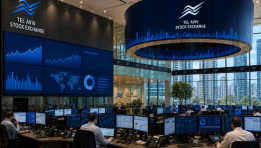
SKN | Thursday, April 30, 2026 – Israel Market Closes Flat as Tel Aviv-125 Holds Gains While Mixed Signals Emerge Across Sectors
Israeli markets closed with minimal changes on Thursday, April 30, 2026, as investors paused following the strong rally seen in
- ago 2 hours
- •
- 7 Min Read
Israeli markets closed with minimal changes on Thursday, April 30, 2026, as investors paused following the strong rally seen in
- orshu
- •
- 7 Min Read
- •
- ago 4 hours
SKN | U.S. Markets Show Mixed Momentum as Dollar Weakens and Volatility Eases
U.S. markets opened on April 30 with a mixed but stabilizing tone, as investors balance macroeconomic signals, earnings momentum,
- ago 4 hours
- •
- 7 Min Read

U.S. markets opened on April 30 with a mixed but stabilizing tone, as investors balance macroeconomic signals, earnings momentum,

- omer bar
- •
- 9 Min Read
- •
- ago 5 hours
SKN | Can Samsung Challenge TSMC’s Dominance with Its 2-Nanometer Push and New U.S. Expansion?
As the global semiconductor race intensifies, Samsung Electronics is signaling a renewed push into advanced logic chip manufacturing, aiming to
- ago 5 hours
- •
- 9 Min Read

As the global semiconductor race intensifies, Samsung Electronics is signaling a renewed push into advanced logic chip manufacturing, aiming to

