


- orshu
- •
- 6 Min Read
- •
- 19 seconds ago
Key Points
- European markets closed firmly higher with gains across all major indices, signaling strong regional momentum.
- Currency strength supports investor confidence, particularly in the British pound and euro.
- Broad participation across indices reflects stability rather than isolated sector-driven gains.
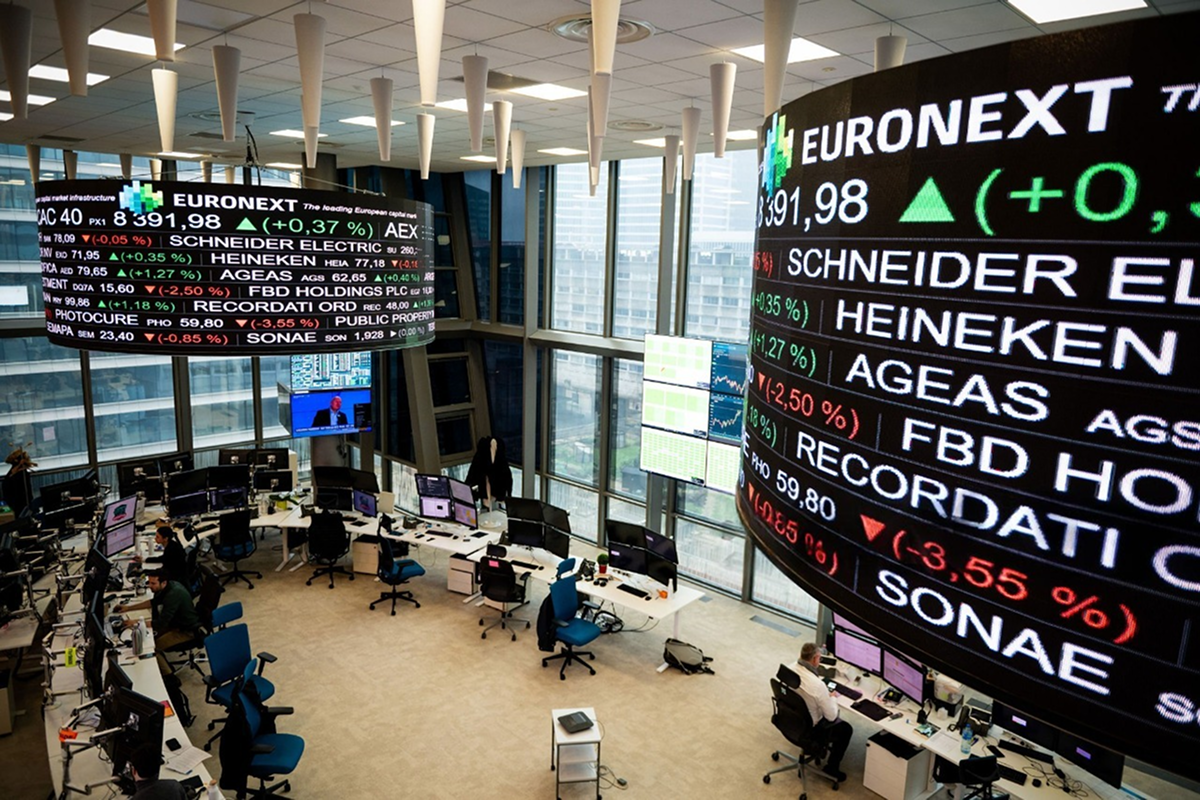
European markets closed on April 30 with a strong upward bias, supported by synchronized gains across major indices and improving macro sentiment. The session reflects broad-based investor confidence, with both equity benchmarks and currency indicators pointing toward a stable and constructive market environment.
Equity Markets Show Consistent Strength Across the Region
European equities delivered a cohesive upward performance, with all major indices closing higher. The FTSE 100 rose by 1.62 percent, leading gains among regional benchmarks, supported by strength in energy and multinational exposures. Similarly, the MSCI Europe Index increased by 1.60 percent, reflecting widespread participation across sectors and countries.
Germany’s DAX advanced by 1.41 percent, signaling resilience in industrial and export-driven sectors despite ongoing global uncertainties. The Euro Stoxx 50 climbed by 1.12 percent, reinforcing the strength seen across large-cap eurozone equities. Meanwhile, the Euronext 100 Index gained 1.01 percent, highlighting stability in pan-European corporate performance.
France’s CAC 40 posted a more moderate increase of 0.53 percent, suggesting some relative caution, but still maintaining alignment with the broader upward trend. Overall, the synchronized movement across indices indicates a structurally supported rally rather than a fragmented or speculative advance.
Currency Strength Reinforces Market Stability
Currency markets also contributed to the positive tone, with the British Pound Index rising by 0.74 percent and the Euro Index increasing by 0.40 percent. Strength in regional currencies often reflects confidence in economic fundamentals and can attract foreign capital into equity markets.
A stronger pound and euro can have mixed implications for exporters, but in the current context, it signals macro stability and capital inflows. Currency appreciation alongside equity gains suggests that investors are not only allocating to European equities but are also increasingly comfortable with currency exposure in the region.
This alignment between equity and currency markets points to a coordinated risk-on environment, where both asset classes are benefiting from improved sentiment and expectations around economic resilience.
Market Structure Indicates Stability Rather Than Speculation
The structure of today’s market move suggests a balanced and sustainable rally. Gains were not concentrated in a single index or sector but were instead distributed across multiple benchmarks, indicating broad institutional participation.
Importantly, the absence of sharp divergences between indices highlights a lack of immediate stress signals within the market. This type of movement is typically associated with steady capital deployment rather than short-term speculative flows. Investors appear to be positioning for continued economic normalization, supported by stable financial conditions and improving outlooks.
Additionally, the consistency of gains across both core and peripheral European markets suggests that systemic risk concerns remain contained, allowing for a more uniform upward trajectory.
Looking ahead, investors will need to monitor upcoming economic data, central bank guidance, and corporate earnings trends to assess whether this momentum can be sustained. Currency movements will remain a key variable, particularly in relation to export competitiveness and capital flows. While the current environment presents opportunities in diversified European exposure, risks may emerge if macroeconomic conditions shift or if policy expectations change. Maintaining a focus on market breadth, liquidity conditions, and cross-asset signals will be essential in navigating the next phase of market development.
Comparison, examination, and analysis between investment houses
Leave your details, and an expert from our team will get back to you as soon as possible
* This article, in whole or in part, does not contain any promise of investment returns, nor does it constitute professional advice to make investments in any particular field.
To read more about the full disclaimer, click here
- orshu
- •
- 7 Min Read
- •
- ago 21 minutes
SKN | Thursday, April 30, 2026 – Israel Market Closes Flat as Tel Aviv-125 Holds Gains While Mixed Signals Emerge Across Sectors
Israeli markets closed with minimal changes on Thursday, April 30, 2026, as investors paused following the strong rally seen in
- ago 21 minutes
- •
- 7 Min Read

Israeli markets closed with minimal changes on Thursday, April 30, 2026, as investors paused following the strong rally seen in
- orshu
- •
- 7 Min Read
- •
- ago 3 hours
SKN | U.S. Markets Show Mixed Momentum as Dollar Weakens and Volatility Eases
U.S. markets opened on April 30 with a mixed but stabilizing tone, as investors balance macroeconomic signals, earnings momentum,
- ago 3 hours
- •
- 7 Min Read

U.S. markets opened on April 30 with a mixed but stabilizing tone, as investors balance macroeconomic signals, earnings momentum,
- orshu
- •
- 5 Min Read
- •
- ago 7 hours
SKN | Asia Markets Decline on April 30, 2026 as Regional Weakness Broadens Despite China’s Modest Gain
Asian markets closed April 30, 2026, broadly lower, as investor sentiment weakened across the region. The session saw widespread declines
- ago 7 hours
- •
- 5 Min Read

Asian markets closed April 30, 2026, broadly lower, as investor sentiment weakened across the region. The session saw widespread declines
- orshu
- •
- 4 Min Read
- •
- ago 9 hours
SKN | European Markets Extend Losses as Broad Weakness Persists Despite UK Resilience
European markets continued to slide on Thursday, April 30, 2026, as broad-based weakness persisted across the region. Most major indices
- ago 9 hours
- •
- 4 Min Read

European markets continued to slide on Thursday, April 30, 2026, as broad-based weakness persisted across the region. Most major indices

