


- orshu
- •
- 6 Min Read
- •
- 20 seconds ago
Key Points
- Volatility spikes sharply as the VIX rises by 5.77%, signaling increased market uncertainty.
- Technology stocks lead declines, pushing the Nasdaq lower while the S&P 500 also weakens.
- Defensive rotation emerges, with the Dow and small caps holding relatively steady.

US markets are trading under heightened pressure on April 28, as a sharp rise in volatility weighs on investor sentiment. Diverging performance across major indices highlights a market increasingly driven by risk aversion, sector rotation, and macroeconomic uncertainty.
Volatility Surge Signals Growing Market Stress
The VIX index has climbed by 5.77%, marking a significant jump and indicating a clear shift toward defensive positioning. Often viewed as a barometer of investor fear, the spike suggests that market participants are bracing for potential downside risks or increased short-term instability.
Such a move typically reflects concerns around interest rate expectations, inflation persistence, and geopolitical developments. Even without a broad market sell-off, rising volatility can tighten financial conditions and reduce appetite for high-risk assets.
Institutional investors often respond to these signals by reallocating capital toward safer sectors, increasing hedging activity, and reducing exposure to more volatile segments of the market.
Technology Weakness Drags Broader Indices
The Nasdaq has fallen by 1.07%, leading losses among major indices and highlighting continued pressure on growth and technology stocks. These sectors remain particularly sensitive to changes in interest rate expectations and valuation concerns.
The S&P 500 has also declined by 0.50%, reflecting broader market weakness, although losses remain more contained compared to the technology-heavy Nasdaq. In contrast, the Dow Jones Industrial Average has risen by 0.35%, suggesting relative strength in value-oriented and defensive sectors.
The Russell 2000 has edged higher by 0.04%, indicating limited but notable resilience in small-cap stocks. This mixed performance underscores an ongoing rotation away from high-growth equities toward more stable segments of the market.
Currency Strength and Global Markets Add Pressure
The US Dollar Index has increased by 0.27%, reflecting stronger demand for the dollar as a safe-haven asset. A stronger dollar can weigh on multinational earnings and tighten global financial conditions, particularly for emerging markets.
In international markets, Brazil’s IBOVESPA has declined by 1.16%, while Canada’s S&P/TSX Composite Index has fallen by 0.19%. These declines suggest broader weakness across global equities, particularly in markets linked to commodities and external demand.
The combination of rising volatility, a stronger dollar, and global equity weakness highlights a market environment characterized by caution and selective risk-taking.
Looking ahead, investors will focus on upcoming economic data, central bank guidance, and corporate earnings releases to assess the sustainability of current trends. The sharp rise in volatility suggests that markets may remain sensitive to new developments, increasing the likelihood of continued fluctuations. Key risks include persistent inflation and tighter financial conditions, while opportunities may emerge in defensive sectors and undervalued segments benefiting from capital rotation. Market direction in the coming sessions will depend on whether risk sentiment stabilizes or continues to deteriorate under macroeconomic pressures.
Comparison, examination, and analysis between investment houses
Leave your details, and an expert from our team will get back to you as soon as possible
* This article, in whole or in part, does not contain any promise of investment returns, nor does it constitute professional advice to make investments in any particular field.
To read more about the full disclaimer, click here
- orshu
- •
- 6 Min Read
- •
- ago 3 hours
SKN | Why Did Japan’s Nikkei Pull Back After the BOJ Held Rates Steady?
Japan’s equity rally showed signs of fatigue as the Nikkei 225 retreated following the Bank of Japan’s latest policy
- ago 3 hours
- •
- 6 Min Read
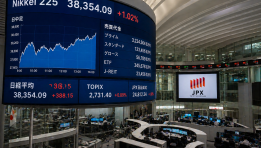
Japan’s equity rally showed signs of fatigue as the Nikkei 225 retreated following the Bank of Japan’s latest policy
- orshu
- •
- 5 Min Read
- •
- ago 3 hours
SKN | Asia Markets Pull Back on April 28, 2026 as Japan Slips Below 60,000 and Regional Weakness Broadens
Asian markets closed April 28, 2026, mostly lower, as the recent rally lost momentum and investors moved to lock in
- ago 3 hours
- •
- 5 Min Read

Asian markets closed April 28, 2026, mostly lower, as the recent rally lost momentum and investors moved to lock in
- orshu
- •
- 4 Min Read
- •
- ago 6 hours
SKN | European Markets Show Mild Gains as Broader Benchmark Slips on Weak Participation
European markets delivered a mixed performance on Tuesday, April 28, 2026, as modest gains across major indices were offset by
- ago 6 hours
- •
- 4 Min Read

European markets delivered a mixed performance on Tuesday, April 28, 2026, as modest gains across major indices were offset by
- orshu
- •
- 5 Min Read
- •
- ago 16 hours
SKN | Markets Close Mixed on April 27, 2026 as S&P 500 Edges Higher and Volatility Drops Further
U.S. equity markets closed mixed on Monday, April 27, 2026, as investors navigated a relatively quiet session marked by modest
- ago 16 hours
- •
- 5 Min Read

U.S. equity markets closed mixed on Monday, April 27, 2026, as investors navigated a relatively quiet session marked by modest

