


- Lior mor
- •
- 10 Min Read
- •
- 1 year ago
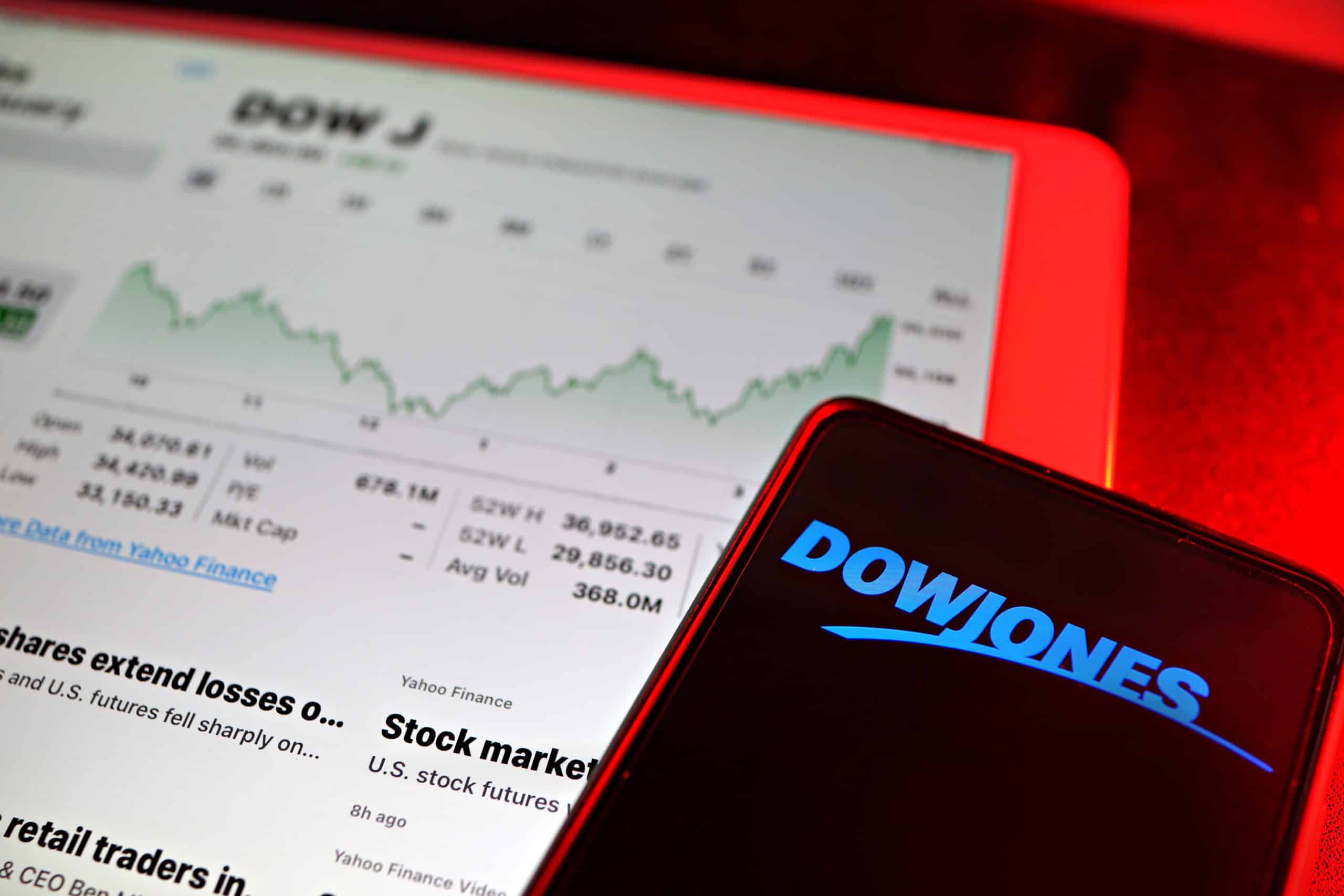
Dow Jones Hits All-Time High, Surpasses 40,000 Points: A New Era in Global Markets
On April 11, 2025, the Dow Jones Industrial Average (DJIA) surged to a historic milestone, crossing the 40,000-point mark for the first time in history. The index rose by 2,333 points over the past five trading days, reflecting an impressive 6.16% weekly gain. This achievement isn’t merely symbolic—it reflects growing investor confidence, strong corporate performance, and a stabilizing macroeconomic environment in the United States.
What is the Dow Jones Industrial Average?
The Dow Jones is one of the oldest and most recognized stock indices globally. It tracks the performance of 30 major U.S. companies across industries such as finance, technology, energy, and manufacturing. Companies like Apple, Microsoft, Boeing, JPMorgan Chase, and Coca-Cola are part of this elite group, which together provides a snapshot of the health of the U.S. economy.
Unlike broader indices such as the S&P 500, the Dow focuses on large, blue-chip companies, making it a trusted indicator for long-term market trends and investor sentiment.
What’s Driving the Rally?
1. Monetary Policy Optimism: A Turning Point in Interest Rates?
One of the most significant catalysts behind this sharp rise is market optimism regarding U.S. interest rates. Following a prolonged period of monetary tightening aimed at curbing inflation, recent economic data suggests that inflationary pressures are finally subsiding. This has led investors to believe that the Federal Reserve may halt or even reverse rate hikes in the coming months.
A shift to a more accommodative policy—potentially including rate cuts in the second half of 2025—could boost corporate profits, reduce borrowing costs, and enhance overall market valuations, especially for large-cap stocks like those in the Dow.
2. Strong Corporate Earnings Across Key Sectors
The recent earnings season has delivered a series of upside surprises, particularly among Dow constituents in the financial, industrial, and consumer sectors. For example, major banks such as Goldman Sachs and JPMorgan Chase posted better-than-expected results, driven by higher net interest margins and resilient loan portfolios. Additionally, industrial giants like Caterpillar and 3M reported solid demand both domestically and internationally, reflecting a broader economic recovery.
3. Resilience of the U.S. Economy
Despite global uncertainties, the U.S. economy continues to demonstrate impressive resilience. Unemployment remains low (hovering around 3.8%), consumer spending is strong, and GDP growth has exceeded analyst expectations. The labor market’s strength and continued household consumption, which makes up more than two-thirds of the U.S. economy, are key pillars behind investor confidence.
This macroeconomic stability has created a favorable backdrop for equity markets, reinforcing the belief that the worst of the inflationary and monetary tightening cycle may be behind us.
4. Investor Sentiment and Inflows Return to Equities
After months of cautious sentiment and capital outflows toward safer assets like bonds and money market funds, institutional and retail investors alike are pouring capital back into equities. The Dow, with its perceived safety and strong dividend-paying constituents, has become a preferred target for large-scale allocations.
What Does the 40,000 Milestone Mean?
Crossing 40,000 points is not just a psychological threshold—it marks a new chapter in global capital markets. The milestone reflects:
- Investor trust in the long-term strength of U.S. corporations.
- Confidence in the ability of the Federal Reserve to guide the economy to a soft landing.
- Expectations that the global economic environment is stabilizing after years of shocks, including the pandemic, geopolitical crises, and inflationary pressures.
For investors, it may signal renewed momentum and opportunities, but it also invites caution.
Caution Ahead: Is a Market Pullback Coming?
As always, sharp market rallies raise questions about sustainability. Some analysts caution that the recent surge could be followed by short-term corrections, especially if future economic data disappoints or if geopolitical tensions escalate.
Additionally, with U.S. presidential elections approaching in late 2024, political uncertainty may introduce additional volatility in the second half of the year. Markets traditionally dislike uncertainty, and election-related developments—especially regarding fiscal policy, trade, and regulation—could influence investor behavior.
What to Watch Going Forward
Looking ahead, the following three elements will be crucial:
- Federal Reserve Policy Decisions – The tone and timing of potential interest rate cuts will shape investor strategies.
- Upcoming Earnings Seasons – Markets will look for consistency in corporate performance to justify high valuations.
- Political and Geopolitical Factors – U.S. elections, global conflicts, and regulatory changes will all play a role in shaping sentiment.
Conclusion: A Historic High, But Not the Final Chapter
The Dow Jones Industrial Average surpassing 40,000 points is a powerful statement about the strength and resilience of the U.S. economy and capital markets. It encapsulates a confluence of positive forces: improving inflation dynamics, stable economic indicators, strong earnings, and revived investor confidence.
Still, history reminds us that markets are cyclical. This achievement should be celebrated, but also viewed with a prudent eye. For investors, this is an opportunity to reassess strategies, manage risk, and prepare for a market that continues to evolve at a rapid pace.
Comparison, examination, and analysis between investment houses
Leave your details, and an expert from our team will get back to you as soon as possible
* This article, in whole or in part, does not contain any promise of investment returns, nor does it constitute professional advice to make investments in any particular field.
To read more about the full disclaimer, click here
- orshu
- •
- 6 Min Read
- •
- ago 55 minutes
SKN | Markets Pull Back on May 7, 2026 as Small Caps Slide and Global Weakness Intensifies
U.S. equity markets closed lower on Thursday, May 7, 2026, as investors paused following the previous session’s strong rally. Losses
- ago 55 minutes
- •
- 6 Min Read

U.S. equity markets closed lower on Thursday, May 7, 2026, as investors paused following the previous session’s strong rally. Losses
- orshu
- •
- 8 Min Read
- •
- ago 1 hour
SKN | Nvidia Extends AI Leadership as Revenue Forecasts Outpace Broader S&P 500 Growth
Nvidia Corporation continued reinforcing its dominant role within the artificial intelligence investment cycle on May 7, with shares advancing
- ago 1 hour
- •
- 8 Min Read
Nvidia Corporation continued reinforcing its dominant role within the artificial intelligence investment cycle on May 7, with shares advancing

- sagi habasov
- •
- 6 Min Read
- •
- ago 2 hours
SKN | Reebok Revival Gains Momentum Under Shaquille O’Neal as Nike Struggles
Shaq Leads Reebok’s Basketball Comeback Reebok is staging a notable comeback in the athletic footwear market as NBA legend Shaquille
- ago 2 hours
- •
- 6 Min Read

Shaq Leads Reebok’s Basketball Comeback Reebok is staging a notable comeback in the athletic footwear market as NBA legend Shaquille
- orshu
- •
- 8 Min Read
- •
- ago 2 hours
SKN | US Dollar Index Holds Firm as Traders Monitor Federal Reserve and Global Currency Markets
The US Dollar Index (DXY) traded modestly higher on May 7 as investors balanced expectations surrounding US monetary policy,
- ago 2 hours
- •
- 8 Min Read

The US Dollar Index (DXY) traded modestly higher on May 7 as investors balanced expectations surrounding US monetary policy,


