





- Articles
- •
- 7 Min Read
- •
- 1 year ago

Opening: Strong Reports, Muted Reactions – The EV Market Is Searching for Direction
Electric vehicle makers Rivian Automotive and Lucid Group released their Q1 2025 earnings on Tuesday evening. Despite beating expectations and delivering notable strategic updates, both stocks failed to generate the usual post-earnings volatility. Rivian exceeded revenue and profit expectations yet cut full-year delivery guidance, prompting a 5.8% decline in its share price. Lucid, which met internal targets and trimmed its loss, ended the day down 3.4%. Investors, it seems, are more concerned with what lies ahead — particularly in the face of new tariffs and economic headwinds — than they are with the numbers just posted.
Rivian: Solid Gross Profit, Lower Deliveries, and Rising Tariff Costs
Rivian reported revenue of $1.24 billion in Q1, well above the $1.01 billion expected by analysts. The company posted a narrower-than-expected loss of $0.41 per share, versus estimates for a $0.76 loss. Gross profit reached $206 million, up from $170 million in the previous quarter — driven in part by $157 million in regulatory credit sales and a surge in software and services revenue, which grew to $318 million from just $88 million a year ago.
However, Rivian lowered its full-year delivery target to between 40,000 and 46,000 vehicles, down from a prior range of 46,000 to 51,000. It also revised its capital expenditure guidance upward to $1.8 billion–$1.9 billion, citing higher costs due to new tariffs on non-USMCA-compliant auto parts. According to CFO Claire McDonough, tariffs are expected to add several thousand dollars per vehicle in incremental costs.
Despite the lower delivery target, Rivian reaffirmed its guidance for a modest positive gross profit in 2025 and reiterated expectations for adjusted EBITDA losses between $1.7 billion and $1.9 billion. Wedbush analyst Dan Ives described the results as strong and the guidance as conservative, maintaining an Outperform rating while cutting his price target from $20 to $18.
Lucid: Mixed Results, Saudi Backing, and a Cautious Market
Lucid posted Q1 revenue of $235 million, slightly below the $249 million consensus, and a loss of $0.20 per share, outperforming estimates for a $0.23 loss. The company maintained its 2025 production forecast of roughly 20,000 vehicles, after delivering 9,029 units in 2024. CapEx is expected to reach $1.4 billion this year.
Lucid highlighted its growing product pipeline, including a new SUV that has already launched and a mid-size EV scheduled for 2026. Backing from Saudi Arabia’s Public Investment Fund remains a strategic advantage, yet market sentiment remains tepid — reflecting persistent doubts around Lucid’s ability to scale production and reach profitability in a competitive, cost-sensitive environment.
A Market Caught Between Innovation and Uncertainty
The relative calm in Rivian and Lucid’s stock prices came as a surprise, especially considering the high volatility historically associated with their earnings. Options markets had priced in moves of 10–15%, yet both stocks traded within a narrow range — a stark contrast to previous quarters.
The muted reaction reflects broader investor uncertainty surrounding the EV market. Trump-era tariffs — including a 25% levy on certain imported auto parts — are inflating production costs and clouding future demand expectations. Even though Rivian and Lucid produce their vehicles domestically, supply chains are still heavily exposed to global pricing pressures.
More broadly, U.S. consumers appear increasingly hesitant to commit to full-EV purchases, favoring lower-cost hybrids amid ongoing inflationary pressures and rising financing costs.
Conclusion: Vision Alone Isn’t Enough — Clarity Is the Missing Piece
While both Rivian and Lucid showcased promising developments, including Rivian’s upcoming R2 model and Lucid’s expanding lineup, the road ahead is fraught with macroeconomic and regulatory uncertainty. Execution, cost control, and demand stabilization will be the key metrics to watch.
In a sector once defined by boundless optimism, markets are now demanding something far more concrete: resilience, predictability, and profitable scale.
Comparison, examination, and analysis between investment houses
Leave your details, and an expert from our team will get back to you as soon as possible
* This article, in whole or in part, does not contain any promise of investment returns, nor does it constitute professional advice to make investments in any particular field.
To read more about the full disclaimer, click here
- sagi habasov
- •
- 7 Min Read
- •
- ago 5 hours
SKN | Why Are Verizon (VZ) Shares Under Pressure? Revenue Trends and Competitive Telecom Dynamics Weigh on Sentiment
Verizon Communications (NYSE: VZ) is trading lower as investor sentiment weakens amid concerns over slowing revenue growth and intensifying competition
- ago 5 hours
- •
- 7 Min Read

Verizon Communications (NYSE: VZ) is trading lower as investor sentiment weakens amid concerns over slowing revenue growth and intensifying competition

- Lior mor
- •
- 7 Min Read
- •
- ago 6 hours
SKN | Why Are Teradyne (TER) Shares Surging? AI Chip Demand and Semiconductor Testing Strength Drive Rally
Teradyne (NASDAQ: TER) is trading higher as investor sentiment improves around the semiconductor testing equipment sector, which is closely tied
- ago 6 hours
- •
- 7 Min Read
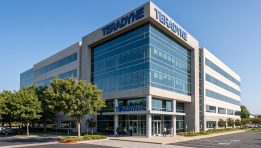
Teradyne (NASDAQ: TER) is trading higher as investor sentiment improves around the semiconductor testing equipment sector, which is closely tied
- Lior mor
- •
- 6 Min Read
- •
- ago 7 hours
SKN | Why Is Palantir (PLTR) Stock Rising Today? AI Demand and Government Contracts Keep Investors Bullish
Palantir Technologies (NYSE: PLTR) is trading higher as investors continue to reward companies positioned at the center of the artificial
- ago 7 hours
- •
- 6 Min Read

Palantir Technologies (NYSE: PLTR) is trading higher as investors continue to reward companies positioned at the center of the artificial

- Ronny Mor
- •
- 7 Min Read
- •
- ago 9 hours
SKN | Apple Supplier Luxshare Targets Up to $3.1 Billion in Hong Kong Listing to Accelerate Expansion
Luxshare Precision Industry, one of Apple's largest manufacturing partners, is preparing to raise as much as HK$24.27 billion (approximately $3.1
- ago 9 hours
- •
- 7 Min Read

Luxshare Precision Industry, one of Apple's largest manufacturing partners, is preparing to raise as much as HK$24.27 billion (approximately $3.1


