


- orshu
- •
- 7 Min Read
- •
- 2 hours ago
Key Points
- Major U.S. indices closed modestly higher, led by a 0.31 percent rise in the Nasdaq.
- The VIX fell 2.72 percent, marking another step toward reduced market volatility.
- The Russell 2000 and IBOVESPA declined, signaling uneven momentum across global and domestic equities.

U.S. markets ended the session with slight gains as investors weighed mixed signals across global regions and sectors. While large-cap technology stocks continued to provide stability and upward momentum, small caps and select international markets lagged, reflecting disparities in risk sentiment. Volatility remained subdued, and the dollar held largely steady, helping maintain a constructive backdrop for equities even as certain pockets of the market showed signs of strain.
Tech Strength Lifts U.S. Indices Despite Diverging Market Performance
The technology sector once again anchored U.S. markets, pushing major indices modestly higher. The Nasdaq rose 0.31 percent to 23,578.13, supported by continued investor demand for growth-focused companies, particularly within software, semiconductors, and cloud-related industries. The sector’s resilience has played a crucial role in sustaining broader market stability as investors navigate an evolving macroeconomic landscape.
The S&P 500 gained 0.19 percent, closing at 6,870.40, with contributions from both defensive and growth-oriented sectors. Meanwhile, the Dow 30 climbed 0.22 percent, ending at 47,954.99 as industrials and healthcare helped balance modest pressure in consumer discretionary components. Although the gains were incremental, the alignment across the major indices points to steady underlying confidence among investors.
In contrast, the Russell 2000 slipped 0.38 percent to 2,521.48. Small-cap stocks have shown sensitivity to shifting expectations around economic growth, lending conditions, and fiscal policy. Their decline reflects investor caution toward segments of the market more directly exposed to domestic economic fluctuations and higher relative borrowing costs.
Volatility Continues to Ease While the Dollar Holds Stable
The reduction in market anxiety was evident as the VIX fell 2.72 percent to 15.35, reaching one of its lower readings of the quarter. A subdued VIX often supports equity strength by reducing downside hedging costs and increasing conviction among buyers. Market participants appear more comfortable with near-term conditions, though the low-volatility environment can sometimes precede sharp market reactions to unexpected news.
The U.S. Dollar Index dipped 0.02 percent, holding near 98.97 and maintaining a consistent trend of stability. A relatively steady dollar benefits multinational firms while limiting currency-driven distortions in global capital flows. The subdued movement may also reflect market expectations for gradual monetary easing in 2026, though upcoming economic data could shift sentiment quickly.
Mixed Regional Performance as Brazil Declines and Canada Softens
International markets displayed wider divergence, with Brazil’s IBOVESPA plunging 4.25 percent to 157,462.94. The steep decline signals heightened risk aversion among investors toward emerging markets, driven by concerns surrounding domestic fiscal policy, commodity price weakness, and broader global uncertainties. Brazil’s volatility has been more pronounced than its North American counterparts, underscoring the heightened sensitivity of its market to macroeconomic shifts.
Canada’s S&P/TSX Composite Index fell 0.53 percent to 31,311.41, pressured by declines in energy and materials. Fluctuations in commodity markets have weighed on the TSX, a benchmark heavily influenced by resource sectors. Despite this, Canada’s broader economic environment remains stable, indicating that the weakness may be more sector-specific than systemic.
The mixed performance across the Americas highlights differing economic conditions and investor expectations, even as U.S. large caps continue to demonstrate relative stability.
What Investors Should Monitor Moving Forward
As markets progress through December, investors should watch for upcoming economic reports, including inflation data, consumer sentiment readings, and corporate guidance updates. These indicators will shape expectations heading into early 2026 and influence sector rotation trends. Opportunities may emerge in technology and defensive sectors if volatility remains subdued, while risks persist among small caps and emerging markets facing economic headwinds. Monitoring policy developments, global demand trends, and earnings revisions will be essential for navigating an increasingly complex but opportunity-rich market environment.
Comparison, examination, and analysis between investment houses
Leave your details, and an expert from our team will get back to you as soon as possible
* This article, in whole or in part, does not contain any promise of investment returns, nor does it constitute professional advice to make investments in any particular field.
To read more about the full disclaimer, click here
- orshu
- •
- 5 Min Read
- •
- ago 7 hours
SKN | European Markets Close Mixed as DAX Leads Gains
European markets closed Friday with a mixed performance, reflecting investor caution ahead of upcoming economic reports and central bank
- ago 7 hours
- •
- 5 Min Read

European markets closed Friday with a mixed performance, reflecting investor caution ahead of upcoming economic reports and central bank
- orshu
- •
- 7 Min Read
- •
- ago 12 hours
SKN | Can Asian Equities Sustain Their Year-End Momentum as South Korea Leads a Regional Rally?
Asian equity markets ended the week on a broadly positive note, with most regional indices advancing on Friday as investors
- ago 12 hours
- •
- 7 Min Read
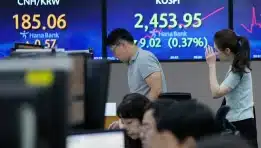
Asian equity markets ended the week on a broadly positive note, with most regional indices advancing on Friday as investors

- omer bar
- •
- 7 Min Read
- •
- ago 14 hours
SKN | Can Europe’s Luxury Sector Sustain Its Rebound Into 2026 as China Recovers and Creativity Returns?
Europe’s luxury-goods sector is heading into 2026 with renewed optimism after a volatile year marked by geopolitical tensions, uneven global
- ago 14 hours
- •
- 7 Min Read

Europe’s luxury-goods sector is heading into 2026 with renewed optimism after a volatile year marked by geopolitical tensions, uneven global
- orshu
- •
- 7 Min Read
- •
- ago 15 hours
SKN: European Markets Edge Higher as Broad Indices Extend Gains to Close the Week Strongly
European markets opened Friday, December 5, with a steady upward bias as investors continued to express confidence in the region’s
- ago 15 hours
- •
- 7 Min Read

European markets opened Friday, December 5, with a steady upward bias as investors continued to express confidence in the region’s

