





- orshu
- •
- 8 Min Read
- •
- 1 hour ago
Key Points
- The TA-125 Index fell 0.97% on June 9, 2026, as declining stocks outnumbered gainers by more than three-to-one.
- Large-cap, mid-cap, and value shares all moved lower, signaling widespread weakness across the Israeli equity market.
- Bond markets remained resilient, posting modest gains and outperforming equities as investors continued to seek stability.

Israeli equities closed lower on Tuesday, June 9, 2026, as selling pressure intensified across nearly every major market segment. The decline followed Monday’s mixed session and reflected growing investor caution, with losses spreading from large-cap stocks to mid-cap, banking, and value-oriented shares.
While equity markets struggled to find support, the bond market continued to demonstrate resilience. Fixed-income benchmarks recorded modest gains, highlighting the ongoing preference among investors for defensive assets amid uncertain market conditions.
Broad-Based Selling Drives Market Lower
The TA-125 Index declined 0.97% to close at 4,191.13 points, marking one of its weakest finishes in recent sessions. Market breadth was decisively negative, with ninety-one declining stocks compared to only thirty advancing issues.
The benchmark TA-35 Index fell 1.15% to 4,232.42 points. Only seven stocks advanced while twenty-eight declined, underscoring the extent of the weakness among Israel’s largest publicly traded companies.
Stock market turnover reached approximately NIS 4.61 billion, reflecting continued investor activity despite the negative sentiment. The elevated trading volume suggests institutional investors remained active participants as market participants reassessed risk exposure.
The widespread nature of the decline indicates that investors were reducing positions across multiple sectors rather than targeting a specific industry or group of companies.
Value Stocks and Mid-Caps Face Renewed Pressure
Some of the sharpest losses came from value-oriented and mid-cap stocks. The TA-125 Value Index dropped 1.38% to 4,064.65 points, making it one of the weakest-performing major benchmarks of the session.
Only eleven value stocks advanced while forty-three declined, reflecting continued pressure on companies viewed as economically sensitive or cyclical. The performance suggests investors remain cautious about near-term growth expectations.
The TA-90 Index declined 0.62% to 4,022.06 points. Twenty-three stocks gained while sixty-three declined, highlighting broad weakness across the mid-cap segment.
Similarly, the combined TA-90 and Banks Index fell 0.57%, with sixty-eight declining securities compared with twenty-three gainers. Banking shares continue to struggle to establish sustained momentum, reflecting ongoing investor caution toward financial institutions.
The Tel Aviv Sector-Balance Index also fell 0.96%, demonstrating that weakness was spread across a wide range of industries. Seventy-four securities declined within the index compared to only twenty-two advancing issues.
Taken together, these figures point to a market environment where investors are prioritizing capital preservation over aggressive risk-taking.
Bond Market Continues to Outperform Equities
While stocks experienced another difficult session, Israel’s bond market remained comparatively stable. The All-Bond General Index edged higher by 0.01% to 431.09 points, extending its recent pattern of resilience.
Bond market participation remained positive, with 366 advancing securities compared with 175 decliners. This favorable breadth contrasts sharply with the negative sentiment observed across equity markets.
The Tel Bond-Adjoined A Index gained 0.08%, while the Tel Bond 60 Adjacent Index advanced 0.03%. Short-term bonds also moved higher, rising 0.02%.
Bond market turnover reached approximately NIS 4.72 billion, exceeding stock market turnover for the second consecutive session. The stronger activity in fixed income reinforces the view that investors continue to favor defensive positioning while monitoring developments in the equity market.
The relative strength of bonds provides a degree of stability, but it also signals that many investors remain cautious about increasing exposure to risk assets.
Looking Ahead: Investors Search for Signs of Stability After Another Weak Session
Tuesday’s decline places renewed focus on whether the Israeli market can stabilize after several sessions of uneven performance. The broad-based nature of the selling suggests that confidence remains fragile, particularly within value, banking, and mid-cap sectors.
Investors will be watching closely to see whether the TA-125 can hold above key support levels and whether market breadth begins to improve in upcoming sessions. A recovery led by a wider range of sectors would provide a stronger indication that sentiment is stabilizing.
At the same time, continued resilience in bonds could help limit downside pressure by providing investors with an alternative source of returns and stability. However, if weakness persists across equities while defensive assets continue to outperform, it may signal that risk appetite remains constrained.
Market participants will continue monitoring global economic conditions, interest-rate expectations, geopolitical developments, and corporate earnings trends. Until broader participation returns to the equity market, investors are likely to remain selective, focusing on quality assets and defensive opportunities while awaiting clearer signs of sustained market strength.
Comparison, examination, and analysis between investment houses
Leave your details, and an expert from our team will get back to you as soon as possible
* This article, in whole or in part, does not contain any promise of investment returns, nor does it constitute professional advice to make investments in any particular field.
To read more about the full disclaimer, click here
- orshu
- •
- 7 Min Read
- •
- ago 1 hour
SKN | European Markets End Mixed as FTSE Slides While Continental Benchmarks Show Resilience
European markets closed with mixed performance on June 09 as investors weighed economic prospects, corporate developments, and monetary policy
- ago 1 hour
- •
- 7 Min Read
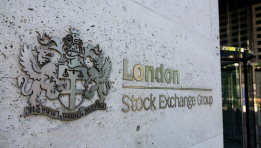
European markets closed with mixed performance on June 09 as investors weighed economic prospects, corporate developments, and monetary policy

- Lior mor
- •
- 9 Min Read
- •
- ago 3 hours
SKN | Chips Under Fire: Wall Street Rebounds From AI Rout Amid Middle East Clashes and Looming Blockbuster IPO
Wall Street closed in positive territory on the first day of the trading week, as major equity benchmarks successfully rebounded
- ago 3 hours
- •
- 9 Min Read

Wall Street closed in positive territory on the first day of the trading week, as major equity benchmarks successfully rebounded
- orshu
- •
- 7 Min Read
- •
- ago 4 hours
SKN | U.S. Markets Advance Broadly as Small Caps Lead While Volatility and Dollar Retreat
U.S. financial markets traded higher on June 09 as investors embraced a broader risk-on environment, pushing most major benchmarks
- ago 4 hours
- •
- 7 Min Read
U.S. financial markets traded higher on June 09 as investors embraced a broader risk-on environment, pushing most major benchmarks
- orshu
- •
- 6 Min Read
- •
- ago 7 hours
SKN | Asia Markets Rebound on June 9, 2026 as South Korea Soars 8.18% and Japan Stages Strong Recovery
Asian markets rebounded strongly on June 9, 2026, as investors returned to equities following one of the region’s sharpest
- ago 7 hours
- •
- 6 Min Read

Asian markets rebounded strongly on June 9, 2026, as investors returned to equities following one of the region’s sharpest


