


- Lior mor
- •
- 7 Min Read
- •
- 49 minutes ago
Key Points
- Jensen Huang argues that AI expands rather than replaces professions, using radiology as evidence of job growth alongside automation.
- He dismisses predictions of mass job loss, emphasizing that workers who leverage AI will displace those who do not.
- Huang expects new industries to emerge around robotics and automation, creating additional employment and economic opportunity.

Nvidia CEO Jensen Huang is challenging the widely held belief that artificial intelligence will destabilize global labor markets, arguing instead that a misunderstood nine-year-old prediction demonstrates why AI tends to transform—rather than eliminate—human work. Speaking in a wide-ranging interview on The Joe Rogan Experience, Huang revisited a 2016 forecast from Geoffrey Hinton, the influential researcher often referred to as the “Godfather of AI,” who claimed radiology would be displaced within five years. Instead, radiology has expanded, with AI becoming a central tool rather than a replacement. The debate arrives at a pivotal moment for global markets, where companies and policymakers are grappling with how AI adoption will affect productivity, employment structures and economic resilience.
AI’s Impact on Labor: Augmentation Over Replacement
Huang’s central argument rests on redefining the nature of a job. He noted that radiologists do not exist simply to study images, but to diagnose disease—a broader task that AI can support but not fully replicate. As imaging tools became faster and more precise through AI integration, hospitals were able to process more scans and serve more patients. Improved operational efficiency, in turn, created stronger clinical demand, prompting institutions to hire additional radiologists. Huang highlighted that nearly all radiologists in the U.S. now use AI in some capacity, a phenomenon he sees as representative of how most professions will evolve. The American College of Radiology forecasts the number of radiologists to grow by up to 40% by 2055, reflecting how technology-driven productivity often increases labor demand rather than suppressing it.
This view stands in contrast to predictions of rapid job erosion. Earlier this year, Anthropic CEO Dario Amodei warned that half of all entry-level roles could disappear as AI systems mature. But Huang argues this perspective ignores market dynamics, organizational behavior and historical patterns of technological disruption. He reiterated a point made at the Milken Institute’s Global Conference: workers will not lose their jobs to AI itself, but to peers who adopt and master the technology more effectively.
Innovation and the Birth of New Industries
While acknowledging that certain tasks—and in some cases entire roles—may become obsolete, Huang emphasized that automation has consistently triggered the creation of new industries. He pointed to emerging robotics initiatives, particularly those led by Tesla, as examples of frontier sectors poised to reshape the labor market. Advanced robotics, he suggested, will require an ecosystem of technicians, manufacturing specialists, mechanical engineers and service providers responsible for maintaining complex machines. Even ancillary markets, such as robot-specific apparel or protective coverings, could emerge as businesses scale.
Huang’s argument aligns with economic research showing that productivity-enhancing technologies frequently expand the overall size of industries by lowering costs, improving outcomes and creating new customer bases. Investors monitoring AI and automation trends have increasingly shifted their focus away from questions of displacement toward understanding where new capabilities will generate value and how capital allocation will follow.
Future Outlook
As global companies accelerate AI adoption, the central challenge will be managing the transition between existing roles and emerging opportunities. Education systems, workplace training programs and corporate strategy will play a decisive role in determining whether workers benefit from AI-enabled productivity gains. Huang’s message suggests that markets are entering a phase in which adaptability and skill-building—not job elimination—will define competitive advantage. Policymakers and employers will need to prepare for job evolution rather than contraction, with new industries likely to form around robotics, automation and AI-driven workflows.
Comparison, examination, and analysis between investment houses
Leave your details, and an expert from our team will get back to you as soon as possible
* This article, in whole or in part, does not contain any promise of investment returns, nor does it constitute professional advice to make investments in any particular field.
To read more about the full disclaimer, click here
- Lior mor
- •
- 8 Min Read
- •
- ago 2 hours
SKN | Can Google’s Partnership With Replit Turn ‘Vibe-Coding’ Into Its Next Strategic Advantage Against Anthropic and Cursor?
Google Cloud’s new multi-year partnership with AI coding startup Replit marks a significant escalation in the competition to dominate the
- ago 2 hours
- •
- 8 Min Read

Google Cloud’s new multi-year partnership with AI coding startup Replit marks a significant escalation in the competition to dominate the

- Ronny Mor
- •
- 6 Min Read
- •
- ago 13 hours
SKN | Software Startup Launches Singapore’s First Commercial Quantum Computer
A Singapore-based software startup has announced the deployment of the country’s first commercially available quantum computer, providing companies access to
- ago 13 hours
- •
- 6 Min Read
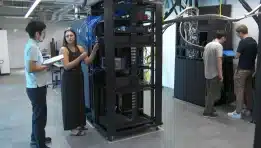
A Singapore-based software startup has announced the deployment of the country’s first commercially available quantum computer, providing companies access to

- sagi habasov
- •
- 6 Min Read
- •
- ago 14 hours
SKN | Citadel Integrates AI Into Stock Selection but Stresses Human Judgment Remains Critical
Citadel, one of the world’s leading hedge funds, has unveiled new artificial intelligence capabilities to support its stock selection process.
- ago 14 hours
- •
- 6 Min Read

Citadel, one of the world’s leading hedge funds, has unveiled new artificial intelligence capabilities to support its stock selection process.

- orshu
- •
- 7 Min Read
- •
- ago 22 hours
SKN | Meta Poaches Apple Design Chief Alan Dye in a Major Talent Coup as Tech Rivalry Intensifies
In a rare shake-up among Silicon Valley’s most guarded creative teams, Meta has successfully recruited Alan Dye, Apple’s influential
- ago 22 hours
- •
- 7 Min Read

In a rare shake-up among Silicon Valley’s most guarded creative teams, Meta has successfully recruited Alan Dye, Apple’s influential

