


- omer bar
- •
- 9 Min Read
- •
- 2 hours ago
Key Points
- The U.S. is seeking a major semiconductor investment from Taiwan, potentially above $300 billion, to advance its domestic manufacturing goals.
- President Lai says Taiwanese firms are willing to invest but require improved U.S. infrastructure, talent support and regulatory clarity.
- Investors are watching for currency and market effects as the scale of potential commitments becomes clearer.
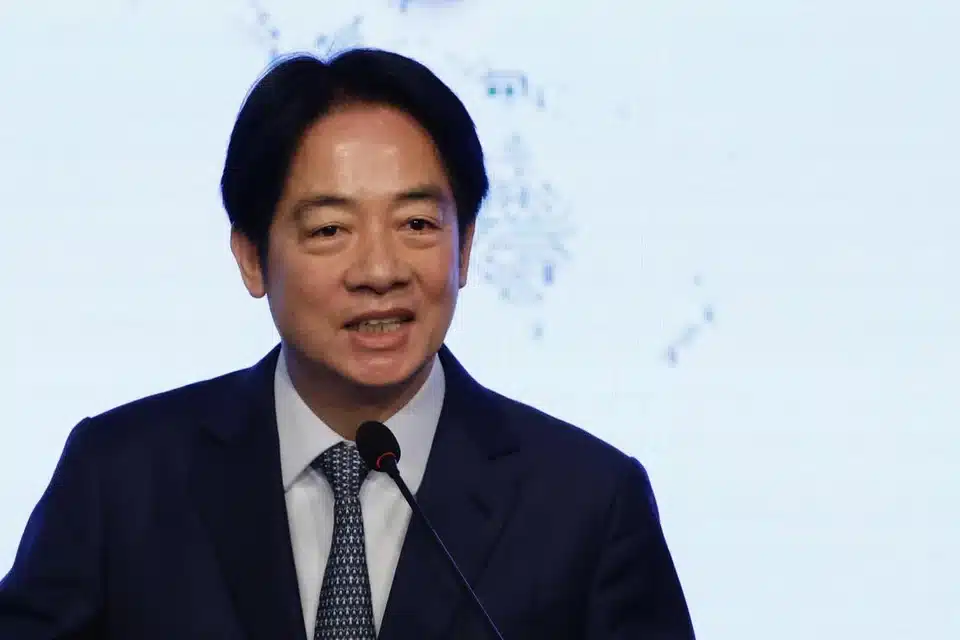
The U.S. and Taiwan appear to be advancing toward one of the largest technology investment agreements in recent memory, as Washington pushes to reindustrialize the semiconductor sector and reduce reliance on overseas chip manufacturing. Commerce Secretary Howard Lutnick said the U.S. is “in the midst of discussions” with Taiwan, adding that the Biden and Trump administrations share the goal of shifting 40% to 50% of American chip consumption to domestic production. Taiwan President Lai Ching-te signaled broad support for this strategy, emphasizing that Taiwanese semiconductor firms stand ready to expand their presence in the U.S.—but only if America delivers the infrastructure, talent pipeline and investment incentives necessary to make such projects viable. The exchange highlights how semiconductor policy has become a central economic and geopolitical priority for both Washington and Taipei.
U.S. Pushes for Historic Levels of Onshore Semiconductor Capacity
Lutnick’s remarks suggest the administration is eyeing an investment package surpassing $300 billion, building on commitments already underway from TSMC, Micron and Texas Instruments. TSMC alone recently increased its planned Arizona investment from $65 billion to as much as $165 billion, reflecting both Washington’s pressure to accelerate onshore production and Taiwan’s desire to remain integrated in global supply chains. The urgency stems from the U.S. government’s long-standing vulnerability: its dependence on Taiwan for the world’s most advanced chips. Treasury Secretary Scott Bessent called a disruption in Taiwan’s semiconductor output “the single point of failure for the global economy,” reinforcing why reshoring remains a national security priority. Yet the scale of the investments being pursued underscores the immense capital requirements of modern chip fabrication—and the political stakes surrounding who finances the next generation of industrial infrastructure.
Taiwan Seeks U.S. Improvements in Infrastructure, Workforce and Incentives
President Lai welcomed America’s ambition but was clear-eyed about the challenges. In remarks recorded for the New York Times DealBook Summit, he noted that achieving Washington’s targets depends as much on U.S. capabilities as on Taiwan’s willingness to commit capital. Semiconductors require vast quantities of land, water and electricity—inputs that have slowed or complicated factory expansions in Arizona and other regions. Equally important is developing a skilled workforce that can operate and maintain cutting-edge technology, as well as implementing predictable regulatory processes that avoid delays. Lai emphasized that Taiwan’s support must be matched by robust U.S. actions to ensure “land acquisition, water and electricity supply, workforce and talent development and investment incentives” are in place. His message was diplomatic but unmistakable: without a comprehensive industrial strategy, American onshoring efforts could fall short of expectations.
Financial Markets Brace for Potential Ripple Effects
The possibility of a large Taiwanese investment pledge has not yet translated into market volatility, but strategists say currency traders are paying close attention. The Taiwan dollar strengthened modestly on Thursday, though BNY’s Wee Khoon Chong noted the lack of reaction reflected the absence of formal figures. Should a major commitment materialize, analysts warn it could put downward pressure on the currency—similar to the South Korean won’s drop following Seoul’s $350 billion investment pledge in the U.S. last year. Equity markets in Taipei were subdued, reflecting both investor caution and the broader uncertainty surrounding the scale and timing of any agreement. For Taiwan-based firms, the strategic calculus involves balancing global expansion with domestic economic stability, all while navigating heightened geopolitical tensions with China.
A Semiconductor Partnership Shaped by Geopolitics
Beyond economics, the dialogue between Washington and Taipei carries deep geopolitical implications. Taiwan relies on U.S. military and political support to deter China, which continues to claim the island as its own territory. Lai’s recent outreach—including commentary in major U.S. publications and a new $40 billion defense spending plan—signals an effort to strengthen ties with Washington at a moment of rising cross-strait pressure. Some analysts have questioned whether U.S. efforts to reshore chip production could weaken the strategic urgency of defending Taiwan, but senior U.S. officials reject that premise. Bessent called the notion “a flawed question,” underscoring that de-risking supply chains does not equate to abandoning strategic commitments.
Future Outlook
Whether the U.S. and Taiwan strike a semiconductor deal exceeding $300 billion will depend on parallel progress in infrastructure readiness, regulatory streamlining and labor-force development in the United States. If achieved, such a commitment could transform America’s manufacturing base and solidify Taiwan’s central role in the global semiconductor ecosystem, even as both economies seek greater resilience. Markets, meanwhile, will closely monitor signals from Taipei and Washington, aware that the next phase of semiconductor investment may influence global capital flows, currency trends and geopolitical alignment for years to come.
Comparison, examination, and analysis between investment houses
Leave your details, and an expert from our team will get back to you as soon as possible
* This article, in whole or in part, does not contain any promise of investment returns, nor does it constitute professional advice to make investments in any particular field.
To read more about the full disclaimer, click here
- orshu
- •
- 6 Min Read
- •
- ago 50 seconds
SKN | Tel Aviv Markets Open Higher Amid Modest Gains Across Key Indices
The Tel Aviv stock market opened higher on the morning of December 4, 2025, with the major indices reflecting moderate
- ago 50 seconds
- •
- 6 Min Read

The Tel Aviv stock market opened higher on the morning of December 4, 2025, with the major indices reflecting moderate

- Lior mor
- •
- 8 Min Read
- •
- ago 3 hours
SKN | Could Trump’s Push to Bring Japan’s Kei Cars to the U.S. Reshape the American Auto Market—or Create New Safety and Trade Tensions?
President Donald Trump’s unexpected endorsement of Japan’s ultra-compact Kei cars has thrust a niche segment of the automotive world into
- ago 3 hours
- •
- 8 Min Read

President Donald Trump’s unexpected endorsement of Japan’s ultra-compact Kei cars has thrust a niche segment of the automotive world into
- orshu
- •
- 7 Min Read
- •
- ago 4 hours
SKN | Global Market Recap: December 3, 2025 Performance and Outlook for December 4, 2025
Global markets on December 3, 2025, displayed a cautiously optimistic tone as investors balanced expectations for monetary easing against economic
- ago 4 hours
- •
- 7 Min Read

Global markets on December 3, 2025, displayed a cautiously optimistic tone as investors balanced expectations for monetary easing against economic
- orshu
- •
- 6 Min Read
- •
- ago 6 hours
SKN | US Stock Futures Show Mixed Moves as Fed Rate Cut Bets Near Reality
US stock futures displayed a mixed pattern on Thursday, reflecting investor uncertainty as markets anticipate the Federal Reserve’s forthcoming interest
- ago 6 hours
- •
- 6 Min Read
US stock futures displayed a mixed pattern on Thursday, reflecting investor uncertainty as markets anticipate the Federal Reserve’s forthcoming interest

