





- omer bar
- •
- 8 Min Read
- •
- 3 hours ago
Key Points
- Microgravity enables the creation of more uniform molecular structures, potentially making complex drugs easier, cheaper, and more convenient to administer.
- Commercial space companies are positioning low Earth orbit as a high-value manufacturing platform for the pharmaceutical industry.
- The industry's biggest challenge is not scientific viability but commercial scalability and the ability to replicate space-derived results on Earth.
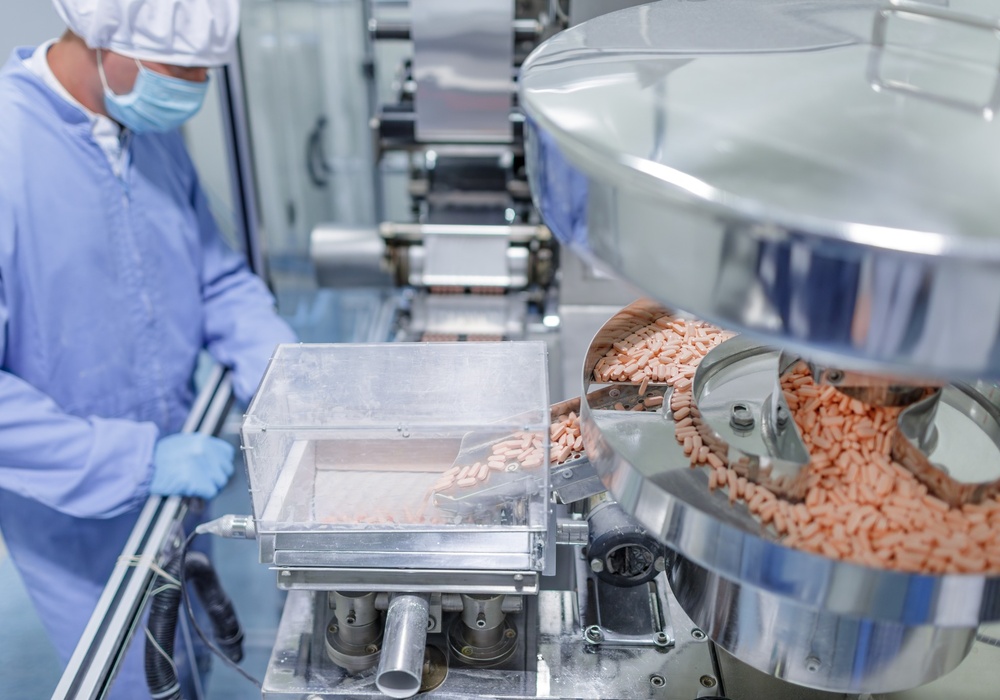
The Space Race Is Expanding Beyond Satellites Into Pharmaceuticals
The commercial space industry is entering a new phase where value creation extends beyond satellite launches, communications, and defense applications into advanced manufacturing. One of the most promising emerging sectors is pharmaceutical development and production in microgravity environments in low Earth orbit. While investor attention remains focused on SpaceX’s anticipated IPO and launch providers, a new industry is quietly taking shape around the use of space-based conditions to solve fundamental challenges in drug development.
The economic rationale is compelling. If medicines can be produced with greater stability, improved effectiveness, and more efficient delivery methods through processes that are impossible on Earth, space transitions from an expensive research environment into a commercially viable manufacturing platform. For an industry that spends hundreds of billions of dollars annually on research and development, even modest improvements in efficiency and success rates can generate substantial economic value.
Microgravity Enables Processes That Gravity Limits on Earth
The primary advantage of manufacturing in space stems from the absence of gravity. On Earth, crystallization and molecular assembly are influenced by particle sedimentation, fluid movement, and structural inconsistencies. In microgravity, these disruptions are significantly reduced, allowing scientists to grow more uniform and stable crystal structures.
For complex biologic drugs, this uniformity can directly impact how therapies are administered to patients. Treatments that currently require lengthy hospital infusions could potentially be converted into simple injections. In some cases, improved stability may also reduce dependence on costly cold-chain logistics and specialized transportation. As a result, pharmaceutical companies are pursuing not only scientific improvements but also opportunities to lower distribution costs and enhance patient convenience.
The Industry Is Moving From Scientific Discovery to Commercialization
The first major proof of concept came from Merck & Co., which conducted crystal growth experiments aboard the International Space Station in 2014 while studying its blockbuster cancer therapy Keytruda. The findings helped researchers better understand molecular behavior in microgravity and contributed to the development of an injectable version of the treatment, which received regulatory approval in 2025.
Today, companies such as Redwire through its SpaceMD subsidiary, and Varda Space Industries, are attempting to transform these scientific breakthroughs into sustainable business models. Rather than conducting isolated experiments, these firms are developing manufacturing systems, re-entry capabilities, and commercial logistics networks designed to support recurring pharmaceutical production in orbit. If successful, the space industry could become a permanent service provider to the global pharmaceutical sector.
Economic Bottlenecks Are Replacing Scientific Ones
Despite rapid technological progress, the industry’s biggest obstacles are increasingly economic rather than scientific. Launch costs have declined significantly over the past decade, but returning materials from orbit remains expensive and operationally complex. At the same time, the approaching retirement of the International Space Station is forcing companies to develop independent commercial infrastructure for long-term production.
Regulation represents another critical challenge. Health authorities must determine how to evaluate, approve, and monitor drugs or pharmaceutical ingredients manufactured in space. Many experts believe the most practical business model may involve producing small research batches in orbit before replicating successful processes at scale on Earth. Whether such replication can be achieved consistently remains one of the industry’s most important unanswered questions.
Looking Ahead
The coming years will test whether the scientific advantages of microgravity can evolve into a commercially sustainable industry. Investors will closely monitor declining transportation costs, advances in orbital manufacturing infrastructure, and the development of regulatory frameworks. If pharmaceutical companies successfully transform space-generated discoveries into scalable commercial products, drug manufacturing could become one of the most significant growth drivers of the broader space economy over the next decade.
Comparison, examination, and analysis between investment houses
Leave your details, and an expert from our team will get back to you as soon as possible
* This article, in whole or in part, does not contain any promise of investment returns, nor does it constitute professional advice to make investments in any particular field.
To read more about the full disclaimer, click here
- orshu
- •
- 6 Min Read
- •
- ago 2 hours
SKN | Anthropic’s Reported Claude Fable 5 Launch Signals Intensifying Competition in the AI Race
The artificial intelligence sector remains one of the most influential themes driving global technology investment, with major developers racing
- ago 2 hours
- •
- 6 Min Read

The artificial intelligence sector remains one of the most influential themes driving global technology investment, with major developers racing

- omer bar
- •
- 6 Min Read
- •
- ago 5 hours
SKN | Semiconductor Stocks Extend Rebound as Micron and Marvell Lead AI-Driven Recovery
The semiconductor sector extended its recovery this week, with Micron Technology and Marvell Technology emerging as standout performers for
- ago 5 hours
- •
- 6 Min Read

The semiconductor sector extended its recovery this week, with Micron Technology and Marvell Technology emerging as standout performers for

- sagi habasov
- •
- 6 Min Read
- •
- ago 7 hours
SKN | Apple’s WWDC Fails to Reignite AI Enthusiasm as Investors Seek Clearer Growth Catalysts
Apple's annual Worldwide Developers Conference (WWDC) was expected to provide greater clarity on the company's artificial intelligence roadmap. Instead,
- ago 7 hours
- •
- 6 Min Read

Apple's annual Worldwide Developers Conference (WWDC) was expected to provide greater clarity on the company's artificial intelligence roadmap. Instead,

- Lior mor
- •
- 8 Min Read
- •
- ago 7 hours
SKN | OpenAI Files for IPO as AI Giants Race Toward Wall Street
OpenAI, the company behind ChatGPT, has filed confidential preliminary paperwork with the U.S. Securities and Exchange Commission, marking a significant
- ago 7 hours
- •
- 8 Min Read

OpenAI, the company behind ChatGPT, has filed confidential preliminary paperwork with the U.S. Securities and Exchange Commission, marking a significant


